
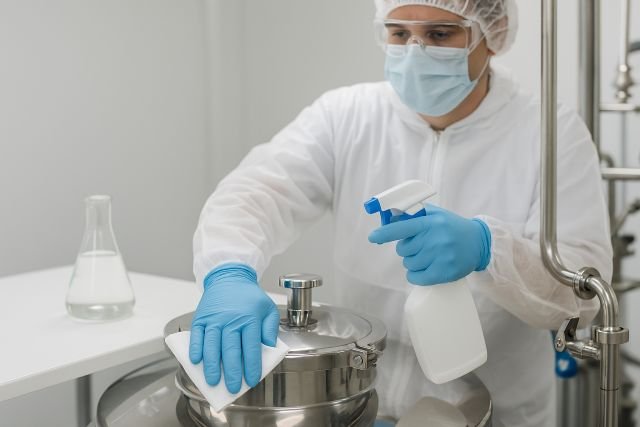
In regulated industries such as pharmaceuticals, biotechnology, cosmetics, and food manufacturing, maintaining strict hygiene and preventing cross-contamination is essential for product safety. This is why Cleaning Validation plays a critical role in ensuring equipment, facilities, and processes remain compliant with global regulatory expectations. Within the first 100 words of this article, it’s clear that Cleaning Validation is not simply a procedural formality — it is a scientific, documented, and highly regulated practice that protects consumers, manufacturers, and product integrity.
- What Is Cleaning Validation? A Complete Overview
- Why Cleaning Validation Is Critical for Safety and Compliance
- The Science Behind Cleaning Validation
- Effective Cleaning Methods Used in Modern Manufacturing
- Sampling Methods Used in Cleaning Validation
- Documentation Requirements for Cleaning Validation
- Lifecycle Approach to Cleaning Validation
- Risk Assessment in Cleaning Validation
- Cleaning Validation Challenges and Practical Solutions
- Industry Examples and Real-World Scenarios
- FAQs About Cleaning Validation
- Conclusion
As compliance expectations evolve, organizations must ensure their cleaning programs meet FDA, EMA, MHRA, WHO, and GMP standards. This guide provides an in-depth look at Cleaning Validation, including methods, documentation, sampling techniques, acceptance criteria, and modern approaches that reduce risk and support quality by design.
What Is Cleaning Validation? A Complete Overview
Cleaning Validation is a documented, scientific process that proves cleaning procedures consistently remove residues — such as active pharmaceutical ingredients (APIs), detergents, microorganisms, or other contaminants — to predetermined, acceptable levels. This ensures that equipment used in manufacturing does not negatively affect the quality, safety, or purity of the next product.
Regulatory authorities define Cleaning Validation as essential for preventing contamination, especially in multi-product facilities. The FDA describes it as a “documented evidence that the cleaning procedure removes residue to predetermined levels,” reinforcing its importance during inspections.
Why Cleaning Validation Is Critical for Safety and Compliance
Preventing Cross-Contamination
Cross-contamination can lead to product recalls, adverse patient events, and regulatory penalties. Cleaning Validation reduces contamination risks by verifying that every cleaning step is effective, repeatable, and properly controlled.
Meeting Global GMP Requirements
Good Manufacturing Practice (GMP) standards require manufacturers to ensure equipment is clean, sanitized, and maintained. Cleaning Validation supports:
Regulatory inspections
Quality audits
Process controls
Batch release decisions
Without validated cleaning processes, organizations face severe compliance challenges.
Reducing Product Variability
Residues — whether chemical, microbial, or particulate — can alter product potency or safety. Cleaning Validation ensures that every batch meets its intended specifications and remains within validated limits.
The Science Behind Cleaning Validation
Understanding Residue Types
Manufacturing can leave behind a variety of residues, including:
Active pharmaceutical ingredients (APIs)
Excipients
Microbial contaminants
Detergents or cleaning chemicals
Lubricants or processing oils
The difficulty of removing residues depends on solubility, stickiness, toxicity, and product characteristics.
Determining Acceptable Residue Limits
Regulators expect scientifically justified limits based on:
Maximum daily dose (MDD)
Toxicological data (PDE or ADE values)
Equipment surface area
Next product dose
The EMA encourages health-based exposure limits (HBELs), which provide a safer, more scientific approach to calculating residue limits.
Analytical Methods and Sensitivity
Analytical techniques must be sensitive enough to detect low residue levels. Common methods include:
HPLC
TOC
UV spectroscopy
Microbial swabbing and plating
The choice of method depends on the product’s chemical characteristics.
Effective Cleaning Methods Used in Modern Manufacturing
Clean-in-Place (CIP)
CIP systems clean equipment automatically using automated cycles of rinsing, detergent washes, and sanitization. They are ideal for enclosed systems such as tanks and piping.
Clean-out-of-Place (COP)
COP involves disassembling equipment and manually cleaning components. This method is common in smaller facilities or where equipment geometry makes automation difficult.
Manual Cleaning
Manual cleaning remains widely used but poses the highest risk for variation. Therefore, Cleaning Validation must ensure personnel follow consistent, well-documented SOPs.
Sampling Methods Used in Cleaning Validation
Swab Sampling
Swab sampling collects residue directly from equipment surfaces. It is widely used because it provides localized data and is easy to document. However, swabbing efficiency varies depending on the surface type and residue characteristics.
Rinse Sampling
Rinse samples analyze residues dissolved in final rinse water. This method works well for large systems where swabbing is impractical.
Visual Inspection
Visual examination is a minimum requirement. If visible residue is found, quantitative analysis typically follows.
Regulatory agencies emphasize that visual cleanliness alone is not sufficient for validation, but it remains an important acceptance criterion.
Documentation Requirements for Cleaning Validation
Proper documentation is essential for regulatory compliance. A typical Cleaning Validation package includes:
Validation Master Plan
Cleaning Procedure (SOP)
Risk Assessment
Protocol and Acceptance Criteria
Analytical Method Validation
Sample Plans
Results and Report
Documents must clearly demonstrate that cleaning methods are scientifically justified, executed correctly, and consistently repeatable.
Lifecycle Approach to Cleaning Validation
The cleaning lifecycle approach aligns with modern Quality by Design (QbD) principles and regulatory expectations. The lifecycle includes:
Process Design
Qualification
Continued Verification
This method ensures cleaning remains effective long after initial validation.
The FDA and EMA emphasize lifecycle principles for cleaning because they improve consistency and reduce long-term compliance risks.
Risk Assessment in Cleaning Validation
Identifying High-Risk Equipment and Products
Risk assessment helps identify where contamination is most likely to occur. Considerations include:
Toxicity of compounds
Product mixtures
Equipment complexity
Difficulty of cleaning
Tools like FMEA (Failure Mode and Effects Analysis) support risk prioritization.
Establishing Health-Based Limits
Using toxicological data (PDE/ADE values) ensures acceptable residue limits protect patient safety. This aligns with the EMA’s guidance on HBELs, encouraging scientifically meaningful limits.
Cleaning Validation Challenges and Practical Solutions
Difficulty Removing Sticky or Insoluble Residues
Hard-to-clean formulations require specialized detergents or modified cleaning parameters. Heating, mechanical agitation, or pH adjustments often improve cleaning effectiveness.
Inconsistent Manual Cleaning
Manual cleaning frequently causes variation. Training programs, standardized tools, and clear SOPs help minimize inconsistencies.
Insufficient Analytical Method Sensitivity
If methods cannot detect expected residue levels, they must be optimized or replaced. Validating analytical precision and specificity is critical.
Industry Examples and Real-World Scenarios
Pharmaceutical Manufacturing
In multi-product pharmaceutical plants, Cleaning Validation is mandatory before switching production lines. For example, if a facility manufactures antibiotics and antidepressants, residue carryover between batches could be dangerous.
Case studies frequently show that poor cleaning documentation leads to regulatory warning letters.
Biopharmaceutical Production
Biologic drug manufacturing poses unique challenges, such as protein-based residues. Enzyme detergents and advanced CIP cycles improve cleaning efficiency.
Nutraceutical or Food Facilities
Even though nutraceutical regulations are sometimes less strict, Cleaning Validation improves product safety and reduces allergen risks.
FAQs About Cleaning Validation
What is Cleaning Validation?
Cleaning Validation is a documented process proving that cleaning procedures consistently remove residues to acceptable levels for safety and compliance.
Why is Cleaning Validation required?
It is required to prevent contamination, meet GMP standards, and ensure product quality.
What agencies regulate Cleaning Validation?
Regulators include FDA, EMA, MHRA, WHO, and local GMP authorities.
What is the difference between CIP and COP cleaning?
CIP automates equipment cleaning, while COP involves manual disassembly and washing.
How often should Cleaning Validation be re-evaluated?
Revalidation may be required after equipment changes, new products, or process modifications.
Conclusion
Cleaning Validation is a cornerstone of regulatory compliance, product safety, and Good Manufacturing Practice. By ensuring cleaning processes are scientifically sound, consistently executed, and well-documented, organizations protect consumers from cross-contamination and safeguard product integrity. Regulatory bodies around the world expect manufacturers to justify cleaning methods, prove residue limits, and monitor long-term effectiveness. With a lifecycle approach, risk assessment, strong SOPs, and validated analytical methods, companies can confidently demonstrate Cleaning Validation excellence. Ultimately, a robust Cleaning Validation program strengthens quality systems, reduces regulatory risk, and promotes a culture of safety and accountability.