


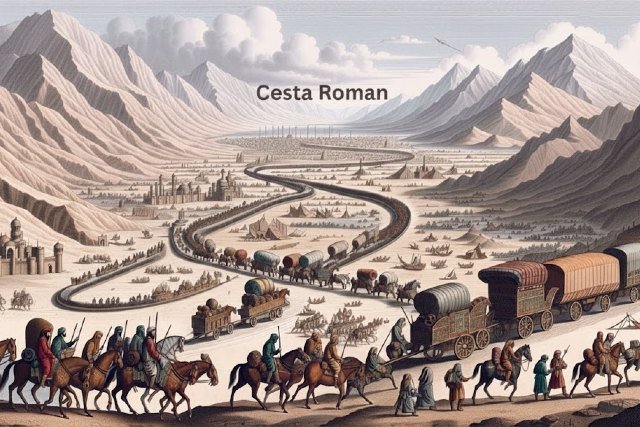
The ancient Cesta Roman remains one of the most fascinating networks of pathways that once stitched together the vast territories of the Roman Empire. Within the first stones of these old routes lies a powerful story of military expansion, cultural exchange, commerce, and myth-making. In the first hundred words of this article, it is essential to understand how deeply the Cesta Roman influenced not only the regions it touched but also the development of infrastructure, mobility, and identity throughout Europe and beyond. Many of these forgotten corridors still exist beneath forests, fields, and modern highways, waiting for rediscovery by historians, archaeologists, and curious travelers.
- The Origins of the Cesta Roman: A Foundation of Empire
- Why the Cesta Roman Was Built: Strategic, Cultural, and Economic Purposes
- Lost Routes and Hidden Pathways: The Forgotten Cesta Roman
- The Role of the Cesta Roman in Trade and Travel
- Cesta Roman and Forgotten Legends of the Empire
- Modern Rediscovery: How Archaeologists and Historians Trace the Cesta Roman Today
- Experiencing the Cesta Roman Today: Travel, Tourism, and Cultural Revival
- Frequently Asked Questions
- Conclusion
This article explores the origins, evolution, and lingering mysteries of the Cesta Roman while answering the most common questions users have about Rome’s ancient roads. You’ll also gain new insight into the legends that traveled along these pathways, supported by historical research, archaeological discoveries, and modern case studies.
The Origins of the Cesta Roman: A Foundation of Empire
Understanding the Cesta Roman requires revisiting the early ambitions of Rome. As the Republic expanded into the Italian peninsula, military engineers constructed straight, durable routes to move legions swiftly across conquered territories. These roads were designed using layers of gravel, stone, and paved slabs, many of which still survive today.
Historians from the University of Cambridge estimate that the Romans built over 400,000 km of roads, with around 80,000 km paved — an engineering achievement unmatched until the modern era (source: Cambridge Ancient History). The Cesta Roman became the backbone of communication, governance, and supply chains. Routes like the Via Appia, Via Flaminia, and Via Augusta are among the best-known, but lesser-known branches and provincial paths contributed equally to the empire’s success.
Some of these routes evolved from prehistoric trails used by local tribes long before Roman soldiers set foot on them. The Romans excelled at identifying strategic locations, reinforcing them with engineering skill, and creating a unified transport system that could withstand centuries.
Why the Cesta Roman Was Built: Strategic, Cultural, and Economic Purposes
The Cesta Roman served multiple overlapping purposes that shaped ancient life. Military strategy was the most obvious motivation, but economic integration and cultural connectivity quickly became just as important.
Roman generals often commented that roads won wars long before soldiers did. According to historian Mary Beard, the ability to move troops faster than enemies shifted the balance of power in nearly every frontier conflict (source: “SPQR: A History of Ancient Rome”). Merchants benefited equally, using the smooth pathways to transport wine, grain, olive oil, textiles, and luxury items between provinces.
Culturally, the roads enabled the spread of Latin, Roman law, architectural styles, and religious practices. Temples, rest stations, and mansiones were positioned at strategic intervals, creating social hubs where travelers exchanged stories and news from distant lands. Over time, these interactions gave rise to local legends and myths that blended Roman beliefs with indigenous folklore.
Lost Routes and Hidden Pathways: The Forgotten Cesta Roman
One of the most captivating aspects of the Cesta Roman is how much of it has disappeared from public memory. While major routes remain well documented, countless smaller roads have become overgrown or buried under centuries of agricultural development and urban expansion.
Archaeologists have identified forgotten segments through satellite imagery, LiDAR scanning, and accidental discoveries by construction crews. For example, a recently uncovered Roman road segment in Slovenia revealed intricate stone patterns and drainage systems that confirm the sophistication of Roman engineering. Such discoveries are still being published in academic sources like the Journal of Roman Archaeology.
These forgotten pathways often intersect with legends about ghostly soldiers, lost trade caravans, or cursed travelers — folklore preserved in rural villages from Spain to Romania. The interaction between history and myth enriches the narrative of the Cesta Roman, giving modern readers a portal into the ancient imagination.
The Role of the Cesta Roman in Trade and Travel
Economically, the Cesta Roman functioned almost like the Silk Road of the Western world. Merchants moved raw materials from remote regions to urban centers, and finished goods found their way back along the same network.
Travelers depended on milestones, inns, and guideposts to navigate vast territories. Roman surveyors (agrimensores) documented distances and mapped terrain with remarkable precision. The Peutinger Table, a medieval copy of an ancient Roman road map, provides detailed insight into how these routes were visualized and organized.
Modern economists often compare the Roman road system to digital infrastructure today because both enabled unprecedented levels of communication and commerce. Research published in the Economic Journal (2019) found that cities located on ancient Roman roads remain disproportionately wealthier than those that never had direct access, proving the long-term influence of the Cesta Roman.
Cesta Roman and Forgotten Legends of the Empire
Beyond their practical use, the roads served as storytelling channels. Soldiers returning from campaigns shared tales of distant lands; merchants told of strange customs and mythical creatures; pilgrims carried spiritual stories from one temple to another. Over centuries, this exchange created a rich tapestry of legends tied directly to the Cesta Roman.
Some of the most enduring myths include spectral processions of legionnaires in Britain, enchanted springs in Gaul said to heal travelers, and mysterious shrines in the Balkans that blended Roman gods with local deities. Even modern travelers walking preserved trails report feeling a deep connection to the ancient energies embedded in these landscapes.
These legends matter because they reveal how roads were more than infrastructure. They were living cultural arteries.
Modern Rediscovery: How Archaeologists and Historians Trace the Cesta Roman Today
Thanks to technology, researchers can now reconstruct lost segments with extraordinary precision. LiDAR mapping has been particularly revolutionary, allowing scientists to “see” through forests and vegetation to reveal buried structures.
One recent case study comes from Croatia, where a hidden Roman road was found beneath several meters of soil using laser scanning. The discovery helped experts understand how the Cesta Roman connected coastal ports with inland settlements, offering new insight into regional trade patterns.
Digital preservation projects, such as the European Roman Roads Database (ERRD), aim to compile all known road segments into one unified platform. These resources help scholars, travelers, and cultural enthusiasts rediscover forgotten pathways.
Experiencing the Cesta Roman Today: Travel, Tourism, and Cultural Revival
Across Europe, many regions are restoring sections of ancient roads for tourism and heritage initiatives. Spain has revitalized parts of the Via Augusta for hikers. Italy has protected long stretches of the Via Appia Antica. Romania, Croatia, and Serbia are mapping lesser-known routes to attract cultural tourists.
Walking these ancient pathways provides tangible insight into the scale and durability of Roman engineering. Travelers often describe a sense of stepping back in time, imagining the footsteps of soldiers, traders, and wanderers who walked the same stones two thousand years ago.
Local museums, interactive maps, and guided tours further enhance the modern experience, bridging historical scholarship with public engagement.
Frequently Asked Questions
What is the Cesta Roman?
The Cesta Roman refers to the interconnected network of ancient Roman roads that stretched across Europe, North Africa, and parts of the Middle East. It served military, economic, and cultural purposes and became the backbone of Roman expansion.
How old is the Cesta Roman?
Most major Roman roads were built between 300 BCE and 200 CE, though some originated as earlier tribal pathways that Rome later reinforced.
Are any Cesta Roman roads still visible today?
Yes. Several segments remain well preserved, especially in Italy, Spain, France, and the Balkans, where restoration efforts have revived ancient pathways for tourism.
What materials were used to build the roads?
Roman engineers used layered construction involving sand, gravel, large stones, and paved slabs. This method ensured stability and drainage, contributing to the roads’ longevity.
Why are Roman roads considered engineering marvels?
Their straightness, drainage systems, layered construction, and long-term durability demonstrate sophisticated engineering skills unmatched for centuries.
Conclusion
The enduring legacy of the Cesta Roman is visible not only in archaeological remains but also in the cultural memory, legends, and economic patterns still shaping Europe today. Understanding these ancient pathways offers more than historical knowledge — it reconnects us with the stories, struggles, and aspirations of people who lived thousands of years ago. Whether explored through field research, digital reconstructions, or modern hiking trails, the Cesta Roman continues to inspire curiosity and wonder. Its forgotten routes remind us that every road carries not only travelers but also the echoes of civilizations.