


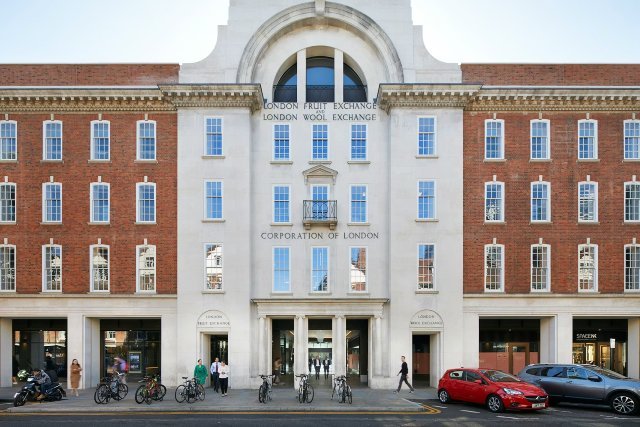
The London Fruit and Wool Exchange stands as a powerful symbol of London’s long-standing role as a global trading hub. Located in the heart of the City of London, this historic institution reflects how commerce, architecture, and economic priorities evolved over centuries. From its origins supporting agricultural and textile trade to its modern reinvention, the London Fruit and Wool Exchange tells a compelling story of adaptation and resilience.
- What Is the London Fruit and Wool Exchange?
- The Historical Context of the London Fruit and Wool Exchange
- The Location and Architectural Presence
- How the London Fruit and Wool Exchange Operated
- Evolution and Decline of Traditional Commodity Exchanges
- The London Fruit and Wool Exchange Today
- The Role of the Exchange in London’s Economic Story
- Common Questions About the London Fruit and Wool Exchange
- A Real-World Historical Scenario
- Conclusion: The Enduring Legacy of the London Fruit and Wool Exchange
In its early years, the London Fruit and Wool Exchange played a vital role in organizing trade for two of Britain’s most important commodities. Over time, shifts in global markets, transportation, and finance reshaped its function, but its significance within London’s commercial history remains intact. This article offers a detailed, SEO-optimized exploration of the London Fruit and Wool Exchange, tracing its history, purpose, architectural character, and lasting relevance.
What Is the London Fruit and Wool Exchange?
The London Fruit and Wool Exchange was established as a dedicated trading center for merchants dealing in fruit imports and wool, two commodities that were central to Britain’s economic strength. Situated near Bishopsgate, the Exchange provided a structured marketplace where buyers and sellers could negotiate prices, manage supply, and formalize contracts.
At a time when London was emerging as the commercial capital of the world, specialized exchanges like this one helped bring order and efficiency to increasingly complex trade networks. The London Fruit and Wool Exchange was not merely a building but a system that supported trust, transparency, and scale in commerce.
Its name reflects the dual importance of agricultural imports and the wool trade, both of which underpinned Britain’s domestic industries and export economy.
The Historical Context of the London Fruit and Wool Exchange
London as a Global Trading Power
To understand the importance of the London Fruit and Wool Exchange, it is essential to consider London’s role during the height of British trade expansion. By the late 19th and early 20th centuries, London handled a significant share of the world’s commodity trading.
According to historical records from the Bank of England, Britain was responsible for over 30 percent of global trade finance during this period. Exchanges like the London Fruit and Wool Exchange enabled the city to manage vast quantities of goods flowing in from across the British Empire and beyond.
Why Fruit and Wool Mattered
Wool was one of Britain’s oldest and most valuable commodities. It supported textile manufacturing, employment, and exports for centuries. Fruit, on the other hand, became increasingly important as global shipping improved and consumer demand for imported produce grew.
The London Fruit and Wool Exchange brought these trades together under one institutional roof, allowing merchants to operate efficiently in a centralized environment.
The Location and Architectural Presence
Bishopsgate and the Commercial Heart of London
The London Fruit and Wool Exchange was strategically located near Bishopsgate, an area long associated with commerce, finance, and trade. Proximity to transport links, warehouses, and other exchanges made this location ideal for merchants.
Bishopsgate’s evolution mirrors that of the Exchange itself. What began as a trading district gradually transformed into a financial and professional services center, especially in the late 20th century.
Architectural Character of the Exchange
Architecturally, the London Fruit and Wool Exchange reflects the robust, practical design principles of commercial buildings from its era. Solid construction, spacious interiors, and flexible floor plans allowed it to accommodate trading floors, offices, and storage-related functions.
Historic England notes that many City of London trading buildings were designed with adaptability in mind, a factor that later enabled their reuse as offices rather than demolition.
How the London Fruit and Wool Exchange Operated
Daily Trading Activity
In its operational years, the London Fruit and Wool Exchange functioned as a meeting place for brokers, importers, exporters, and wholesalers. Prices were negotiated face-to-face, contracts were agreed upon verbally or in writing, and market intelligence was exchanged in real time.
This physical proximity fostered trust and rapid decision-making, which were essential in volatile commodity markets. Before digital trading platforms, exchanges like this were the nerve centers of commerce.
Regulation and Market Stability
The Exchange also helped standardize trading practices. Agreed weights, grades, and pricing conventions reduced disputes and increased confidence among participants.
Economic historians frequently point out that such institutions were early forms of market regulation, contributing to London’s reputation as a reliable place to do business.
Evolution and Decline of Traditional Commodity Exchanges
Changing Trade Dynamics
By the mid-20th century, the role of physical commodity exchanges began to change. Improvements in telecommunications, container shipping, and global logistics reduced the need for centralized, in-person trading.
The London Fruit and Wool Exchange, like many similar institutions, saw its original purpose gradually diminish as trading moved toward digital platforms and international markets diversified.
Transition to New Uses
Rather than becoming obsolete, the building associated with the London Fruit and Wool Exchange adapted to new economic realities. As London’s economy shifted toward finance, insurance, and professional services, former trading buildings found new life as office spaces.
This transition reflects a broader pattern in the City of London, where historic commercial structures are repurposed to meet contemporary needs.
The London Fruit and Wool Exchange Today
Modern Identity and Use
Today, the London Fruit and Wool Exchange is best known as a commercial office building rather than an active trading floor. It houses modern businesses while retaining its historic name, preserving a link to London’s trading heritage.
This blending of old and new is a defining feature of the City. Buildings carry centuries of history while supporting 21st-century economic activity.
Cultural and Historical Significance
Although no longer functioning as a commodity exchange, the London Fruit and Wool Exchange remains significant as a historical reference point. It reminds us how physical spaces once shaped global trade long before algorithms and digital screens took over.
Institutions such as the Museum of London and the London Metropolitan Archives document the importance of such exchanges in shaping the city’s identity.
The Role of the Exchange in London’s Economic Story
A Case Study in Adaptation
The London Fruit and Wool Exchange serves as a case study in economic adaptation. Its transformation mirrors London’s shift from an industrial and trading economy to a service-driven global financial center.
Few cities have managed this transition as successfully as London, and institutions like this Exchange played a foundational role in that journey.
Lessons for Modern Urban Development
Urban planners and historians often cite the reuse of historic commercial buildings as a sustainable development strategy. Reusing structures like the London Fruit and Wool Exchange reduces environmental impact while preserving cultural heritage.
Research from Historic England shows that adaptive reuse can significantly lower carbon emissions compared to demolition and new construction.
Common Questions About the London Fruit and Wool Exchange
Is the London Fruit and Wool Exchange still an active exchange?
No, it no longer operates as a commodity exchange. Today, it functions primarily as an office building while retaining its historic name.
Why was fruit traded alongside wool?
Both fruit and wool were high-volume, economically important commodities. Grouping them within one exchange improved efficiency and centralized related trading activities.
Where is the London Fruit and Wool Exchange located?
It is located in the City of London near Bishopsgate, an area historically associated with commerce and trade.
A Real-World Historical Scenario
Imagine a wool merchant in the early 1900s arriving at the London Fruit and Wool Exchange. Around him, brokers discuss prices influenced by shipments from Australia, demand from textile mills, and changing tariffs.
In nearby offices, fruit importers negotiate deals for produce arriving from the Mediterranean. This daily interaction illustrates how the Exchange acted as a living marketplace connecting global supply chains to local decision-making.
Conclusion: The Enduring Legacy of the London Fruit and Wool Exchange
The London Fruit and Wool Exchange represents far more than a former marketplace. It embodies London’s evolution as a global trading power and its ability to adapt to changing economic realities.
From facilitating the trade of essential commodities to serving modern businesses within its historic walls, the Exchange continues to play a role in the city’s story. Its legacy reminds us that today’s financial systems are built upon centuries of physical trade, personal negotiation, and institutional trust.
For anyone interested in London’s commercial heritage, the London Fruit and Wool Exchange offers a fascinating window into how trade shaped the city and how history continues to influence its modern identity.