


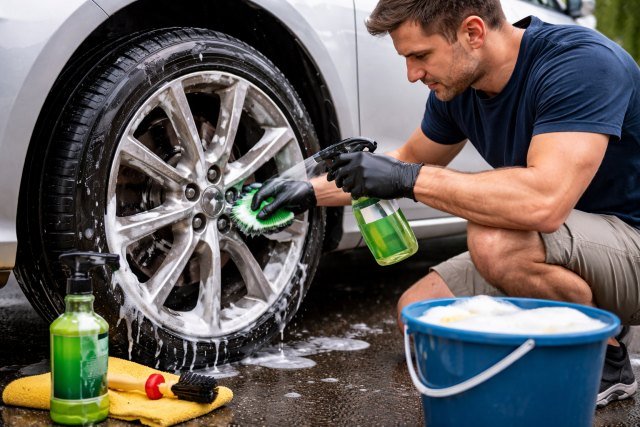
Alloy wheel cleaner is one of those detailing essentials that quietly does the heavy lifting. Your rims sit closest to road grime, tar, salt, and the biggest enemy of all — brake dust. Even if your paint looks freshly washed, dull or stained wheels can instantly make the whole car look neglected. The good news? With the right alloy wheel cleaner and the right method, you can restore factory-like shine, protect the finish, and keep cleaning sessions quick and stress-free.
- Why Alloy Wheels Get Dirty So Fast
- What Is an Alloy Wheel Cleaner
- Types of Alloy Wheel Cleaner
- How to Choose the Best Alloy Wheel Cleaner for Your Finish
- The Right Way to Use an Alloy Wheel Cleaner (Step-by-Step)
- How to Remove Stubborn Brake Dust That Won’t Budge
- Common Mistakes That Ruin Alloy Wheels
- How Often Should You Use an Alloy Wheel Cleaner?
- Wheel Protection: The Secret to Easier Cleaning
- Are Alloy Wheel Cleaners Safe?
- DIY vs Store-Bought Alloy Wheel Cleaner: What Works Better?
- Real-World Scenario: Fixing Neglected Wheels Without Damage
- Alloy Wheel Cleaner FAQs
- Conclusion: The Best Alloy Wheel Cleaner Strategy for Long-Term Shine
In this complete guide, you’ll learn how alloy wheel cleaners work, which formulas are safest for different finishes, how to remove stubborn brake dust without damaging clear coat, and how to keep wheels cleaner for longer.
Why Alloy Wheels Get Dirty So Fast
Alloy wheels face constant exposure to contaminants. Most of what you see on wheels isn’t just “dirt.” It’s often brake dust, which contains fine particles produced by friction between brake pads and rotors.
Brake dust is especially problematic because it can embed into the wheel’s clear coat and oxidize over time. Studies and environmental agencies increasingly highlight non-exhaust emissions — like brake and tire wear — as a major contributor to traffic-related particulate pollution. Some research estimates that non-exhaust sources can account for a very large share of total traffic-related PM in certain environments.
From a wheel-care standpoint, this matters because brake dust:
- Bonds aggressively to surfaces (especially when hot).
- Can stain clear coat if left uncleaned.
- Accelerates corrosion in harsh weather or salty climates.
- Can create pitting on polished or bare metal if neglected.
What Is an Alloy Wheel Cleaner
An alloy wheel cleaner is a specialized chemical formulation designed to dissolve and lift brake dust, road grime, oil films, tar, and mineral deposits from alloy wheel surfaces — without damaging the wheel finish.
Unlike general car shampoo, wheel cleaners contain targeted ingredients such as:
- Surfactants for grime emulsification
- Chelating agents to bind metal particles
- Iron-reactive ingredients that break down brake dust
- Solvents for tar and oily residues
The best alloy wheel cleaner works quickly, rinses clean, and stays safe across multiple wheel finishes when used properly.
Types of Alloy Wheel Cleaner
Not all wheel cleaners are equal — and the “best” depends on wheel finish, level of contamination, and how often you clean.
1) pH-Neutral Alloy Wheel Cleaner (Safest Everyday Option)
A pH-neutral alloy wheel cleaner is the go-to for routine cleaning. It’s safe for:
- Clear-coated alloys
- Painted wheels
- Powder-coated rims
- Most factory finishes
This type relies on surfactants and gentle chemistry to remove grime without harsh reactions. It’s ideal when wheels are maintained regularly.
Best for: weekly or biweekly washes, new wheels, ceramic-coated wheels
Trade-off: may need light brushing for heavy buildup
Many detailing sources recommend non-acid, pH-balanced formulations for sensitive finishes, since they reduce the risk of etching or staining.
2) Iron Fallout / “Color-Changing” Alloy Wheel Cleaner (Brake Dust Killer)
These are the famous “turns purple” cleaners. They use reactive chemistry to dissolve iron particles found in brake dust.
If your wheels feel rough even after washing, or you see speckled staining, you likely need an iron remover. This is especially useful for:
- European brake pads (often produce heavier dust)
- Performance vehicles
- Wheels that haven’t been deep cleaned in months
Best for: stubborn brake dust, decontamination washes
Trade-off: smell can be unpleasant; needs proper dwell time
Authoritative sources emphasize that brake dust contains metallic particles and can be difficult to remove once bonded.
3) Acid-Based Wheel Cleaner (Fast, Powerful, Highest Risk)
Acid wheel cleaners are designed for severe buildup — often on neglected wheels or commercial fleet vehicles. They’re effective because they dissolve mineral deposits and brake residue quickly.
However, acids can:
- Damage uncoated or polished aluminum
- Etch clear coat if misused
- Stain chrome and delicate finishes
- Create permanent hazing on improperly finished wheels
Most consumer and detailing guidance recommends reserving acids for extreme cases and only on compatible finishes.
4) Alkaline / Heavy-Duty Wheel Cleaner (Strong Degreasing)
Alkaline wheel cleaners remove oily grime and heavy traffic film well. They’re effective but can be harsh at high concentrations and may dull certain finishes if abused.
Professional detailers often dilute alkaline products based on condition and finish.
How to Choose the Best Alloy Wheel Cleaner for Your Finish
Wheels aren’t “one material.” Most alloys today are clear-coated. Others may be polished, anodized, or bare metal.
Here’s the simplest rule that prevents 90% of damage:
If you’re not sure what finish you have, use a pH-neutral alloy wheel cleaner first.
Clear-Coated / Painted Alloy Wheels
Choose pH-neutral or iron-reactive cleaners. These finishes are durable but still vulnerable to etching or staining if harsh chemicals sit too long.
Polished or Bare Aluminum
Avoid acids and aggressive alkalines. These wheels are more chemically sensitive and can haze easily.
Chrome Wheels
pH-neutral is safest. Avoid strong acids unless explicitly labeled safe for chrome.
Matte or Satin Finishes
Avoid anything that leaves gloss enhancers or wax residue. Stick with gentle cleaners and soft brushes.
The Right Way to Use an Alloy Wheel Cleaner (Step-by-Step)
The biggest mistake people make is using wheel cleaner on hot wheels or in direct sunlight. That’s how staining happens.
Step 1: Work on Cool Wheels
Always clean wheels when they’re cool to the touch. Hot wheels cause cleaners to evaporate quickly and bond residue.
Step 2: Rinse Thoroughly
A strong rinse removes loose grit and reduces scratching risk when brushing.
Step 3: Spray Alloy Wheel Cleaner Evenly
Coat the face, spokes, lug area, and barrel (inner rim) if accessible.
Step 4: Let It Dwell (But Don’t Let It Dry)
Most cleaners need 30 seconds to 2 minutes. Iron removers often need longer. Follow product instructions.
Step 5: Agitate With a Soft Wheel Brush
Use a soft brush for spokes and a long barrel brush for inner wheels. Use a separate brush for tires, since tire grime is much harsher.
Step 6: Rinse Thoroughly Again
Wheel cleaner residue should never be left behind.
Step 7: Dry With a Microfiber Towel
Drying prevents water spotting and highlights remaining contamination.
How to Remove Stubborn Brake Dust That Won’t Budge
If your wheels still look dirty after cleaning, you’re likely dealing with bonded contamination.
Try this process:
- Use an iron-reactive alloy wheel cleaner and allow full dwell time.
- Lightly agitate with a soft brush.
- Rinse thoroughly.
- If contamination remains, consider a clay mitt specifically designed for wheels.
- Protect with a wheel sealant or ceramic coating afterward.
Brake dust is often iron-rich, and bonded iron is one reason wheels develop tiny rust-colored spots and embedded grit.
Common Mistakes That Ruin Alloy Wheels
Even the best alloy wheel cleaner can’t save you if technique is wrong.
Mistake 1: Cleaning Hot Wheels
This can bake chemicals into clear coat, leaving streaks or stains.
Mistake 2: Using Household Cleaners
Degreasers and harsh detergents can strip protection and dull finishes.
Mistake 3: Using the Same Sponge on Paint and Wheels
Brake dust contains abrasive particles that can scratch paint badly.
Mistake 4: Letting Cleaner Dry on the Wheel
This can lead to spotting or chemical staining.
Mistake 5: Using Abrasive Brushes
Cheap stiff brushes can permanently swirl or haze glossy wheels.
How Often Should You Use an Alloy Wheel Cleaner?
It depends on your driving habits and brake pad type. But here’s a practical guide:
- City driving / heavy braking: clean weekly
- Highway driving: every 1–2 weeks
- Performance pads: weekly
- Ceramic-coated wheels: every 2–3 weeks (light cleaning)
The key is consistent maintenance. Brake dust becomes harder to remove the longer it sits and oxidizes.
Wheel Protection: The Secret to Easier Cleaning
The best way to reduce wheel-cleaning time isn’t stronger cleaner — it’s protection.
Wheel Sealants
These create a sacrificial layer that makes brake dust rinse off more easily.
Ceramic Coatings
Ceramic wheel coatings are more durable, heat-resistant, and chemically resistant. They can significantly reduce how strongly brake dust bonds.
With protection applied, you often need only a gentle alloy wheel cleaner and a quick rinse.
Are Alloy Wheel Cleaners Safe?
Wheel cleaners are generally safe when used correctly, but they are still chemicals and deserve care.
Environmental agencies like the California Air Resources Board and the U.S. EPA discuss how brake and tire wear contribute to particulate matter pollution and why non-exhaust emissions are increasingly important.
Separately, studies have also raised concerns that brake dust particles can be highly reactive and potentially harmful in lab settings, reinforcing the importance of avoiding inhalation of dust during cleaning.
Best Practices
Wear gloves when using strong cleaners. Avoid spraying into wind. Rinse runoff properly and never dump concentrated product into drains.
DIY vs Store-Bought Alloy Wheel Cleaner: What Works Better?
DIY solutions like dish soap or vinegar are often suggested online, but they typically fall short.
- Dish soap can strip protection and doesn’t dissolve iron.
- Vinegar is acidic and can haze polished metal or weaken protective coatings.
- Baking soda is abrasive and can dull clear coat.
A dedicated alloy wheel cleaner is engineered for wheel contaminants — especially brake dust — making it more effective and safer when chosen correctly.
Real-World Scenario: Fixing Neglected Wheels Without Damage
Imagine a car that hasn’t had its wheels cleaned properly in six months. The owner notices:
- brown specks near the spokes
- black buildup around lug nuts
- rough texture even after washing
A smart correction process would be:
- Start with pH-neutral cleaner to remove loose grime
- Move to iron-reactive alloy wheel cleaner for embedded brake dust
- Use gentle brushing
- Finish with a protective sealant or ceramic spray
This avoids the common mistake of jumping straight to acids, which could etch clear coat and permanently haze the finish.
Alloy Wheel Cleaner FAQs
What is the best alloy wheel cleaner for brake dust?
The best alloy wheel cleaner for brake dust is an iron-reactive, color-changing cleaner because it dissolves iron particles and removes bonded contamination more effectively than standard soap.
Can alloy wheel cleaner damage rims?
Yes — especially acid-based or overly strong alkaline cleaners. Damage usually happens when cleaners are used on hot wheels, left to dry, or applied to sensitive finishes like polished aluminum.
Should I use acid wheel cleaner on alloy wheels?
Only if the wheel finish is compatible and contamination is extreme. For most users, a pH-neutral or iron-reactive alloy wheel cleaner is safer and effective for routine cleaning.
How long should alloy wheel cleaner sit?
Most formulas should dwell 30 seconds to 2 minutes, while iron removers may need slightly longer. Never let it dry on the surface.
Can I use alloy wheel cleaner on tires?
Some wheel cleaners are safe for tires, but many are not optimized for tire browning. Tire-specific cleaners often work better and reduce the risk of streaking on the wheel finish.
Conclusion: The Best Alloy Wheel Cleaner Strategy for Long-Term Shine
A great alloy wheel cleaner doesn’t just make rims look good — it protects the finish, prevents staining, and keeps your wheels easier to clean over time. For most drivers, the safest and smartest approach is to use a pH-neutral alloy wheel cleaner regularly, then bring in an iron-reactive formula when brake dust becomes stubborn or bonded. Acid cleaners can be effective, but they should be treated like a last resort because the risk to your finish is higher.
If you want consistently spotless, shiny rims, the real secret is this: clean often, clean safely, and protect the surface afterward. That combination delivers the best results with the least effort — every single wash.