


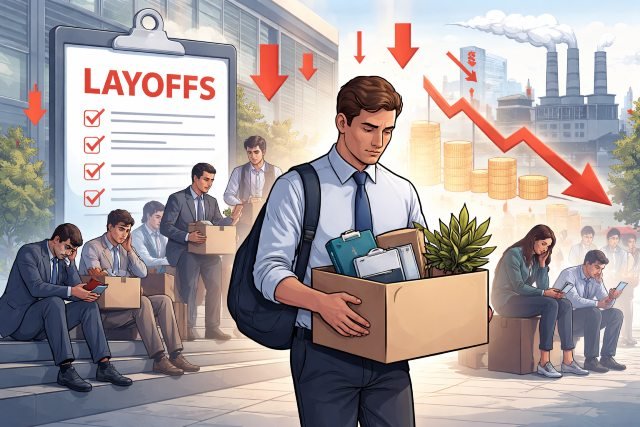
Layoffs are more than a headline — they’re a life event for employees and a signal of broader economic shifts. Whether driven by recession fears, cost-cutting, automation, or changing consumer demand, layoffs affect household stability, workplace morale, local communities, and national growth.
- What Are Layoffs?
- Why Do Companies Lay Off Employees?
- Types of Layoffs Employees Should Know
- Layoffs and Employees: The Immediate Impact
- Layoffs and Job Market Reality: What Happens After Job Loss
- How Layoffs Affect the Economy
- Do Layoffs Always Mean the Economy Is in Trouble?
- Common Questions About Layoffs
- Actionable Tips for Employees Facing Layoffs
- Case Scenario: How Layoffs Create Two Different Outcomes
- How Employers Can Handle Layoffs More Responsibly
- Conclusion: Layoffs Are a Workforce Reality — But Not the End
If you’ve ever wondered why layoffs happen even when companies are profitable, how they ripple through the economy, or what you should do if you’re impacted, you’re not alone. In today’s volatile labor market, understanding layoffs isn’t just useful — it’s essential.
And importantly: layoffs don’t always mean the economy is collapsing. In many cases, they reflect a restructuring of work, a shift in business models, or a reallocation of labor to new industries. The key is knowing what layoffs mean for you, and how they shape the bigger picture.
What Are Layoffs?
Layoffs are employer-initiated job terminations that occur when a company reduces its workforce due to business reasons such as cost reduction, restructuring, decreased demand, or automation. Unlike firing, layoffs typically do not reflect employee performance.
This definition often appears in featured snippets because it answers the core question clearly — so keep it near the top of your article and use it as your anchor.
Why Do Companies Lay Off Employees?
Layoffs happen for many reasons, and the most common ones don’t always reflect failure. Sometimes they reflect change.
1. Economic Slowdowns and Recession Risk
When sales drop or forecasts weaken, companies reduce expenses quickly — often through workforce cuts. Layoffs become a “fast lever” to stabilize cash flow during uncertain demand cycles.
2. Corporate Restructuring
A company might eliminate departments, merge roles, or change strategy. This is especially common after mergers, acquisitions, or leadership changes. Even if the business is healthy, restructuring can create redundancy.
3. Automation and Technology Shifts
As AI tools and automation systems improve, some jobs shrink or change. In fact, recent reporting has shown layoffs explicitly tied to AI implementation, reflecting a bigger shift toward workforce redesign and efficiency initiatives.
4. Outsourcing and Global Labor Reallocation
To reduce labor costs, companies may move certain functions overseas or contract them out. While this may improve margins short-term, it can disrupt communities and contribute to wage polarization.
5. Investor and Profitability Pressure
In publicly traded companies, layoffs can be used to meet quarterly earnings targets. Even when revenue grows, leadership may reduce headcount to improve profitability ratios.
Types of Layoffs Employees Should Know
Not all layoffs work the same way, and understanding the type helps employees plan their next move.
Permanent Layoffs
These occur when positions are eliminated with no expectation of return. The employee is removed from payroll and benefits, usually eligible for unemployment assistance depending on location.
Temporary Layoffs
Also known as furloughs or short-term reductions. Workers may be brought back when demand improves, but timelines can be uncertain.
Mass Layoffs
These involve large-scale job cuts — often requiring formal notification under labor laws (such as WARN notice systems in the U.S.). Mass layoffs tend to affect regions significantly and can influence regional unemployment.
Layoffs and Employees: The Immediate Impact
When layoffs happen, the first effects are personal and practical.
1. Loss of Income and Financial Stability
The most obvious impact is income disruption. But the deeper issue is unpredictability. Rent, utilities, loan payments, school fees — everything becomes harder without steady income.
Even short job gaps can compound financial strain, especially in high-inflation environments where living costs don’t pause.
2. Benefits Disruption
Layoffs often affect health coverage, retirement contributions, and other benefits. Some employers offer severance packages or extended health benefits, but not all do.
3. Mental Health Stress
Layoffs can be emotionally destabilizing. For many people, work is connected to identity, routine, and social belonging. Losing that abruptly can trigger anxiety, depression, and reduced confidence.
It’s also common for employees to feel anger or betrayal — especially if layoffs follow “positive performance reviews” or “growth announcements.”
4. Career Setbacks (and Sometimes Career Redirection)
Some layoffs create a temporary delay in career progression. But others become turning points — launching workers into better roles, new industries, or entrepreneurship.
What matters most is how quickly an employee transitions from shock to strategy.
Layoffs and Job Market Reality: What Happens After Job Loss
One of the biggest questions employees have is: How long does it take to recover?
The honest answer depends on the economy, your industry, your location, and your skill alignment. Some labor markets remain resilient even during layoff cycles. For example, recent data has shown that jobless claims can remain historically low even when layoffs happen in pockets of the economy.
That’s why layoffs often happen alongside “healthy employment” headlines — because layoffs can be uneven, concentrated in specific industries like tech, media, manufacturing, retail, or logistics.
How Layoffs Affect the Economy
Layoffs don’t only impact workers. They influence the economy in ways that can ripple for months — or years.
1. Reduced Consumer Spending
When workers lose income, they spend less. That reduces demand for goods and services, which can lead to more business slowdowns — creating a cycle.
This is why layoffs can sometimes accelerate a downturn even if they started as a cost-cutting move.
2. Rising Unemployment (But Not Always Immediately)
Unemployment trends often lag layoffs. Some workers find jobs quickly, while others remain unemployed longer.
Global unemployment is tracked by institutions like the IMF and the World Bank, which provide ongoing data about labor market health across economies.
3. Pressure on Government and Social Systems
More layoffs can lead to:
- Increased unemployment benefit claims
- Greater reliance on social assistance
- Higher healthcare strain (when benefits disappear)
- Policy pressure for job creation and retraining
International labor organizations warn that labor market resilience can be tested by weak growth and structural shifts — especially in lower-income economies where safety nets are smaller.
4. Productivity and Business Reconfiguration
Layoffs can increase productivity per employee (at least on paper), but they can also reduce innovation, customer experience, and long-term growth. When remaining staff face higher workloads, burnout rises — and turnover may follow.
5. Wage Trends and Inequality
Layoffs can suppress wage growth in affected sectors by increasing competition for jobs. They can also widen inequality when high-skilled workers rebound quickly while others face long job searches and lower-quality employment.
OECD labor research highlights that even when employment remains resilient, uncertainty and slowdowns can weaken labor markets and wage recovery.
Do Layoffs Always Mean the Economy Is in Trouble?
Not necessarily.
Layoffs are often a micro-signal, not a full economic verdict. They can reflect:
- Industry changes (like tech rebalancing)
- Business restructuring
- Seasonal cycles
- Automation shifts
- Investor behavior
That said, widespread layoffs across multiple industries can indicate economic contraction — especially when paired with slowing job creation, rising unemployment, and declining business investment.
The more useful approach is this: watch patterns, not headlines. A wave of layoffs in one sector (e.g., tech) doesn’t equal an economy-wide collapse.
Common Questions About Layoffs
What should I do immediately after a layoff?
Start with three steps:
- Secure documents (termination letter, benefits paperwork, severance terms)
- File for unemployment if eligible
- Update your resume and LinkedIn within 48 hours to regain momentum
What is a severance package?
A severance package is compensation and benefits offered by an employer after layoffs. It may include pay for several weeks or months, extended health insurance, and career transition support.
Can layoffs happen even if the company is profitable?
Yes. Many layoffs happen to improve margins, satisfy investors, or restructure operations. Profitability does not always prevent layoffs.
Are layoffs the same as being fired?
No. Layoffs are not typically performance-related. Firings are generally tied to performance, behavior, or policy violations.
How long does it take to find a job after layoffs?
It depends on the market and your skills. Some workers find jobs within weeks, others may take months — especially during slow economic cycles.
Actionable Tips for Employees Facing Layoffs
Layoffs feel overwhelming, but there are smart actions that reduce damage and speed up recovery.
1. Treat the First Week Like Crisis Management
Before you overthink your career, stabilize your basics:
- Cut unnecessary spending
- Check emergency savings runway
- Contact creditors early if needed
- Understand your health coverage timeline
2. Negotiate Your Severance (Yes, You Often Can)
If you were laid off, ask:
- Can severance be extended?
- Can benefits continue longer?
- Can the company provide a reference letter?
- Can they cover training or certification?
Some companies won’t negotiate, but many will — especially if they want a smooth transition.
3. Build a “Fast Reemployment Plan”
A strong plan includes:
- 10 target companies
- 2–3 role types you qualify for
- A resume version for each role
- A networking goal (5 conversations/week)
- Proof-of-skill (portfolio, case studies, certifications)
4. Upskill Based on Market Demand
Don’t upskill randomly. Use layoffs as a pivot point. Focus on skills connected to resilient roles: data analysis, sales enablement, AI tool literacy, cybersecurity, cloud operations, healthcare support, skilled trades, and compliance.
Global labor trend reports emphasize that technology and economic shifts are reshaping job demand, making reskilling a central survival strategy — not a bonus.
Case Scenario: How Layoffs Create Two Different Outcomes
Imagine two employees laid off from the same company:
Employee A waits one month before job searching because they’re emotionally overwhelmed. They apply online without networking. They accept a lower-paying job after 5 months.
Employee B takes 48 hours to stabilize finances, then networks immediately. They revise their resume, reach out to former colleagues, and join industry communities. They land a role in 6 weeks — sometimes with higher pay.
The difference isn’t luck. It’s momentum. Layoffs create urgency, and urgency creates advantage when managed strategically.
How Employers Can Handle Layoffs More Responsibly
If you’re a manager, HR leader, or business owner, layoffs should be handled with integrity. Poorly handled layoffs damage brand trust, decrease productivity, and increase turnover among remaining staff.
Responsible layoffs include:
- Transparent communication
- Fair severance policies
- Career placement support
- Mental health resources
- Honest explanations about future direction
Even when layoffs are necessary, how you treat people becomes your company’s reputation.
Conclusion: Layoffs Are a Workforce Reality — But Not the End
Layoffs are disruptive, but they’re also a signal — about shifting industries, changing business priorities, and evolving economic conditions. For employees, layoffs can feel personal, even when they’re not. For the economy, layoffs can reduce consumer spending and raise unemployment, but they can also accelerate workforce transition into new sectors and emerging roles.
The best defense is preparation: build adaptable skills, strengthen networks, and understand your rights. If you’re facing layoffs today, remember this: job loss is an event, not your identity. With the right strategy, layoffs can become a pivot point toward something better — both professionally and financially.