

JR Geo is showing up more and more in conversations about modern geography learning and beginner-friendly geospatial tech. If you’ve seen the term and wondered whether it’s a kids’ geography program, a simplified GIS tool, or a broader “junior geospatial” concept — the honest answer is: it’s often used as an umbrella phrase.
- What Is JR Geo?
- Why JR Geo Matters More Than Ever
- How JR Geo Works (Simple Explanation)
- JR Geo vs GIS: What’s the Difference?
- JR Geo in the Classroom: What It Looks Like in Practice
- JR Geo for Parents: How to Know It’s High Quality
- JR Geo and Augmented Reality (AR): Hype or Helpful?
- The Bigger “Why”: Fixing Geo-Literacy Gaps
- JR Geo Use Cases Beyond Kids
- Actionable Tips: How to Get Started With JR Geo (Without Overthinking It)
- JR Geo Explained FAQ
- Conclusion: Why JR Geo Matters
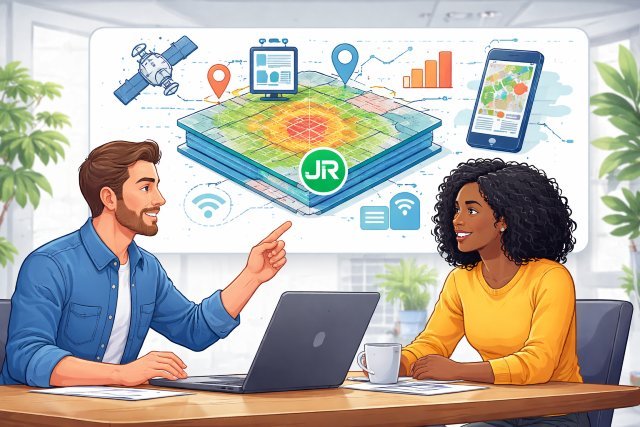
In practice, JR Geo typically refers to an interactive, beginner-first approach to geography and mapping that blends digital maps, real-time location data, and engaging learning experiences (often game-like, sometimes AR-enhanced). It’s designed to make geography feel less like memorizing capitals and more like understanding how the world works through place, patterns, and data.
This guide breaks down what JR Geo is, how it works behind the scenes, and why it matters for students, parents, educators, and even future-ready careers.
What Is JR Geo?
JR Geo is commonly used to describe a junior (beginner) geography + geospatial learning experience — typically interactive, digital-first, and built around maps, spatial thinking, and real-world context. In plain terms:
JR Geo is an interactive way to learn geography using digital maps, activities, and sometimes real-time data — built for beginners and young learners, but useful to anyone starting with geospatial concepts.
You’ll see JR Geo framed in two closely related ways:
- Junior geography learning (education-focused): map skills, continents/countries, climate, landforms, cultures, and environmental awareness — taught through interactive apps, quizzes, and visual tools.
- Beginner geospatial / simplified GIS (tech-focused): introducing location intelligence (layers, pins, routes, satellite imagery) without the steep learning curve of professional GIS platforms. This overlaps with “intro GIS,” “geospatial tools for beginners,” and “location-based learning.”
Both interpretations share the same core idea: learn geography by interacting with places — visually, contextually, and hands-on.
Why JR Geo Matters More Than Ever
Geography used to be taught as static facts. But the modern world runs on location.
Think about it:
- Food delivery and ride-hailing rely on live maps and routing
- Disaster response depends on real-time situational mapping
- Cities plan infrastructure using geospatial analysis
- Climate and environmental monitoring increasingly uses remote sensing and mapping models
This shift is reflected in market and research signals:
- The GIS (Geographic Information System) market continues to expand rapidly, showing how valuable location intelligence has become across industries. One industry report estimates the global GIS market at USD 9.4B in 2024 with strong growth ahead.
- Education research strongly argues that spatial thinking is foundational, not optional — supporting learning across math, science, history, and real-world problem solving.
- Immersive tools like AR can improve learning outcomes; a large meta-analysis reports AR programs producing learning outcomes that are on average ~0.6 standard deviations higher than comparison conditions.
How JR Geo Works (Simple Explanation)
Most JR Geo experiences — whether they look like an app, a classroom activity set, or a “junior GIS” — follow a similar learning loop:
1) Explore a place visually
A learner starts with an interactive map (political map, physical map, satellite view, or a simplified “world explorer” interface). This reduces friction because the brain can attach meaning to visuals faster than text-only facts.
2) Add context through layers
This is where JR Geo starts to feel “modern.” Instead of one flat map, learners interact with layers, such as:
- Countries and borders
- Rivers, mountains, deserts
- Climate zones
- Population density
- Land use (forests, cities, agriculture)
Layered thinking is the gateway skill to GIS — and it’s a key part of spatial learning frameworks.
3) Interact through challenges and tasks
Rather than “read and recall,” JR Geo often uses:
- quizzes (“Find the Andes”)
- missions (“Plan a route that avoids steep terrain”)
- mini simulations (“Where would flooding spread first?”)
- scenario prompts (“Why do big cities form near rivers?”)
This approach matches how people actually use geography: to make decisions.
4) Connect to real-world signals (optional but powerful)
Some JR Geo tools introduce beginner-friendly real-time elements, like:
- live weather overlays
- traffic patterns
- earthquake activity maps
- environmental change visuals (deforestation, ice melt)
Even when simplified, this teaches a crucial modern concept: maps can be data dashboards, not just pictures.
5) Reflect and explain (the learning “lock-in” step)
The strongest JR Geo experiences ask learners to explain patterns:
- “Why are deserts common near 30° latitude?”
- “Why do ports cluster in specific coastal zones?”
- “Why does this neighborhood flood more often?”
That reflection is what turns “map play” into spatial reasoning — a core goal highlighted in major education research on spatial thinking.
JR Geo vs GIS: What’s the Difference?
A fast way to understand it:
- GIS (professional): advanced tools for collecting, analyzing, and publishing spatial data for governments, companies, and scientists
- JR Geo (beginner/junior): simplified, learning-first experiences that teach the building blocks of GIS thinking (layers, patterns, location-based decisions)
You can think of JR Geo as “GIS concepts without the overwhelm.”
That’s valuable because GIS can be intimidating at first. JR Geo lowers the barrier while still teaching transferable skills.
JR Geo in the Classroom: What It Looks Like in Practice
Here are a few real-world classroom scenarios where JR Geo-style learning makes geography click.
Scenario A: “Why do people live where they live?”
Students explore a country and toggle layers for rivers, elevation, and population density. They quickly notice patterns: population clusters near water and flatter land. From there, discussion naturally shifts into economics, history, and infrastructure.
Scenario B: “Map-based climate understanding”
Students compare climate layers with vegetation layers and identify correlations. This turns climate from abstract definitions into visible systems.
Scenario C: “Disaster preparedness”
A class studies a coastal city and uses storm surge or flooding risk overlays (simplified). Students propose evacuation routes and safe zones — learning geography as decision-making.
This is exactly the kind of cross-curricular value spatial-thinking researchers emphasize: geography becomes a framework for reasoning across subjects.
JR Geo for Parents: How to Know It’s High Quality
Not all “JR Geo” content online is created equally. Look for these signals:
- It encourages “why” questions, not just “what/where”
- It uses maps that are clear and interactive (not cluttered)
- It connects geography to daily life (food, travel, climate, culture)
- It includes progress tracking or feedback (even simple)
- It avoids pure memorization as the only goal
A practical tip: if a tool helps a child explain patterns (“cities near rivers”) rather than just label items, it’s doing the right job.
JR Geo and Augmented Reality (AR): Hype or Helpful?
AR can be genuinely useful when it makes invisible geography visible — like visualizing:
- landform elevation
- tectonic plate boundaries
- storm systems moving over time
- how rivers carve valleys
And it’s not just marketing. Large-scale research reviews and meta-analyses have found meaningful learning benefits in AR-supported instruction under many conditions.
The key is design: AR works best when it supports a clear learning goal and doesn’t distract with gimmicks.
The Bigger “Why”: Fixing Geo-Literacy Gaps
JR Geo is also partly a response to a long-running problem: many people struggle with basic geographic literacy and global awareness.
For example, National Geographic has highlighted geo-literacy concerns for years, including findings from its well-known global survey work.
The takeaway isn’t “everyone is bad at geography.” It’s that traditional methods haven’t always built durable understanding, especially in a world where geography is dynamic, data-driven, and deeply connected to current events.
JR Geo-style learning tries to solve that by making geography:
- visual
- interactive
- connected to real situations
- rooted in spatial reasoning
JR Geo Use Cases Beyond Kids
Even if the “JR” implies youth, JR Geo ideas apply to beginners of all ages:
Career starters and upskilling
If you’re new to GIS, data analytics, urban planning, logistics, or environmental work, JR Geo-style tools can teach foundational map thinking without drowning you in software complexity.
Community and civic learning
Community groups can use simplified mapping approaches to understand issues like transit access, neighborhood flooding, or public health services.
Business decision-making
Many business questions are geographic questions in disguise:
- Where are customers concentrated?
- Which routes reduce cost?
- Which regions are higher risk?
JR Geo thinking trains people to ask and answer those questions with location in mind.
Actionable Tips: How to Get Started With JR Geo (Without Overthinking It)
Here’s a simple progression that works for most learners:
- Start with interactive political + physical maps (countries, landforms).
- Introduce layers: climate, population, elevation.
- Add small challenges: “find patterns” and “explain why.”
- If ready, explore a beginner mapping tool that lets you add pins and simple data.
- Tie it to life: travel planning, weather events, cultural foods, or news maps.
JR Geo Explained FAQ
What does JR Geo mean?
JR Geo usually refers to junior or beginner-focused geography learning that uses interactive maps, activities, and sometimes real-time data to teach map skills and spatial thinking.
Is JR Geo a real product or a general term?
Online, JR Geo is often used as a general label for interactive “junior geography” learning experiences and beginner-friendly geospatial tools, not always one single official platform.
How is JR Geo different from traditional geography learning?
Traditional geography often centers on memorization. JR Geo emphasizes interaction, map exploration, layers, and real-world context, which helps learners understand patterns and relationships (spatial reasoning).
Does JR Geo help with STEM skills?
Yes. JR Geo strengthens spatial thinking, which supports STEM learning, problem solving, and data interpretation across subjects.
Is AR necessary for JR Geo?
No. AR can improve learning when designed well, but JR Geo can be highly effective with standard interactive maps and layered visualization alone.
Conclusion: Why JR Geo Matters
JR Geo is more than a trend phrase — it represents a shift in how people learn geography in a world powered by maps, data, and location-aware decisions. By making geography interactive, layered, and connected to real life, JR Geo helps learners build geo-literacy and spatial thinking skills that traditional memorization-heavy methods often miss. Research-backed emphasis on spatial thinking in K–12 learning and the growing role of GIS across industries both point to the same conclusion: understanding place is a modern superpower.