

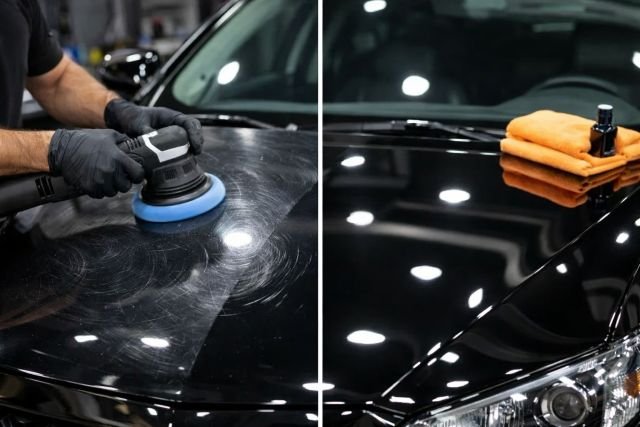
If you’ve searched for paint correction near me, you’re probably seeing the same frustrating signs in direct sun: circular swirl marks, random light scratches, or a cloudy haze that makes the paint look older than it should. The encouraging part is that most of these issues sit in the clear coat, which means professional paint correction can restore depth, clarity, and gloss without repainting.
- What is paint correction?
- Paint correction near me: what problems can it actually fix?
- Why swirls and haze come back after some “detail” jobs
- How a professional paint correction service works
- How fast is paint correction, really?
- What does paint correction cost near you?
- What results should you expect in real life?
- How to choose the best paint correction shop near you
- After paint correction, how do you keep it swirl-free?
- Paint correction FAQs
- Conclusion
Paint correction is not the same as a quick “shine-up.” It’s a controlled polishing process designed to permanently reduce or remove defects by leveling the clear coat just enough to make the surface reflect light evenly again. Because clear coat is thin, skilled technicians work carefully, often measuring paint and using the least aggressive approach that achieves a strong improvement. I-CAR notes that modern basecoat/clearcoat systems are typically measured in mils and that clear coat is often around roughly 2.0 mils in many systems, which helps explain why professionals take a conservative approach with aggressive methods.
This guide breaks down what paint correction is, what it fixes, how quickly you can expect results, what pricing usually depends on, and how to choose the right shop near you with confidence.
What is paint correction?
Paint correction is the process of refining automotive paint through machine polishing, and sometimes compounding, to reduce visible defects in the clear coat. The goal is to restore optical clarity so reflections look sharp instead of distorted. When a finish is properly corrected, the improvement isn’t just “glossier,” it looks cleaner, deeper, and more uniform across panels.
A helpful way to understand it is to imagine the paint surface as a landscape. Swirls and micro-scratches are tiny grooves that scatter light. Polishing uses abrasives to level that landscape so light reflects consistently, which is what creates that crisp, mirror-like look.
Because the process involves removing a small amount of clear coat, reputable detailers take film build seriously. PPG’s refinish guidance emphasizes staying within film build recommendations because excessive thickness can cause issues such as cracking, delamination, or reduced long-term durability. While paint correction isn’t the same as repainting, that principle still reinforces why professionals respect paint limits and avoid unnecessary aggressiveness.
Paint correction near me: what problems can it actually fix?
When people search paint correction near me, they’re usually trying to fix one of three things: swirls, scratches, or haze. The good news is that these are exactly what correction is meant to address, as long as the defects are within the clear coat.
Swirl marks are the most common. They often come from washing and drying habits that introduce micro-scratches over time. Many industry resources describe micro-marring and swirl marks as typical outcomes of improper washing, dirty wash media, or abrasive drying methods.
Light scratches are also often correctable. A practical rule is the fingernail test: if a scratch catches your fingernail, it may be too deep to remove safely, but it can often be reduced so it’s far less visible. If it doesn’t catch, there’s a strong chance it can be removed or nearly removed with the right pad and polish combination.
Haze is another common complaint, especially on darker colors. It can come from oxidation, previous poor polishing, chemical staining, or simply years of micro-scratching that dulls the finish. Correction restores clarity by refining the clear coat until reflections look clean again.
Water spots are a “sometimes.” If you’re dealing with mineral deposits that have etched into the clear coat, light etching may improve substantially. Deep etching can remain faint even after correction, but surrounding clarity improvements usually make it much less distracting.
Why swirls and haze come back after some “detail” jobs
A lot of drivers pay for a full detail, see a big improvement, and then feel like the defects returned within weeks. Often, they never left. Some services rely on glazes, heavy oils, or fillers that temporarily mask defects rather than removing them. Once those products wash away, the original swirls and haze become visible again.
True paint correction removes defects by leveling the clear coat and verifying the finish under strong lighting after wipe-down steps that reveal what’s real. If you want results that last, you’re looking for a shop that corrects paint, not one that simply enhances it for a short-term pop.
How a professional paint correction service works
If you’re trying to compare options for paint correction near me, it helps to know what a careful, professional workflow looks like. High-quality correction follows a consistent process because skipping steps leads to inconsistent results.
The vehicle is washed thoroughly and then decontaminated so bonded particles don’t interfere with polishing. Many shops use chemical decontamination to dissolve iron fallout and tar, then use mechanical decontamination if needed to ensure the surface is clean and smooth.
Next comes inspection under strong, directional lighting that makes swirls and haze obvious. This is where a technician can tell whether the paint is simply lightly marred or whether it needs more intensive work. Many reputable shops also check paint thickness, especially if a vehicle has unknown history, prior bodywork, or repainted panels. Since clear coat is limited, this step helps technicians work safely. I-CAR’s clearcoat thickness discussion is one reason film awareness is so important during correction.
A well-run correction typically includes a test spot. This is one of the best signs you’re dealing with a serious operator. The test spot identifies the least aggressive approach that achieves the desired result, which protects the paint and avoids unnecessary cutting.
Once the method is chosen, the shop performs either a one-step correction or a multi-step correction. A one-step typically uses a polishing compound or all-in-one polish that significantly improves gloss and removes a meaningful portion of defects without chasing perfection. A two-step generally starts with compounding for deeper correction and follows with a finer polish to refine clarity and remove haze from the cutting stage.
After polishing, the technician wipes panels to remove polishing oils and rechecks the finish under inspection lighting. This is critical because oils can make paint look better than it truly is. Once the finish is verified, the shop applies protection such as a sealant, wax, or ceramic coating.
Ceramic coating is popular because it adds a durable, hydrophobic layer that can make maintenance easier and help resist environmental contamination. Carwash.com explains ceramic coating technology in terms of enhanced gloss, slickness, and longevity compared with traditional protection approaches, which aligns with why many drivers pair correction with coating.
How fast is paint correction, really?
If your priority is speed, your results will largely depend on how damaged the paint is and how perfect you want it to be. Many one-step corrections can be completed in a single long appointment, particularly on well-maintained paint that mainly has light swirls. More intensive two-step corrections often take longer because the technician is performing multiple passes, changing pads and products, and verifying results panel by panel.
Vehicles with heavier defects or sensitive paint types can also increase time. Dark colors and softer paints may show haze more easily, requiring extra refinement. If a ceramic coating is added, the process can extend further due to prep requirements and curing considerations.
A good shop will describe a realistic schedule and explain what drives the timeline. Be cautious of “too fast” promises for heavy defects, because meaningful correction is labor.
What does paint correction cost near you?
Pricing varies by location, vehicle size, paint condition, and the level of correction. Instead of focusing only on a single number, it helps to understand what you’re paying for. Correction is primarily skilled labor combined with expensive consumables, lighting, and equipment.
A shop may charge less for light enhancement because it requires fewer passes and less time. A full two-step correction costs more because it involves more cutting, more refining, more verification, and more risk management. Larger vehicles, especially SUVs and trucks, also take longer simply because there’s more surface area.
Market context matters too. The professional detailing industry has grown substantially, and Grand View Research estimated the global car detailing services market at about $41.40 billion in 2024 with projected growth through 2030. Increased demand has led to more shops offering “paint correction,” but the quality can vary widely, making it even more important to compare process and proof rather than price alone.
If you’re comparing quotes from shops near you, look for clarity on what’s included. A trustworthy quote usually explains the level of correction, expected improvement, whether paint measurement is used when needed, and what protection is applied afterward.
What results should you expect in real life?
A daily driver that’s been through automated washes often has uniform swirls that look like spiderwebs under sun. In this case, a one-step correction can produce a dramatic transformation because the defects are shallow and consistent. If you want the best possible finish, a two-step will usually push clarity further, especially on darker paints.
A black SUV often looks worse than it is because black shows everything. When a shop performs a proper compound and polish, the paint can regain that deep “pool” effect people love. Some isolated deeper scratches may remain, but once the overall haze and swirling are gone, those remaining defects rarely dominate the look the way they did before.
Even new cars can benefit. Dealership washing can introduce swirls quickly, and some new vehicles arrive with light marring from transport prep. A light correction before applying long-term protection can be a smart move, because you lock in a cleaner finish from the start rather than sealing in defects.
How to choose the best paint correction shop near you
When you search paint correction near me, you’ll find mobile detailers, boutique studios, tint shops that also detail, and high-volume operations. The right choice depends on your goals, but there are a few ways to quickly identify who takes correction seriously.
Start with evidence. Look for before-and-after images taken under harsh lighting. Shade can hide defects, so the most convincing work is shown under direct sun or strong LEDs. Videos that show reflections moving across panels are often even better, because they’re harder to fake with fillers.
Next, pay attention to the language a shop uses. Professionals discuss a test spot and explain what level of correction is realistic. They talk about preservation of clear coat and how they verify results after wipe-down. They also explain what you should do after correction to keep it looking good, because they understand swirls usually come from maintenance, not bad luck.
Washing technique is especially important. Industry guidance regularly points to improper washing and contaminated wash media as common sources of micro-scratching and swirl marks. If a shop doesn’t educate you on maintenance or tries to rush you out without aftercare guidance, that can be a warning sign.
Finally, make sure expectations are aligned. Some owners want a strong improvement at a reasonable price, while others want to chase near-perfection. The best shops will ask what you want, inspect the paint, and recommend an approach that fits both your goals and your paint’s safety limits.
After paint correction, how do you keep it swirl-free?
The biggest secret to keeping corrected paint looking fresh is reducing friction and contamination during washing and drying. Most swirls start when dirt is rubbed across the surface. The best habit is to avoid touching paint until as much dirt as possible has been rinsed away, then wash with clean microfiber and safe technique.
Dry wiping is a common cause of micro-scratching. If the car is dusty, it’s better to rinse it than to “wipe it off.” That quick wipe is often what creates new swirls, especially on darker paint.
Protection choice also matters. Traditional sealants and waxes can provide a nice gloss and some defense, but they need reapplication. Ceramic coatings are popular because they can last longer and make cleaning easier by reducing how strongly contaminants bond to the surface. Carwash.com discusses ceramic coating benefits in terms of durability and performance characteristics that many vehicle owners notice in daily maintenance.
No protection makes paint scratch-proof, but the right protection combined with careful washing can slow down the return of swirls significantly.
Paint correction FAQs
Paint correction results are considered permanent for the defects that are removed, because the clear coat has been physically leveled. The finish can still be damaged again by improper washing, abrasive wiping, or automated washes, which is why maintenance matters.
Deep scratches may not fully disappear if they extend beyond the clear coat or require unsafe removal levels. In many cases, a professional can reduce their appearance dramatically while improving the surrounding clarity, which makes the scratch far less noticeable overall.
Paint correction is not something you can do endlessly because each correction removes a small amount of clear coat. Since clear coat is thin in many modern systems, professionals aim to use the least aggressive process needed to achieve the desired improvement and preserve long-term durability.
Ceramic coating and paint correction are different services that complement each other. Correction improves the paint by removing defects, and coating protects the corrected finish and can make maintenance easier, but it does not remove swirls by itself.
If you want to know whether a shop is using fillers, ask how they verify results after polishing. A wipe-down step and inspection under strong lighting are common ways to confirm the finish is truly corrected rather than temporarily masked.
Conclusion
If your car looks dull in sunlight, shows swirls under gas-station lights, or has light scratches that make the paint look neglected, paint correction near me is one of the fastest, most dramatic ways to restore a clean, glossy finish without repainting. The best results come from a shop that performs a test spot, verifies correction under proper lighting, and protects the finish afterward so the improvement lasts. Once corrected, your paint will only stay swirl-free if you maintain it with safer washing and drying habits, because most new defects come from friction during cleaning rather than from driving alone.