

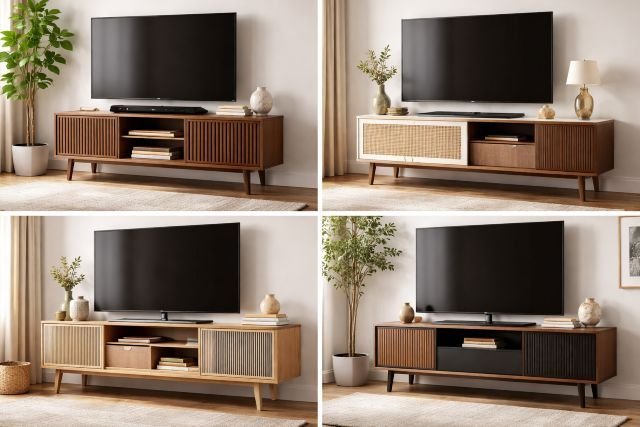
A mid century modern tv stand is supposed to make your living room feel calm, curated, and effortless. But one messy power strip, three dangling HDMI cables, and a streaming box spaghetti situation can ruin the whole vibe fast. If you’ve ever tried to “just tuck the cords behind it,” you already know cords always find a way to show.
- What “hide cords like magic” really means
- Why mid-century modern consoles are built for cleaner cable setups
- The cable-hiding features that actually work
- Top-rated mid century modern tv stand styles that hide cords like magic
- How to pick the right size so cords stay hidden
- How to set up cable management so it stays “magical” long-term
- Materials and finishes that hold up in real living rooms
- FAQs
- Conclusion
The good news is that the best mid century modern tv stand designs now come with cable management that feels borderline magical. Instead of a single hole in the back and a wish, the best consoles use hidden pass-through ports, rear channels, cord control spaces, and closed storage that swallows devices while still letting them breathe.
What “hide cords like magic” really means
When brands promise cable management, they can mean anything from “there’s a hole in the back” to “this is basically an invisible wiring system.” In real-world terms, a mid century modern tv stand hides cords well when it routes cables from devices to the TV without visible drape, keeps power strips and adapters out of sight, prevents tangles so you can swap gear without chaos, and maintains airflow so heat doesn’t build up in closed cabinets.
That airflow point matters. Overcrowded power strips and tightly bundled cords can create heat issues and unsafe setups, which is why many safety guides emphasize avoiding pinched cords, avoiding damaged cables, and using power strips correctly.
Why mid-century modern consoles are built for cleaner cable setups
Mid-century modern furniture is a natural match for cord control because the style favors long, low silhouettes, smooth front faces, and enclosed storage. Those design choices give you space to hide devices and cable slack while keeping the exterior visually quiet. The tradeoff is that the same clean lines also make mess stand out, so the right internal layout matters as much as the outside look.
The cable-hiding features that actually work
Multiple rear pass-through ports, not just one
A single cable hole is fine if you only have one device. Most rooms have several. Look for two or more rear pass-throughs placed where you’ll actually position devices, because separation makes routing cleaner and reduces tangles. Some product descriptions explicitly call out cable management cutouts, line holes, and cord wrap details, which typically indicates more than bare-minimum planning.
A recessed back panel or rear channel
This is the underrated “magic” feature. A recessed back creates a hidden lane where cords run vertically and horizontally without forcing the console away from the wall. It also reduces pinching and sharp bends, which safety guidance commonly warns against, especially where cords can be trapped or stressed.
Closed storage that still works with remotes and heat
Closed doors hide clutter, but they can create two annoyances: remote signals and heat. The best mid century modern tv stand options handle this by using slatted sections, breathable door designs, or mixed storage, so one area stays convenient for daily use while the rest stays hidden. If you plan to place a game console in a closed bay, prioritize ventilation and leave clearance behind the device so cables don’t press hard against the back panel.
Built-in power, only when it’s designed responsibly
Some consoles include built-in outlets. That convenience is real, but power management should be treated like any other electrical decision. Many safety-focused sources emphasize using properly rated power strips and avoiding risky setups such as overloading outlets or creating heat-trapping piles of adapters.
If you choose a stand with built-in power, you’ll get the best results by keeping adapters spaced out, avoiding crushing cords behind the unit, and leaving enough ventilation space so the outlet area doesn’t become a warm, closed pocket.
Adjustable shelves that match real device layouts
Cable hiding fails when devices don’t fit. If your console is squeezed in, cords bend sharply, push against the back, and create visible bulges or gaps. Adjustable shelving lets you align devices with pass-through ports, which keeps cables naturally routed instead of forced into awkward angles.
Top-rated mid century modern tv stand styles that hide cords like magic
Instead of naming a few random product models that may go out of stock, this section focuses on the top-performing styles that consistently deliver the cord-hiding results people want. You can use these as your shopping filters and match them to current inventory on your site.
The “clean-back console” for wall-mounted TVs
If your TV is wall-mounted, cords usually drop straight down. The best match is a long, low mid century modern tv stand with multiple rear pass-throughs near the center and a recessed lane behind the cabinets. Sliding doors help too, because they give access without swing clearance and encourage you to keep doors closed, which keeps cords and devices hidden most of the time.
In practice, this style creates a straight, invisible cable path from TV to console. Done well, you can stand across the room and see nothing except the console itself.
The “device vault” for multi-box households
If you have a cable box, a game console, a soundbar hub, a streaming device, maybe a router, the vault style is your best friend. It’s typically more compartmentalized, with dedicated spaces that each have their own rear ports. That compartment approach prevents the most common cable mess: everything piling into one chamber and turning into a knot.
Some retailers explicitly highlight built-in cable management systems and integrated power for this style, which can be a strong signal the interior layout is designed for modern device clutter.
The “hybrid slat” console for everyday convenience
This is a practical favorite because it balances concealment and usability. One bay stays more open or slatted for the device you use constantly, while another bay stays fully closed for the power strip, extra slack, and accessories. That small difference keeps your daily routine friction-free without sacrificing the clean look mid-century furniture is known for.
If you want a setup that still looks tidy after months of regular use, this is often the most forgiving configuration.
The floating mid-century wall console for ultra-minimal rooms
A floating console eliminates the under-legs clutter zone entirely. It can also make cable routing easier because your cord path can run down the wall behind the unit, then disappear into the storage space.
This option can look stunning, but it’s only “magic” if the install is solid and weight limits are respected. If your home has brick, uneven walls, or you’re not comfortable with mounting, a floor console with excellent cable routing will still deliver the same clean effect.
How to pick the right size so cords stay hidden
Even the best cable management features can’t fix a stand that’s too small inside. The easiest way to keep cords hidden is to ensure you have enough clearance for devices and for cable bends. HDMI and power cables need space to curve gently. If the back of your device is pressed tightly against the panel, cords will bulge, kink, or push the console away from the wall, which often exposes the very cables you’re trying to hide.
Depth matters more than people expect. If your gear is deep, a slightly deeper console can look the same from the front but behave far better behind the scenes.
How to set up cable management so it stays “magical” long-term
Start by giving cords a predictable path. Route video and audio cables through one set of pass-throughs and route power through a separate path when your console allows it. Separation reduces tangling and makes troubleshooting faster.
Next, place the power strip where it can breathe. A common mistake is stuffing a power strip into a tight corner behind hot devices. Safety resources warn against unsafe power strip use and emphasize proper handling to reduce risk.
Keep the power strip accessible too. If you can’t reach the switch or plugs without pulling the console out, you’ll eventually leave doors open or cords exposed, and the clean look won’t last.
Finally, avoid routing cords where people walk. Even if it looks tidy, cords across pathways can become trip hazards, and fall-prevention resources frequently highlight cords as a common risk.
Materials and finishes that hold up in real living rooms
Cable hiding is the headline, but material choices decide whether the console still looks good after years of use. Walnut tones are a classic mid-century signature and tend to hide minor wear better than glossy finishes. Wood veneers can be durable when well-made, but edges and heat exposure are where lower-quality builds show their age. Leg geometry matters too: tapered legs look light and iconic, but stability should be strong if you have kids, pets, or a heavy TV placed on top.
If sustainability is a priority, you can look for responsibly sourced wood certifications, including FSC, which is commonly used in furniture supply chains.
FAQs
What is a mid century modern tv stand?
A mid century modern tv stand is a low-profile media console inspired by mid-20th-century modern design. It typically features clean lines, tapered legs, warm wood tones, and storage that keeps devices and accessories visually contained.
How do I hide cords with a mid century modern tv stand?
Choose a stand with multiple rear pass-through ports and closed storage. Route cords through the back, keep cable slack inside a closed compartment, and place the power strip in a ventilated area so heat doesn’t build up.
Are TV stands with built-in power outlets safe?
They can be safe when the electrical components are properly rated and used responsibly. Avoid overloading, avoid crushing cords behind the unit, and keep power components ventilated rather than tightly enclosed.
What matters more for cord hiding: doors or cable ports?
Cable ports matter first because they create the route. Doors matter second because they conceal the devices and slack. The best results come from having both, plus enough internal space so cords aren’t forced into sharp bends.
Conclusion
A mid century modern tv stand that hides cords like magic isn’t a gimmick. It’s the result of smart design: multiple rear pass-throughs, a recessed cable lane, storage that closes cleanly, and enough internal space to keep cords relaxed instead of compressed.
If you want the cleanest setup with the least maintenance, prioritize a console that routes cables in separate paths, hides the power strip in a ventilated compartment, and gives you doors or drawers that stay closed without fighting your device layout. Do that, and your mid-century console will look like it was styled for a magazine, even on normal weekdays.