

Keeping a house tidy can feel impossible when clutter returns faster than you can clean it. The problem usually isn’t laziness or lack of discipline. In most cases, it’s the absence of a simple system. The bags and buckets approach offers a realistic way to manage everyday mess by creating easy pathways for items to move in, out, and around your home without friction.
- What the bags and buckets system really means
- Why clutter feels overwhelming and mentally draining
- How to start the bags and buckets system at home
- Bags and buckets in the entryway
- Using bags and buckets in the living room
- Applying the bags and buckets method in the kitchen
- Bags and buckets in bedrooms
- Bathrooms and small-space organization
- The daily reset that makes the system work
- Does the bags and buckets system actually reduce stress?
- Conclusion: why bags and buckets keeps your house tidy long term
Within the first few minutes of using bags and buckets, many people notice how much faster tidying becomes. Instead of stopping to decide where each item belongs, you rely on a few clear categories that handle most clutter automatically. This small shift reduces mental overload and turns cleaning into a short reset rather than an exhausting chore.
What the bags and buckets system really means
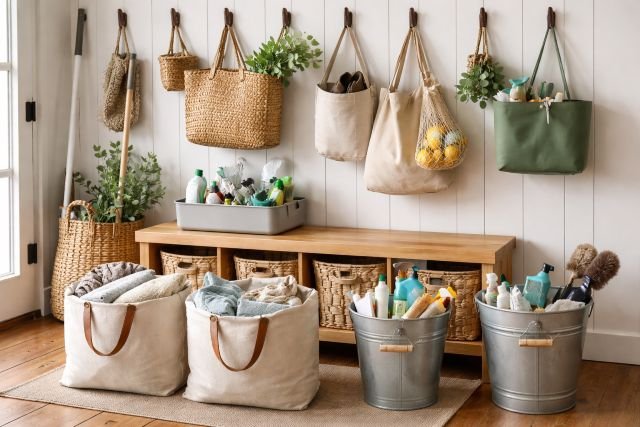
At its core, the bags and buckets system separates clutter into two functions. Bags are designed for items that need to leave a space or the house entirely. Buckets are meant for items that move around frequently and need an easy, temporary home. This distinction prevents piles from forming while keeping items accessible.
What makes this system effective is that it delays perfection. You are not required to organize everything immediately. Instead, you collect first, then decide later. This mirrors how our brains naturally work, especially when energy and time are limited.
Why clutter feels overwhelming and mentally draining
Clutter is not just visual noise. Studies in environmental psychology show that excessive household clutter is linked to lower life satisfaction and increased stress levels. Research from UCLA observing family homes found that participants who described their homes as cluttered often exhibited higher stress indicators, including elevated cortisol levels.
Cleaning itself also consumes significant time. According to survey data published by the American Cleaning Institute, Americans spend roughly six hours per week cleaning their homes, yet many still feel their spaces are never fully under control. When cleaning time doesn’t produce lasting results, frustration builds quickly.
The bags and buckets method helps because it reduces both visual clutter and decision fatigue. By limiting choices, the system makes tidying repeatable and sustainable.
How to start the bags and buckets system at home
Setting up bags and buckets does not require buying expensive containers or redesigning your home. The goal is to place simple collection tools where clutter naturally gathers. Most clutter follows predictable paths, such as from the front door to the kitchen counter or from bedrooms to shared living spaces.
Once you recognize these clutter routes, you can interrupt them. A bag placed near the entryway catches donations before they become permanent piles. A bucket in the living room gives toys or electronics a home that doesn’t require constant re-sorting.
The effectiveness comes from placement, not aesthetics.
Bags and buckets in the entryway
The entryway often acts as the control center of household clutter. Shoes, mail, bags, and daily essentials tend to collect here first. When unmanaged, this area becomes a visual signal of chaos.
Using the bags and buckets method in the entryway allows items to be processed immediately. A dedicated bag for donations encourages decluttering in real time. Another bag for errands or returns ensures items actually leave the house instead of being forgotten in closets. Buckets for keys, shoes, or daily carry items eliminate last-minute searching.
Because the entryway is a transitional space, it is one of the most impactful places to implement this system.
Using bags and buckets in the living room
Living rooms collect items that are used briefly and abandoned, such as remotes, chargers, toys, books, and hobby supplies. Without clear homes, these items spread across surfaces.
A bucket placed strategically in the living room acts as a reset button. Instead of organizing every item individually, everything goes into its category container. The room looks tidy again within minutes, even if the bucket itself is not perfectly arranged.
This approach works particularly well for families, as it allows shared spaces to stay functional without constant policing.
Applying the bags and buckets method in the kitchen
Kitchen clutter often appears in the form of paper, packaging, and items that don’t belong there. Countertops become holding zones because they are flat and visible.
Using a single bucket for incoming paper simplifies decision-making. Mail, receipts, and notes go into one place until they are processed during a short daily reset. Bags placed nearby handle trash and items that need to leave the house, preventing buildup.
This system reduces visual noise and restores the kitchen as a functional workspace rather than a storage surface.
Bags and buckets in bedrooms
Bedrooms often accumulate clothing that is worn but not dirty, along with personal items that lack designated storage. Chairs, floors, and nightstands quickly become cluttered.
A bucket specifically for in-between clothes replaces the infamous “clothes chair” and keeps garments contained. Small buckets or trays near the bed collect everyday personal items, preventing surfaces from overflowing.
By giving temporary items a clear home, the bedroom becomes easier to maintain and more restful.
Bathrooms and small-space organization
Bathrooms are particularly vulnerable to clutter because they contain many small items used daily. When these items lack simple storage, they scatter quickly.
Buckets in bathrooms can hold daily-use products or backup supplies, while a small bag for empty containers signals when restocking is needed. This eliminates mental tracking and streamlines shopping routines.
Even in tight spaces, the bags and buckets system works because it prioritizes access and containment over perfection.
The daily reset that makes the system work
The success of the bags and buckets method depends on a short, consistent reset routine. This reset usually takes about ten minutes and focuses on collecting, not organizing.
By walking through the home with a bag for misplaced items and another for trash, clutter is removed quickly. Items that belong elsewhere are returned, while bucketed items are left for later. Because the process is predictable, it becomes easier over time.
Consistency matters more than intensity. A small daily reset prevents the need for long cleaning sessions.
Does the bags and buckets system actually reduce stress?
Research suggests that reducing clutter can positively affect emotional well-being. Studies published in the Journal of Environmental Psychology have found links between cluttered environments and increased negative emotions in non-hoarding households. Additional analysis on household clutter and mental well-being supports the idea that visual order contributes to a calmer living environment.
While no system eliminates stress entirely, bags and buckets reduce the constant background pressure of unfinished tasks, making homes feel more manageable.
Conclusion: why bags and buckets keeps your house tidy long term
A tidy home is not built on motivation or perfection. It is built on systems that work even when energy is low. The bags and buckets method succeeds because it aligns with how people actually live, move, and drop items throughout the day.
By giving clutter simple paths and temporary homes, this system prevents buildup before it becomes overwhelming. Over time, your house becomes easier to reset, easier to maintain, and far less stressful to live in. Bags and buckets is not about hiding mess. It is about managing it intelligently, consistently, and realistically.