


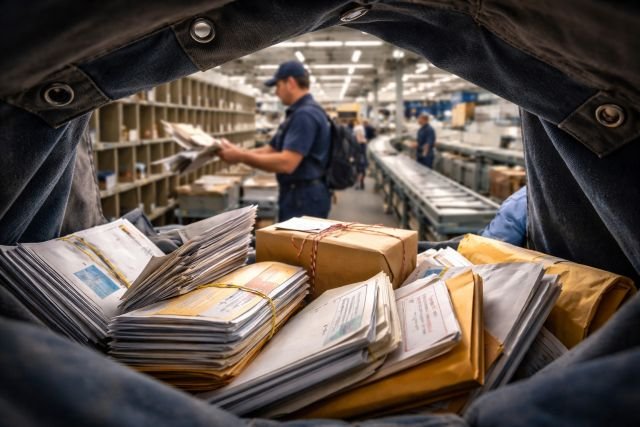
A bag of mail may look ordinary when it leaves your hands, but behind that simple container is one of the most complex logistics systems in the world. Every day, postal services process millions of letters and parcels, moving them across cities, states, and even countries with remarkable precision. From the moment a bag of mail is collected to the second it reaches the recipient, it passes through a carefully coordinated sequence of checks, scans, and transport stages.
- What a Bag of Mail Really Is in Modern Postal Systems
- Mail Pickup: The First Step Inside a Bag of Mail
- Initial Sorting: How Addresses Are Read and Verified
- Transportation: Moving a Bag of Mail Across Regions
- Destination Processing: Preparing Mail for Local Delivery
- The Last Mile: When the Bag of Mail Meets the Carrier
- Common Questions About What Happens Inside a Bag of Mail
- Real-World Example: A Cross-Country Letter
- How to Ensure Your Mail Moves Smoothly
- Conclusion: The Hidden Complexity Inside a Bag of Mail
Understanding how a bag of mail moves through the system helps explain delivery times, tracking updates, and the occasional delay. It also reveals why small details, such as address clarity or mailing time, can make a major difference. This article takes you inside the full journey of a bag of mail, showing exactly what happens from pickup to final delivery.
What a Bag of Mail Really Is in Modern Postal Systems
In postal operations, a bag of mail refers to a grouped collection of mailpieces that are transported together through different stages of processing. While the word “bag” suggests a sack, it actually represents a broader concept. A bag of mail can include containers, trays, tubs, or rolling units, all designed to keep items organized while moving through the network.
Each bag of mail is labeled to indicate its origin, destination, and mail class. These identifiers allow automated systems and postal workers to route mail efficiently. According to the United States Postal Service, containerization is a critical strategy that reduces handling errors and speeds up processing across facilities.
Mail Pickup: The First Step Inside a Bag of Mail
The journey begins when mail is collected from a mailbox, business location, post office lobby, or scheduled pickup. At this point, individual pieces are gathered and combined into a bag of mail based on their destination and service type. This step is known as induction, and it officially places mail into the postal system.
Timing matters significantly during pickup. Mail deposited after the final collection time usually waits until the next business day. For packages, acceptance scans often occur here, creating the first visible tracking update. Letters, however, may not receive individual scans even though they are moving efficiently through the system.
The USPS Office of Inspector General has noted that most early delays originate at this stage due to improper postage or unclear addressing. That insight highlights why preparation before mailing is just as important as what happens afterward.
Initial Sorting: How Addresses Are Read and Verified
Once the bag of mail arrives at a processing facility, it is opened and introduced into automated sorting equipment. High-speed optical character recognition technology scans addresses at incredible speeds, reading thousands of mailpieces per hour. Even handwritten envelopes are interpreted using advanced image processing and machine learning.
If the system cannot read an address, the item is flagged for manual review. Postal workers then verify the address and reintroduce the piece into the sorting stream. According to USPS data, automation successfully reads the vast majority of mail, which significantly reduces delivery time and labor costs.
This is also where mail is separated by class. First-Class Mail, Marketing Mail, Priority Mail, and parcels are routed differently based on service standards. Each category influences how quickly the bag of mail moves to the next stage.
Transportation: Moving a Bag of Mail Across Regions
After sorting, a bag of mail is dispatched for transportation. Depending on distance and urgency, mail may travel by truck, plane, or a combination of both. Long-distance mail often moves overnight to regional hubs, while local mail may stay within the same metro area.
Transportation contracts and routing strategies play a major role here. The USPS works with commercial airlines and freight carriers to move mail efficiently across the country. According to the Bureau of Transportation Statistics, mail transportation relies on time-sensitive logistics similar to express freight operations.
Weather conditions, mechanical issues, or high mail volume can slow this stage. When people see tracking updates that show mail “in transit” for extended periods, it usually means the bag of mail is moving between major facilities rather than sitting idle.
Destination Processing: Preparing Mail for Local Delivery
When a bag of mail reaches its destination region, it enters another processing facility closer to the final address. Here, mail is sorted again, this time down to specific post offices or carrier routes. This process is known as delivery point sequencing.
Advanced sorting machines arrange mail in the exact order a carrier will deliver it. This saves time and reduces handling on delivery day. The USPS reports that delivery point sequencing significantly improves efficiency and accuracy, especially in dense urban areas.
At this stage, address corrections may occur. If an address is outdated but forwarding information exists, the system automatically reroutes the item. If no forwarding is available, the mail may be returned to the sender.
The Last Mile: When the Bag of Mail Meets the Carrier
The final step in the journey of a bag of mail is last-mile delivery. The sorted mail arrives at a local delivery unit, where carriers load it into their vehicles or delivery bags. Parcels receive final scans such as “Out for Delivery,” while letters continue without individual tracking updates.
This is the most visible part of the process for recipients, but it is built on all the earlier steps working correctly. Delays here are often caused by staffing shortages, severe weather, or access issues at the delivery address.
Common Questions About What Happens Inside a Bag of Mail
Many people wonder whether mail sits untouched inside a bag for days. In reality, bags are opened and processed at every major stage. The bag itself is simply a transport unit, not a storage solution.
Another common question is why tracking sometimes appears to stop. This usually happens when the bag of mail is moving between facilities without intermediate scans. The mail is still in motion, even if updates are not visible.
People also ask whether handwritten mail moves slower than printed labels. While automation can read most handwriting, poorly written or low-contrast addresses are more likely to require manual intervention, which can add time.
Real-World Example: A Cross-Country Letter
Consider a letter mailed from New York to California. After pickup, it enters a bag of mail bound for a regional processing center. It is sorted overnight, flown across the country, processed again in a West Coast facility, and delivered locally within a few days. Each step is optimized to minimize handling while maintaining accuracy.
Despite traveling thousands of miles, the letter may only be physically handled a handful of times. This efficiency is why postal systems remain one of the most cost-effective logistics networks ever created.
How to Ensure Your Mail Moves Smoothly
Small actions can significantly improve how a bag of mail moves through the system. Clear addressing, proper postage, and mailing before cutoff times all reduce friction. Using standardized address formats recommended by USPS further increases the likelihood that automation will process your mail without delay.
For important items, choosing trackable services provides visibility and peace of mind. While letters may not show scans, parcels offer insight into where the bag of mail is at each major step.
Conclusion: The Hidden Complexity Inside a Bag of Mail
A bag of mail represents far more than a collection of letters and packages. It is a carefully managed unit moving through a sophisticated network of technology, transportation, and human expertise. From pickup to delivery, every stage is designed to balance speed, accuracy, and cost.
Understanding what happens inside a bag of mail helps set realistic expectations and empowers you to mail smarter. The next time you drop something in the mailbox, you’ll know the remarkable journey it’s about to begin.