

When people search for babybel cheese calories, they’re usually trying to answer one simple question: “Is this little cheese actually good for me, or am I just eating sneaky calories?” Babybel looks harmless because it’s small, wrapped, and marketed as a smart snack, but the nutrition story depends heavily on which variety you choose and how many you eat.
- Babybel cheese calories per mini wheel explained
- What babybel cheese calories mean for fullness and hunger
- Saturated fat and babybel cheese calories
- Sodium content and daily intake considerations
- Calcium and nutrient value per calorie
- Is babybel good for weight loss?
- How many babybel cheeses should you eat?
- Pairing babybel to make the calories work harder
- Frequently asked questions about babybel cheese calories
- Conclusion: understanding babybel cheese calories clearly
Babybel’s biggest advantage is portion control. Each mini wheel is a clearly defined serving, typically 20 grams, which makes calorie tracking easier than with block cheese or shredded cheese. However, calories alone don’t tell the full story. Fat content, protein, sodium, and satiety all matter when deciding whether Babybel fits into your diet.
This guide breaks down exactly what you’re eating when you unwrap a Babybel, how the calories are distributed, and how to use Babybel intelligently for weight loss, maintenance, or general health.
Babybel cheese calories per mini wheel explained
A standard Babybel mini wheel weighs about 20 grams, and that serving size stays consistent across most varieties. What changes is how many calories you get from fat, protein, or carbohydrates.
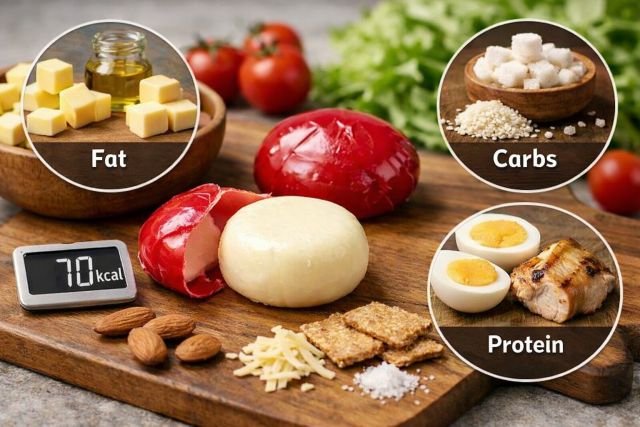
Babybel Original contains approximately 70 calories per mini wheel. Those calories come primarily from fat, with a moderate amount of protein. According to Babybel’s official nutrition label, one Original wheel provides around five grams of total fat, including about three and a half grams of saturated fat, along with four grams of protein and roughly 150 milligrams of sodium.
Babybel Reduced Fat, sometimes labeled as Babybel Light, contains about 50 calories per mini wheel. Even though it has fewer calories, it actually contains slightly more protein than the Original version. One Reduced Fat wheel delivers around three grams of total fat, two grams of saturated fat, five grams of protein, and about 150 milligrams of sodium.
Babybel Plant-Based also contains around 50 calories per mini wheel, but the calorie composition is very different. The plant-based version contains about three and a half grams of fat, roughly three grams of saturated fat, four grams of carbohydrates, and zero grams of protein. Sodium remains similar at about 150 milligrams per wheel.
The key takeaway here is that equal calories do not mean equal nutritional value. Two Babybel varieties can both contain 50 calories while behaving very differently in your body.
What babybel cheese calories mean for fullness and hunger
Calories matter, but satiety matters more. How long a snack keeps you full depends largely on protein, fat, and volume.
Babybel Original tends to feel satisfying because of its higher fat content. Fat slows digestion, which can help reduce hunger between meals. However, because the protein content is moderate rather than high, it may not keep you full for very long if eaten alone.
Babybel Reduced Fat often performs best for people focused on weight loss or calorie control. Even with fewer calories, it delivers more protein per calorie than the Original version. Protein has been consistently shown to increase satiety and reduce overall calorie intake later in the day, according to research published in the American Journal of Clinical Nutrition.
Babybel Plant-Based is the least filling for most people because it contains no protein. While it may fit vegan or dairy-free diets, it is more likely to leave you hungry unless paired with another protein source.
Saturated fat and babybel cheese calories
One of the most overlooked aspects of babybel cheese calories is saturated fat. Cheese is naturally high in saturated fat, and Babybel is no exception despite its small size.
Babybel Original contains about three and a half grams of saturated fat per wheel. Babybel Reduced Fat contains around two grams, while the Plant-Based version contains roughly three grams of saturated fat despite having fewer calories overall.
The American Heart Association goes even further, advising that saturated fat make up no more than six percent of total daily calories for optimal heart health.
This means that eating two or three Babybel Originals can quickly account for a significant portion of your daily saturated fat limit, even though the calorie count still looks modest.
Sodium content and daily intake considerations
All Babybel varieties contain roughly the same amount of sodium, which is about 150 milligrams per mini wheel.
While 150 milligrams doesn’t sound like much, sodium adds up quickly throughout the day. The FDA sets the daily sodium limit at 2,300 milligrams, and the American Heart Association recommends aiming closer to 1,500 milligrams for most adults.
If Babybel is an occasional snack, sodium is unlikely to be an issue. However, if you regularly eat cheese snacks, deli meats, packaged foods, and restaurant meals, Babybel can contribute to sodium overload without you noticing.
Calcium and nutrient value per calorie
One reason Babybel remains popular is that its calories are not empty. Each mini wheel contains about 140 milligrams of calcium, which equals roughly ten percent of the daily value.
The FDA daily value for calcium is 1,300 milligrams per day.
This makes Babybel a relatively nutrient-dense snack compared to many processed snack foods with similar calorie counts. You are getting calcium, protein in dairy versions, and fat-soluble vitamins naturally present in cheese.
Is babybel good for weight loss?
Babybel can fit into a weight-loss plan if portion control is respected. The biggest mistake people make is assuming that because one Babybel is small, multiple Babybels do not count.
For weight loss, Babybel Reduced Fat is typically the best option because it offers fewer calories with more protein, which improves satiety and reduces the likelihood of overeating later.
Babybel Original can still work, but it is easier to exceed saturated fat targets if you eat more than one or two wheels per day. Babybel Plant-Based works best when paired with protein-rich foods, especially for people who find themselves hungry shortly after eating it.
How many babybel cheeses should you eat?
In practical terms, one Babybel functions as a light snack that takes the edge off hunger. Two Babybels function more like a structured snack. Three or more Babybels begin to resemble a small meal in terms of calories, fat, and sodium.
Understanding this mental shift helps prevent accidental overeating, especially when Babybel is eaten straight from the fridge without much thought.
Pairing babybel to make the calories work harder
Babybel is most effective when paired with foods that add volume, fiber, or additional protein. Pairing a Babybel with fruit, vegetables, or whole grains slows digestion and improves satiety without dramatically increasing calories.
For the Plant-Based version in particular, pairing with a protein source is important to avoid hunger rebound. This small adjustment can turn Babybel from a snack that disappears quickly into one that actually supports appetite control.
Frequently asked questions about babybel cheese calories
A single Babybel cheese contains either 70 calories for the Original version or 50 calories for the Reduced Fat and Plant-Based versions, based on a 20-gram serving size.
Babybel can be a healthy snack when eaten in moderation because it provides calcium and protein in a portion-controlled format. However, saturated fat and sodium intake should be monitored if eaten frequently.
Babybel Reduced Fat and Babybel Plant-Based contain the fewest calories at approximately 50 calories per mini wheel.
Babybel Plant-Based contains zero grams of protein because it is made from plant-derived fats and starches rather than milk proteins.
Conclusion: understanding babybel cheese calories clearly
Understanding babybel cheese calories goes beyond reading the number on the wrapper. The type of Babybel you choose determines how filling it is, how much saturated fat you consume, and how well it fits into your overall nutrition goals.
Babybel Original delivers richer flavor at 70 calories per wheel but also higher saturated fat. Babybel Reduced Fat offers the most balanced calorie-to-protein ratio at 50 calories, making it the most weight-loss-friendly choice. Babybel Plant-Based also contains 50 calories but should be paired with protein for better satiety.
When eaten mindfully and paired intelligently, Babybel can absolutely fit into a healthy diet. The key is knowing exactly what you’re eating once the wax comes off.