


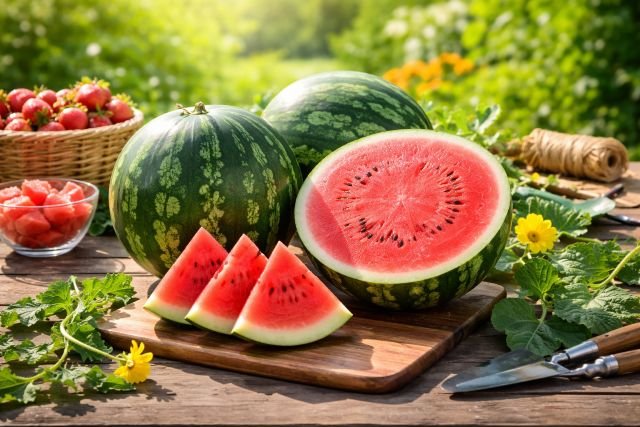
The sugar baby watermelon is one of the most popular small watermelon varieties in the world, prized for its rich sweetness, deep red flesh, and compact size. Unlike oversized picnic watermelons that demand long seasons and sprawling space, this classic icebox watermelon delivers full flavor in a manageable form, making it a favorite among home gardeners and fresh fruit lovers alike.
- What is a sugar baby watermelon?
- Sugar baby watermelon taste and texture
- Sugar baby watermelon nutrition and health benefits
- How to grow sugar baby watermelon successfully
- When and how to harvest sugar baby watermelon
- Common sugar baby watermelon problems and solutions
- Frequently asked questions about sugar baby watermelon
- Final thoughts on sugar baby watermelon
In this in-depth guide, you’ll learn exactly what makes sugar baby watermelon special, how it tastes compared to other varieties, its scientifically backed health benefits, and how to grow it successfully even if you have limited space. Whether you’re planting your first melon patch or simply want to understand why this variety remains so popular, this article covers everything you need to know.
What is a sugar baby watermelon?
A sugar baby watermelon is a small, round, seeded watermelon variety known for its dark green to nearly black rind and vivid red interior. It typically weighs between eight and ten pounds, which is why it’s often referred to as an “icebox watermelon,” meaning it fits easily into a standard refrigerator.
This variety has been grown for decades and is commonly classified as an open-pollinated or heirloom watermelon, depending on the seed source. Gardeners value it for its relatively short maturity window, often around 70 to 85 days, which makes it suitable for regions with shorter summers. According to Johnny’s Selected Seeds, sugar baby watermelon is known for reliable yields and consistent flavor, even in less-than-perfect growing conditions.
Because of its size, sugar baby watermelon is also popular among small households. Instead of cutting and storing half a massive melon, you can enjoy an entire fruit at peak ripeness without waste.
Sugar baby watermelon taste and texture
How does sugar baby watermelon taste?
The taste of sugar baby watermelon is often described as classically sweet, crisp, and refreshing. The sweetness is clean rather than overpowering, with a balanced flavor that reflects what many people think of as “traditional” watermelon taste.
The flesh is typically firm yet juicy when harvested at the right time. Compared to some modern hybrid varieties that emphasize extreme sugar content, sugar baby watermelon focuses on flavor balance. This makes it especially enjoyable when eaten fresh, chilled, or paired with savory foods like feta or mint.
According to Harvest to Table, sugar baby watermelons are known for dependable sweetness when grown in full sun and harvested at proper maturity, even in cooler climates.
Sugar baby watermelon vs other watermelon varieties
When compared to large seeded or seedless watermelons, sugar baby watermelon stands out for consistency rather than sheer size. Large melons can be very sweet, but they require more heat and time to develop flavor. Sugar baby watermelons often outperform larger varieties in home gardens where conditions aren’t perfect.
Another advantage is texture. Smaller fruits tend to ripen more evenly, reducing the risk of bland or watery sections inside the melon.
Sugar baby watermelon nutrition and health benefits
Hydration and low-calorie nutrition
Watermelon is composed of about 92 percent water, making it one of the most hydrating fruits available. The University of Massachusetts Extension notes that watermelon contributes meaningfully to daily fluid intake while remaining naturally low in calories.
This makes sugar baby watermelon an excellent option during hot weather or after physical activity, when hydration needs are higher.
Vitamins, antioxidants, and plant compounds
Sugar baby watermelon contains vitamin C, vitamin A in the form of beta-carotene, and several antioxidants. One of the most studied compounds in watermelon is lycopene, the red pigment also found in tomatoes. Research published in the Journal of Nutrition has shown that lycopene from watermelon is bioavailable, meaning the body can absorb and use it effectively.
Lycopene has been linked in multiple studies to antioxidant activity and potential cardiovascular benefits, although results vary depending on overall diet and lifestyle.
Citrulline and cardiovascular research
Watermelon is a natural dietary source of L-citrulline, an amino acid involved in nitric oxide production, which helps support healthy blood flow. A systematic review and meta-analysis published in 2025 found that citrulline supplementation and watermelon intake were associated with modest reductions in blood pressure among adults.
While watermelon should not be viewed as a medical treatment, these findings help explain why it is frequently recommended as part of heart-healthy eating patterns.
How to grow sugar baby watermelon successfully
Climate and planting timing
Growing sugar baby watermelon successfully starts with proper timing. Watermelons are heat-loving plants that require warm soil to germinate and grow well. University extension research generally recommends planting only after soil temperatures reach at least 65 to 70°F.
Planting too early often leads to slow growth, weak vines, and delayed fruiting. In contrast, planting once consistent warmth arrives allows sugar baby watermelon plants to establish quickly and produce stronger vines.
Sunlight requirements
Sugar baby watermelon thrives in full sun. Agricultural extension guidelines recommend eight to ten hours of direct sunlight per day for optimal growth and sugar development.
Sun exposure directly affects sweetness because sugar is produced in the leaves through photosynthesis and then stored in the fruit. Insufficient sunlight almost always results in bland melons.
Soil quality and drainage
Well-drained soil is essential for sugar baby watermelon. Heavy, compacted soils retain too much moisture, which can lead to root stress and disease. Incorporating compost improves soil structure and nutrient availability while maintaining drainage.
Utah State University Extension emphasizes the importance of loose, fertile soil with good drainage for healthy watermelon production.
Watering strategy for sweeter fruit
Watermelon plants need consistent moisture during early growth and flowering. However, once fruits begin to size up, excessive watering can dilute flavor. Many experienced growers slightly reduce watering during the final weeks before harvest, allowing sugars to concentrate inside the fruit.
This practice should be done carefully, as severe drought stress can cause cracking or stunted fruit. The goal is balance rather than deprivation.
Pollination and fruit set
Sugar baby watermelon produces separate male and female flowers on the same plant. Bees and other pollinators play a critical role in fruit development. If vines are flowering heavily but not setting fruit, poor pollination is often the cause.
Encouraging pollinators by planting nearby flowering plants or avoiding insecticides during bloom can significantly improve yields.
When and how to harvest sugar baby watermelon
Knowing when to harvest a sugar baby watermelon is key to flavor. Unlike some fruits, watermelon does not continue to ripen after harvest.
Signs of ripeness include a yellow or creamy field spot where the melon rests on the ground, a dull rather than shiny rind, and a dry, curling tendril near the fruit stem. Many growers also rely on the classic hollow sound when tapping, although this method requires experience.
Harvesting too early almost always results in less sweetness, regardless of how well the plant was grown.
Common sugar baby watermelon problems and solutions
Blossom drop, poor fruit set, and bland flavor are the most common complaints among gardeners. These issues are usually related to temperature stress, inconsistent watering, or lack of pollination rather than the variety itself.
Ensuring warm soil, full sun, steady early watering, and active pollinators solves most problems before they start.
Frequently asked questions about sugar baby watermelon
Is sugar baby watermelon seedless?
Sugar baby watermelon is a seeded variety. While seedless watermelons are popular commercially, many gardeners prefer seeded types for flavor and ease of growing.
Can sugar baby watermelon grow in containers?
Sugar baby watermelon can grow in large containers if given enough soil volume, sunlight, and support for vines. Containers should be at least 15 to 20 gallons and well drained.
How long does sugar baby watermelon take to grow?
Most sugar baby watermelon varieties mature in about 70 to 85 days from planting, depending on climate and growing conditions.
Final thoughts on sugar baby watermelon
The sugar baby watermelon remains a top choice for gardeners and watermelon lovers because it delivers big flavor in a small package. Its sweet taste, manageable size, and reliable performance make it ideal for home gardens, raised beds, and even containers.
With proper sunlight, warm soil, balanced watering, and good pollination, sugar baby watermelon rewards growers with crisp, juicy fruit that rivals much larger varieties. Whether you’re growing your own or choosing melons at the market, understanding this variety helps you enjoy watermelon at its very best.