

If you’ve ever watched someone unwrap a present, smile politely, and then quietly set it aside, you already know the problem with “stuff.” It’s not that gifts are bad. It’s that many gifts don’t last beyond the moment. That’s why more people are choosing experiences, stories, and impact—and why adopt a cow has become one of the most memorable ways to show you care.
- What Does “Adopt a Cow” Actually Mean?
- Why This Gift Feels So Personal
- Adopt a Cow Through a Sanctuary
- Adopt a Cow as a Livelihood-Impact Gift
- Adopt a Cow as a Virtual Classroom Experience
- How to Choose the Most Ethical Adopt-a-Cow Program
- How to Make the Gift Feel Special on the Day
- Costs and Expectations: What Your Recipient Will Get
- Frequently Asked Questions About Adopt a Cow Gifts
- Conclusion: Adopt a Cow and Give a Gift That Lasts
To adopt a cow as a gift is to give something living and meaningful without creating clutter. It can support the day-to-day care of a rescued cow, fund programs that help families build income through livestock and training, or connect classrooms to farms through a virtual learning journey. In every version, the point is the same: your gift becomes a story that keeps going.
This isn’t just a feel-good idea. Giving itself is huge, and it continues to grow. Giving USA estimated total U.S. charitable giving at $592.5 billion in 2024, driven in part by economic factors like stock market gains. You can reference that report to support the broader shift toward generosity-based gifting and philanthropy.
What Does “Adopt a Cow” Actually Mean?
Most people hear “adopt” and imagine ownership. In reality, adopt a cow usually means you sponsor care or support a cow-related mission through a donation. You don’t take the cow home, and you don’t become a legal owner. Instead, you help cover costs and programs that make real change possible, and the organization gives you a way to “meet” the cow or understand your impact.
That “meeting” is a big part of the magic. Many programs provide a certificate, a photo, a profile, and updates. When the adoption is connected to a specific rescued cow, it can feel like the cow becomes a tiny part of your recipient’s life. When the adoption supports development or education, the impact feels bigger and broader, like you’re helping shape a healthier future.
People sometimes worry that this kind of gift is too abstract. It doesn’t have to be. The best adoption programs turn generosity into something concrete and emotionally real.
Why This Gift Feels So Personal
A gift is meaningful when it reflects the recipient, not the shopper. That’s why adopt a cow works so well for certain people. Animal lovers often feel a deep connection to individual beings, not just causes. Sustainability-minded friends love gifts that reduce waste and encourage mindful consumption. Minimalists appreciate a present that doesn’t add to the pile. Teachers and parents love gifts that spark learning and curiosity.
It also carries an emotional weight most gifts can’t match. There’s a difference between “I bought you something” and “I chose this because it matches who you are.” Adopting a cow communicates attention, thoughtfulness, and values.
And it sticks. Months later, when an update arrives or the recipient sees a photo again, the gift comes back to life. That’s a rare quality in modern gifting.
Adopt a Cow Through a Sanctuary
If you want the most direct, heart-forward version of this gift, sanctuary-style cow adoption is often the best fit. In this model, your donation supports a rescued cow’s day-to-day needs. That usually includes food, shelter, veterinary care, bedding, enrichment, and staff time.
The reason this is so impactful is simple: large animals are expensive to care for properly. Many sanctuaries rely on sponsorship to keep their commitments sustainable. One example, The Cows Foundation, notes that cost depends on the farm and conditions and cites a commonly referenced average of roughly $300 per month to maintain one cow. That number will vary by region, season, hay prices, veterinary needs, and the cow’s health.
For your article page, you can include a relevant image with an alt tag like: alt=”Adopt a cow gift certificate with rescued cow photo”. Another strong option is: alt=”Rescued sanctuary cow enjoying hay after adoption sponsorship”.
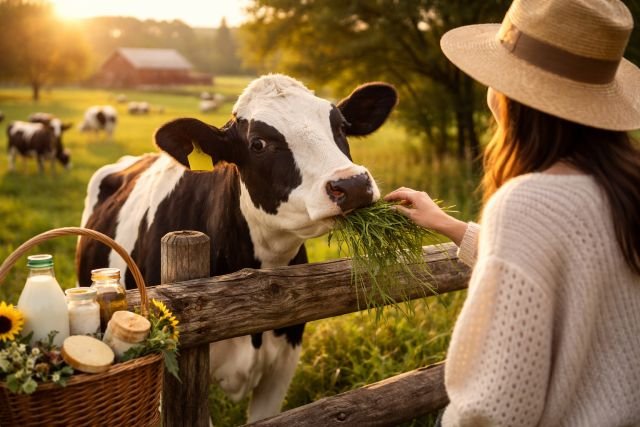
This adoption type tends to feel especially “gift-like” because the recipient can connect with an individual animal. Many sanctuaries provide a name, a personality description, and a photo that makes the cow feel like a character in a story rather than a line item on a receipt.
This is also a strong option for sympathy gifts and memorial gifts. People grieving a loss often don’t want objects. They want meaning. Supporting a rescued animal’s life can be a gentle, lasting form of tribute.
Adopt a Cow as a Livelihood-Impact Gift
Some people connect more with outcomes than with an individual animal. If your recipient is impact-driven, globally minded, or passionate about poverty reduction, a livelihood-focused “adopt a cow” gift can be incredibly meaningful.
In this model, your gift helps fund livestock and training for families, often alongside veterinary support and guidance in animal care and household economics. Heifer International is one well-known example of a gift catalog that includes cattle gifts, and their catalog lists a heifer gift at $500, describing it as paired with training and support.
It’s important to be thoughtful here because livestock donations vary widely in quality and effectiveness based on design. The strongest programs focus on training, follow-up support, veterinary access, and local markets. Research reviews have explored the impacts of livestock development interventions across outcomes like income, assets, food security, nutrition, and women’s empowerment, while also noting that results differ by context and execution.
You can also cite evaluations that examine specific livestock donation programs. For example, an evaluation using household panel data in Zambia assessed impacts of Heifer’s livestock donation approach using poverty and food security measures.
For your article page, you can use imagery that matches this framing and alt tags like: alt=”Adopt a cow donation supporting smallholder dairy income and nutrition”. Another option is: alt=”Livestock training and support funded by adopt a cow gift”.
This version of the gift typically won’t assign a specific named cow to your recipient. Instead, it gives them the satisfaction of funding a system of support that helps a family build stability. For many people, that’s the deepest kind of meaning.
Adopt a Cow as a Virtual Classroom Experience
For teachers, parents, and kids, an “adopt a cow” gift can also be educational rather than philanthropic. Programs like Discover Dairy’s “Adopt a Cow” connect classrooms with a dairy farm and provide updates over time, helping students learn where food comes from and how farms operate.
For images, consider using classroom-focused visuals with alt tags like: alt=”Students receiving adopt a cow virtual farm updates in the classroom”. Another option is: alt=”Dairy calf profile for adopt a cow learning experience”.
This kind of adoption is especially powerful because it unfolds over a school year. It turns a one-time gift into ongoing curiosity and conversation, which is exactly what makes the best gifts memorable.
How to Choose the Most Ethical Adopt-a-Cow Program
Because “adopt” can be used loosely, the most important part of gifting a cow adoption is choosing a program that’s transparent and aligned with your intent. The goal is to avoid accidental disappointment, like a recipient expecting a named cow and receiving only a generic thank-you email.
Start by looking for clear explanations of how funds are used. Ethical organizations explain what your donation supports and what the recipient will receive. They avoid language that implies legal ownership or guaranteed outcomes that can’t be responsibly promised.
If you’re choosing a sanctuary, look for clear animal welfare commitments. Legitimate sanctuaries focus on lifetime care, responsible veterinary oversight, and standards that prioritize the animal’s wellbeing. You want signals that the sanctuary exists for the animals, not for photo ops.
If you’re choosing a livelihood-focused program, look for training and follow-up. Livestock can support household resilience, but only when people have the knowledge and resources to care for the animal and benefit from it sustainably. The Food and Agriculture Organization has discussed how livestock’s contributions to livelihoods and poverty reduction can be under-reflected in policy, emphasizing that planning and context matter.
In short, choose programs that treat cows as living beings with real needs, or cows as part of a broader support system that includes skills, care, and sustainability.
How to Make the Gift Feel Special on the Day
Even though the impact lasts, gifting still happens in a moment. You want that moment to feel real, not like forwarding a donation receipt.
A simple way to elevate the experience is to present it as a story. Instead of writing a generic note, write a short message that explains why you chose this gift for them specifically. The emotional connection matters more than fancy wrapping.
If the program provides a certificate or a cow profile page, print it or place it in a card. If it’s digital, schedule your gift delivery so the recipient receives the welcome message on the celebration day. That creates a sense of “unwrapping” even without a box.
You can also pair the adoption with something small that reinforces the theme without adding clutter, like a framed photo of the cow’s profile image or a small farm-themed book for kids. Keep it modest. The adoption is the main gift.
Costs and Expectations: What Your Recipient Will Get
People often ask the same practical questions, and answering them directly helps your content rank and improves trust.
Sanctuary adoptions commonly offer monthly or annual sponsorship tiers, and many include a certificate plus a photo or story about the cow. The exact deliverables vary by organization, so it’s worth stating clearly on your site what’s included and how often updates are sent.
Livelihood-based gifts are often fixed amounts and typically include an honor card or printable acknowledgment that the gift was made in someone’s name. These programs usually share impact stories rather than ongoing updates about a single cow.
Virtual classroom programs deliver content and updates over time, and the “recipient” is often a classroom community rather than one individual.
If you want to reduce support emails and boost conversion, clearly state on your adoption landing page whether the cow is a real, named individual or a symbolic representation of a program.
Frequently Asked Questions About Adopt a Cow Gifts
Can I really adopt a cow and own it?
In most programs, no. When you adopt a cow, you are sponsoring care or supporting a mission. It’s a donation-based adoption, not legal ownership.
How much does it cost to adopt a cow?
It depends on the organization and the model. Sanctuary care can be substantial, and one sanctuary foundation cites an average around $300 per month to maintain one cow, with regional and seasonal variation.
Will the recipient get updates and photos?
Often, yes, but it depends. Sanctuary-style sponsorships are most likely to offer a named cow, photos, and updates. Development gifts tend to provide broader impact storytelling. Educational programs deliver updates aligned with learning materials.
Is adopting a cow a good corporate gift?
It can be an excellent corporate gift, especially when your company wants to reflect values like kindness, sustainability, or community impact. It’s also easy to send at scale digitally, and it avoids the awkwardness of guessing sizes, tastes, or shipping addresses.
What’s the most meaningful way to adopt a cow?
The most meaningful option is the one that matches your recipient’s heart. For animal lovers, a sanctuary adoption often feels most personal. For impact-driven recipients, a livelihood-focused cow gift can feel powerful. For teachers and kids, classroom-based programs can create ongoing joy and curiosity.
Conclusion: Adopt a Cow and Give a Gift That Lasts
If you want to give something that feels heartfelt, adopt a cow is one of the simplest ways to make generosity personal. It turns gifting into a living story. It can support rescued animals, fund sustainable livelihood pathways, or spark real learning for kids and classrooms. Most importantly, it tells the recipient that you see them and you chose a gift that matches what they value.
In a world full of forgettable purchases, adopting a cow creates a memory with real-world impact. And that’s what meaningful gifts are supposed to do.