

If your heels feel like sandpaper or you keep snagging socks on rough spots, you’re dealing with hard, thickened dead skin (often called a callus). A good foot hard skin remover helps you take that buildup down safely — without over-scrubbing, cracking, or making your feet sore.
- What “hard skin” on feet actually is (and why it forms)
- Best foot hard skin remover options (and who each one is for)
- Foot hard skin remover routine: the fastest safe method
- How often should you use a foot hard skin remover?
- Common mistakes that make hard skin worse (or come back faster)
- When hard skin is a medical issue (don’t DIY these)
- Quick comparison: choosing the right remover
- Example scenario: “My heels are rough again 3 days after filing”
- FAQs
- Conclusion: the smarter way to use a foot hard skin remover
The key is speed and strategy: soften first, remove gradually, then lock in moisture and reduce the friction that caused the hard skin in the first place. Dermatology and public health guidance consistently points to gentle exfoliation (like a pumice stone or foot file) plus daily moisturizing as the safest at-home path for most people.
What “hard skin” on feet actually is (and why it forms)
Hard skin is your body’s protective response to repeated pressure and friction—think tight shoes, lots of walking, running, standing at work, or even sandals that make your heel slide. The skin thickens to protect deeper tissue, creating the rough patches you feel on heels, the ball of the foot, and sometimes toes.
It’s also extremely common. One foot-health fact sheet reports about 5% of the U.S. population has corns or calluses each year.
Best foot hard skin remover options (and who each one is for)
1) Foot files (manual) for fast, controlled smoothing
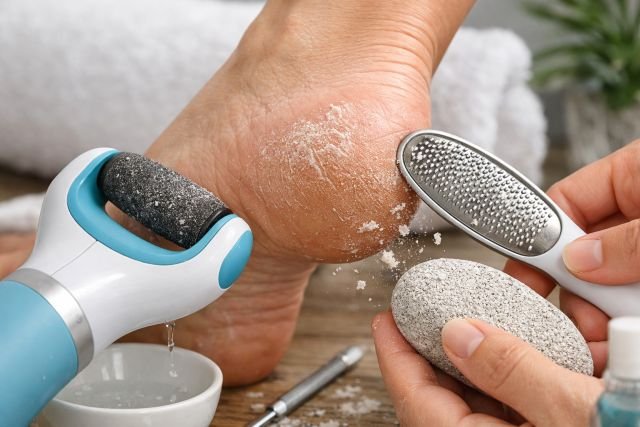
A manual foot file (often stainless steel or etched glass) is one of the quickest ways to visibly reduce hard skin in a single session — because you control pressure and you can stop the second the skin looks smooth.
Best for: thick heel calluses, rough edges, “catchy” skin that snags socks.
Watch-outs: don’t file to the point of tenderness or pink skin—overdoing it can cause micro-tears.
NHS podiatry guidance commonly recommends gentle filing and daily moisturizer to keep skin supple and prevent buildup.
2) Pumice stone for “little and often” maintenance
A pumice stone is slower than a file but great for frequent upkeep. Many clinical handouts recommend soaking first, then rubbing gently to remove layers over multiple sessions.
Best for: mild-to-moderate calluses, maintenance between deeper sessions.
Watch-outs: replace it regularly and keep it clean — porous stones can harbor bacteria if left damp.
3) Electric foot hard skin remover (rollers) for convenience
Electric rollers can be very effective for people who want speed with less hand effort. They’re also easy to overuse because they “feel” gentle while removing a lot of skin quickly.
Best for: medium calluses, busy routines.
Watch-outs: avoid pressing hard; do quick passes and reassess. Stop immediately if warmth or tenderness develops.
4) Keratolytic creams (urea, lactic acid, salicylic acid) for deep softening
If your hard skin comes back fast, a cream that breaks down thickened keratin can make removers work better and reduce recurrence. Two common categories:
- Urea / lactic acid / ammonium lactate: great for dry, thick skin and daily smoothing.
- Salicylic acid: can be effective but isn’t for everyone — some guidance warns people with diabetes or circulation issues to avoid high-strength salicylic acid plasters due to injury risk.
Best for: chronic rough heels, dry “plates” of skin that don’t budge with tools alone.
Watch-outs: don’t apply acids to broken skin or deep cracks.
5) “Foot peel” masks: fast-looking results, higher risk if misused
Peel masks (often glycolic/lactic-based) can cause dramatic shedding over days. But stronger “chemical peel” products sold for unsupervised home use have triggered safety concerns. The FDA has warned consumers about certain chemical peel skin products used without professional supervision because of potential serious skin injuries.
Best for: people who understand acids well and have intact skin.
Watch-outs: avoid if you have diabetes, neuropathy, poor circulation, eczema, open sores, or cracked heels.
Foot hard skin remover routine: the fastest safe method
This approach aims for “immediately smoother” without rebound roughness.
Step 1: Soften the skin (5–10 minutes)
Soak feet in warm water (plain or mildly soapy). Many clinical instructions recommend a short soak to soften the callus before gentle abrasion.
Pro tip: Don’t soak forever. Over-soaking can make skin spongy, and you might remove more than intended.
Step 2: Remove dead skin gradually (2–4 minutes)
Use your foot hard skin remover (file, pumice, or roller) with light-to-moderate pressure:
- File/stone in one direction or small circles.
- Focus on raised ridges and edges first (they’re what catch and crack).
- Stop when the area feels smooth — not “thin.”
NHS leaflets commonly emphasize gentle, regular filing and avoiding going too far.
Step 3: Rinse, pat dry, then moisturize immediately (1–2 minutes)
Apply a thick moisturizer right away to trap hydration. Routine moisturizing helps keep thickened skin from returning as quickly.
If heels crack easily: apply moisturizer, then wear cotton socks for an hour (or overnight).
Step 4: Reduce friction (the “stay smooth” step)
If the same pressure continues, hard skin will come back. Fix the trigger:
- better-fitting shoes
- cushioned insoles or heel cups
- moisture-wicking socks
- avoid barefoot walking on rough floors at home
Dermatology and clinic guidance links calluses to friction/pressure and emphasizes reducing the cause alongside treatment.
How often should you use a foot hard skin remover?
Most people do best with:
- Heavy buildup: 2–3 short sessions per week for 2 weeks
- Maintenance: 1–2 quick sessions per week
One clinical handout notes that callus removal often takes multiple treatments and that regular gentle pumice use helps keep calluses small and soft.
Common mistakes that make hard skin worse (or come back faster)
Removing too much at once
Over-filing can cause tenderness, inflammation, and a rebound thickening response (your skin “armors up” again). Aim for gradual smoothing.
Using blades at home
Medical professionals may pare down thickened skin in-office, but doing this yourself risks cuts and infection. Mayo Clinic notes clinicians can trim thickened skin during an office visit.
Ignoring the cause (shoes, gait, pressure points)
If your callus is always in the same spot, the pressure point is still there. Offloading is prevention.
When hard skin is a medical issue (don’t DIY these)
Seek podiatry/dermatology care if:
- you have diabetes, neuropathy (reduced sensation), poor circulation, or immune suppression
- the area is red, warm, swollen, bleeding, or draining
- you have deep heel fissures that hurt when you walk
- you suspect a corn (more localized and often painful) or there’s persistent pain
MedlinePlus and major clinical sources consistently frame corns/calluses as treatable but important to manage safely — especially when underlying risk factors exist.
Quick comparison: choosing the right remover
If you want the fastest visible change today: a quality manual foot file + moisturizer routine.
If you want the easiest weekly maintenance: pumice stone in the shower.
If you want convenience with less effort: electric roller (light pressure only).
If your skin is thick and very dry: add a urea/lactic moisturizer daily, then file gently 2–3x/week at first.
If you’re tempted by peels: stick to mild formulas, avoid broken skin, and be cautious — strong chemical peels have documented safety concerns when used without supervision.
Example scenario: “My heels are rough again 3 days after filing”
This usually means one (or more) of these is happening:
- You’re removing the surface but not hydrating deeply afterward (so the skin dries and re-hardens).
- You’re filing too aggressively, triggering irritation and rebound thickening.
- The shoe friction remains, so the body keeps building protection.
Fix: switch to shorter sessions, moisturize daily (thicker cream at night), and address footwear friction for two weeks. Most people notice the “comes back instantly” problem drops off when moisture + friction control is consistent.
FAQs
What is the fastest way to remove dead skin from feet?
The fastest safe method is: 5–10 minute warm soak, then gentle filing or pumice, followed by immediate moisturizing. Repeating short sessions over 1–2 weeks works better than trying to remove everything in one go.
Are electric foot hard skin removers safe?
Yes, for most people — if used lightly and briefly. Avoid pressing hard, don’t use on broken skin, and stop if you feel heat or tenderness.
Should I cut hard skin off my feet?
No at-home cutting. Clinicians may trim thickened skin in-office, but DIY cutting increases risk of injury and infection.
Do foot peel masks work for calluses?
They can work, but they’re not the safest “default” option — especially if your skin is cracked or you have diabetes/neuropathy. Strong chemical peel products have triggered FDA warnings when used without professional supervision.
How do I stop hard skin from coming back?
Moisturize daily, file lightly once or twice a week, and reduce friction/pressure with better-fitting shoes, cushioned insoles, and socks. This matches mainstream guidance that treating the cause is as important as removing the buildup.
Conclusion: the smarter way to use a foot hard skin remover
A foot hard skin remover works best when you treat hard skin like a routine — not a one-time battle. Soften first, remove gradually, moisturize immediately, and reduce the friction that created the callus. That combination delivers the fastest smooth-feet results and keeps the tough dead skin from rebuilding week after week. For persistent pain, deep cracks, or high-risk conditions like diabetes or poor circulation, skip DIY and get professional foot care guidance.