


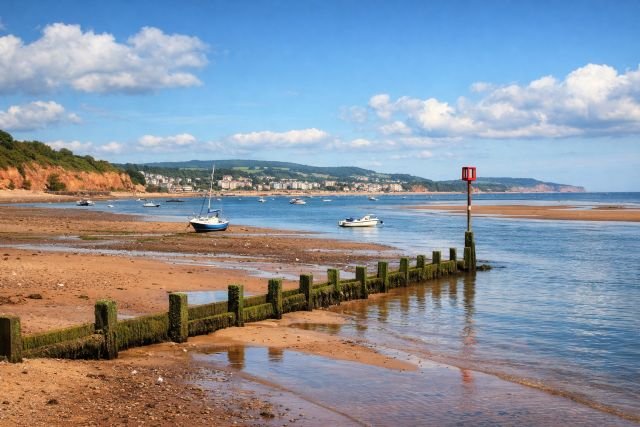
If you’ve ever arrived at the beach expecting a wide sandy playground and found the sea miles away — or turned up for a calm paddle only to meet fast-moving water — you’ve already learned why exmouth tide times matter. Exmouth sits at the mouth of the River Exe on Devon’s south coast, so tides shape everything: beach width, current strength, water clarity, and even which routes and sandbanks are safe.
- What “Exmouth tide times” really mean
- Where to check Exmouth tide times
- Best time to visit Exmouth for wide sand, paddling, swimming, and views
- Understanding tide heights in Exmouth (how to use them for planning)
- Exe Estuary and “tide-at-the-mouth” quirks: what visitors often miss
- Tide safety in Exmouth: simple rules that prevent most emergencies
- “When should I go?” Exmouth tide timing by activity (quick answers)
- FAQs: Exmouth tide times
- Conclusion: use Exmouth tide times to plan the perfect coastal day
This guide breaks down what Exmouth’s tides typically do, how to read tide tables like a local, and — most importantly — when to visit for the coastal conditions you actually want. Along the way, you’ll get practical timing windows for swimming, sand walks, watersports, fishing, and photography, plus safety advice backed by trusted sources.
What “Exmouth tide times” really mean
Exmouth tide times are the predicted times for high tide and low tide at (or near) Exmouth, usually given alongside a tide height in metres. In the UK, most coasts experience a semi-diurnal pattern — two highs and two lows most days — so you’ll often see four key turning points in a 24-hour period. A free, authoritative place many people use for UK predictions is ADMIRALTY EasyTide from the UK Hydrographic Office.
Two important “hidden” ideas sit behind those numbers:
The tide moves for hours between highs and lows
High tide and low tide are the endpoints. The sea level is constantly rising or falling in between, and the rate of change isn’t constant (it usually accelerates mid-cycle). That’s why planning around tides is less about a single time and more about a 2–3 hour window.
Spring vs neap tides change the feel of the coastline
Across the lunar month, spring tides create a bigger difference between high and low water; neap tides create a smaller difference. ADMIRALTY tide data is also part of the UKHO’s tidal prediction services described on GOV.UK.
In plain English: spring tides expose more sand at low tide and push water higher at high tide, which can mean stronger currents and quicker cut-offs along rocky edges.
Where to check Exmouth tide times
Because tides affect safety, it’s smart to rely on reputable, consistent sources:
- ADMIRALTY EasyTide (UKHO) – free predictions for the current day and several days ahead; widely used across the UK.
- Exeter City Council / Exeter Port Authority – points visitors toward tide information for the Exe estuary area and nearby waters.
- Coastal Monitoring (real-time station) – shows live tide levels at Exmouth (useful for “what’s happening right now,” though it notes data may be unquality-controlled).
- Weather context (wind/visibility) – check the Met Office forecast for Exmouth conditions that can make the sea feel rougher or calmer than “tide alone” suggests.
- Extra validation – the National Tidal and Sea Level Facility also provides tidal prediction access for UK/IE ports.
Best time to visit Exmouth for wide sand, paddling, swimming, and views
Below are practical, “use-this-today” timing guidelines. Adjust by season, swell, and wind, but the tide windows hold up year-round.
Best for beach walks and sand flats: 1–2 hours either side of low tide
If your dream day is long walks, sand ripples, rockpooling (where accessible), or giving kids room to roam, aim for low tide ± 2 hours. This is when the shore is at its broadest and the sea is usually farthest out.
Real-world scenario:
You want a relaxed morning stroll and a café stop after. If low tide is around late morning, arrive mid-morning, walk out as the tide bottoms, then head back as the water starts returning.
Suggested image alt tag: “Low tide at Exmouth beach revealing wide sand flats and shallow pools”
Best for classic “swim beach” conditions: 1 hour before to 2 hours after high tide
For swimming, many visitors prefer higher water because entry is easier and you’re less likely to face long shallow wades. A strong rule of thumb is high tide -1h to +2h.
That said, always sanity-check conditions:
- Wind can chop the water up even near high tide (Met Office is helpful here).
- In estuary-influenced areas, currents can strengthen as water funnels in/out.
Suggested image alt tag: “Exmouth shoreline near high tide with gentle waves close to the promenade”
Best for kayaking and paddleboarding on the estuary side: aim for slack water
If you’re launching into calmer areas near the Exe, the “sweet spot” is often around slack water — the short period near high or low tide when the current slows before reversing. It’s not always perfectly still, but it’s usually friendlier than mid-ebb or mid-flood.
If you’re new, plan short out-and-back routes, and keep a conservative margin — currents can build faster than expected as the tide gets moving.
Best for watersports and wind sports: match tide and wind
Exmouth can be brilliant for kitesurfing/windsurfing when wind and tide align, but it’s not a “tide-only” decision. Use:
- Tide tables (for timing and water depth)
- Forecast wind direction and strength (Met Office)
A practical approach is to pick your wind window first, then choose the tide state that suits your launch/landing preference and experience level.
Best for photography: low tide textures + high tide sunsets
Photographers can get two very different looks:
- Low tide for patterns, reflections, and leading lines across wet sand
- High tide for fuller waterlines, boats, and “sea-meets-sky” compositions near the estuary mouth
Suggested image alt tag: “Aerial view of the Exe estuary at changing tide levels near Exmouth” (see aerial example above)
Understanding tide heights in Exmouth (how to use them for planning)
Tide tables often show times and heights. The height number is your clue to how dramatic the day will feel.
Here’s how to use it without becoming a tidal scientist:
- Higher high tides usually mean the sea comes closer to sea walls, steps, and promenades (great for swimming access, less great for maximum sand).
- Lower low tides usually mean bigger sand exposure (great for long walks, but some routes can leave you far from the waterline).
If you’re planning a boat movement, marina access, or anything in channels, tide height becomes even more important—because depth over bars and sandbanks can be the limiting factor.
Exe Estuary and “tide-at-the-mouth” quirks: what visitors often miss
Exmouth isn’t a simple open-beach tide experience; it’s also an estuary system. That brings two common surprises:
Currents can be stronger than they look
Even on a seemingly calm day, moving water can be powerful at pinch points and channel edges. That’s why local maritime guidance emphasizes planning for the Exe estuary and surrounding waters with proper weather and tide info.
The “feel” of the tide can differ between beach and inner estuary
A tide table might be listed for Exmouth Dock/Approaches, but your exact spot up-river can lag slightly, and current strength can vary with channel shape. If you want extra confidence, compare:
- Predicted times (EasyTide)
- Live levels (Coastal Monitoring)
Tide safety in Exmouth: simple rules that prevent most emergencies
Tides don’t “trap” people slowly—they often cut off return routes faster than expected. The RNLI regularly warns beachgoers to check tide times and carry a means of calling for help after rescues involving people stranded by a rising tide.
A quick, practical tide-safety checklist
- Check today’s tide times before you set out (and re-check if plans change).
- If you’re walking far out on sand or exploring edges, set a phone alarm for 60–90 minutes before the time you must turn back.
- Treat fast-rising water seriously on spring tides.
- If you’re unsure, ask lifeguards (in season) or stick to busy, visible areas.
“When should I go?” Exmouth tide timing by activity (quick answers)
For families who want the biggest sandy beach
Arrive 2 hours before low tide and enjoy the expanding sand. Plan to start heading back as the tide turns, especially if you’ve walked far.
For an easy swim with less long wading
Aim for 1 hour before high tide through to 2 hours after.
For paddleboarding and calmer conditions
Plan around slack water near high or low tide, and avoid committing far from your launch during the strongest mid-tide flow.
For fishing and “bite windows”
Many anglers plan around moving water rather than dead slack; the best tide phase depends on species and spot. If you’re learning, start by testing the first half of the flood tide vs the first half of the ebb, and keep notes.
FAQs: Exmouth tide times
What time is high tide in Exmouth?
High tide in Exmouth changes every day (and is usually different morning vs evening). The quickest way to check is a trusted tide table like ADMIRALTY EasyTide for Exmouth Dock/Approaches.
How many tides does Exmouth have per day?
Most days, Exmouth experiences two high tides and two low tides (a semi-diurnal pattern), though exact timing can shift day to day.
Is Exmouth better at high tide or low tide?
It depends on what you want. Low tide is best for long sandy walks and exploring the beach. High tide is often better for swimming and easier water access. Use tide times plus weather forecasts to choose your ideal window.
Where can I find reliable Exmouth tide times?
ADMIRALTY EasyTide (UKHO) is a widely used free source for UK tidal predictions. Live tide level charts are also available via coastal monitoring stations for “right now” checks.
How do I stay safe with Exmouth tides?
Check tide times before you go, avoid being caught far out as the tide turns, and carry a way to call for help. The RNLI frequently reminds visitors that rising tides can strand people quickly.
Conclusion: use Exmouth tide times to plan the perfect coastal day
Exmouth is one of those places where the same beach can feel completely different depending on the water level. If you remember just a few rules, your planning becomes easy: use exmouth tide times to pick your activity window, rely on reputable predictions like ADMIRALTY EasyTide, sanity-check weather and wind, and give yourself extra margin on bigger spring tides.
Do that, and you’ll stop “hoping the beach is right” and start arriving at exactly the right time — whether you’re after wide sand, a relaxed swim, a smooth paddle, or golden-hour photos by the Exe.