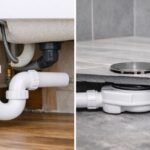



If you’re shopping parts or troubleshooting odors, the plumbing trap for washing machine drains is one of those “small” details that can cause big problems — slow draining, gurgling, sewer smells, or even water on the floor. The trap isn’t just a bend in the pipe. It’s a safety device that holds water to block sewer gas and helps the washer drain smoothly without siphoning.
- What a plumbing trap for washing machine drains actually does
- P-trap vs S-trap for a washing machine: the quick definition
- Which one is right for a plumbing trap for washing machine installs?
- Why S-traps fail with washing machines (and why you notice it more in laundry rooms)
- Washer standpipe basics that affect trap choice (and overflow risk)
- How to tell if your plumbing trap for washing machine is a P-trap or an S-trap
- Common problems (and what they usually mean)
- Real-world scenario: why “it worked for years” doesn’t mean it’s right
- Actionable tips to keep a washing machine P-trap working properly
- FAQs
- Conclusion: choosing the right plumbing trap for washing machine performance and safety
Most homeowners run into this topic when a laundry room is remodeled, an older home is updated, or a washer starts overflowing the standpipe. That’s also when the “P-trap vs S-trap” question shows up. Here’s the simple truth: a P-trap is almost always the correct choice for a washer standpipe, and S-traps are specifically prohibited in modern codes because they’re prone to siphoning and losing their water seal.
What a plumbing trap for washing machine drains actually does
A washing machine doesn’t drain by gentle gravity flow the way a sink often does. It pumps out a fast surge of water (and lint). That discharge needs a properly sized, vented path, and the trap is the “gatekeeper.”
A trap’s job is to maintain a water seal—standing water in the curve — that blocks sewer gases from coming back into your laundry room. Codes commonly target a seal depth range that balances odor protection with self-scouring flow; for example, IAPMO notes an optimum liquid seal depth range of 2 to 4 inches.
If that seal gets siphoned out (or evaporates), you may notice:
- A sewer-gas smell near the washer
- Gurgling sounds during or after draining
- Inconsistent draining or “burping” in the standpipe
P-trap vs S-trap for a washing machine: the quick definition
What is a P-trap?
A P-trap is a U-shaped trap with a horizontal trap arm that runs to a vented drain line. That horizontal section is the key. It helps prevent self-siphoning and lets the vent do its job: stabilize air pressure so the trap keeps water in it.
In real laundry-room terms: your washer hose drains into a vertical standpipe, that standpipe drops into a P-trap, and then the trap arm heads toward a vented branch drain.
What is an S-trap?
An S-trap drops straight down after the trap curve (forming an “S” shape). The problem is that configuration can create a siphon that pulls the trap dry — especially with a washer’s high-flow discharge — opening a direct path for sewer gas.
Modern plumbing codes explicitly prohibit “S” traps. The 2024 International Plumbing Code lists “S traps” under prohibited traps.
Which one is right for a plumbing trap for washing machine installs?
For washer standpipes, the right answer is overwhelmingly:
Choose a P-trap (almost always)
A P-trap is designed to work with venting and keep its water seal during a big discharge. It’s also aligned with modern code expectations for laundry standpipes.
As one concrete example, the International Plumbing Code (IPC) requires an automatic clothes washer standpipe trap and drain to be not less than 2 inches in diameter. That requirement pairs naturally with standard 2-inch P-trap/standpipe configurations used in many jurisdictions.
Avoid an S-trap (effectively always)
Even if your washer “seems fine,” an S-trap is a known failure pattern over time. You might only smell sewer gas occasionally—like after a long drain cycle, or when other fixtures drain and pressure changes in the line.
Also, if you’re remodeling, selling, or getting an inspection, an S-trap can become a flagged issue because codes spell it out as prohibited.
Why S-traps fail with washing machines (and why you notice it more in laundry rooms)
Washing machines are basically siphon stress-tests.
When the pump blasts water down the standpipe, it can create negative pressure downstream. If the trap drops vertically immediately (S-trap), the flow can “pull” the trap seal with it. Once the water seal is gone, sewer gas has a straight shot into the room.
A P “trap arm + vent” arrangement is built to prevent that pressure swing from emptying the trap.
If you’ve ever noticed the smell is worse:
- right after the washer drains, or
- when another fixture drains (toilet flush nearby, tub draining upstairs)
…that’s consistent with trap seal instability and venting issues.
Washer standpipe basics that affect trap choice (and overflow risk)
Even with a correct P-trap, a washer drain can misbehave if the overall standpipe setup is wrong.
1) Diameter matters (2-inch is common in code)
IPC language requires the trap and fixture drain for an automatic clothes washer standpipe to be at least 2 inches.
Too small can mean slow draining, backups, or standpipe overflow—especially with modern high-efficiency washers that can still discharge quickly.
2) Standpipe height and layout matter
Codes vary by jurisdiction, but laundry standpipes are commonly regulated for height and trap location. For example, ICC/IAPMO commentary and code guidance often discuss minimum/maximum standpipe and trap elevations to ensure the washer hose discharge behaves as intended.
If you’re planning a remodel, this is where a licensed plumber earns their keep: correct standpipe height, correct trap elevation, correct vent distance, and correct drain sizing—so you don’t get surprise overflows later.
3) Venting isn’t optional in practice
People sometimes try to “solve” venting by using an S-trap shape or by skipping the vent entirely. That’s exactly the pathway to siphoning, gurgling, and sewer smell.
If you want to go deeper on venting options, add an internal link to a related page like:
- /plumbing-venting-basics
- /laundry-room-drain-venting
- /why-your-drain-gurgles
How to tell if your plumbing trap for washing machine is a P-trap or an S-trap
In a typical laundry box (the recessed washer outlet box), you won’t see the trap directly. But in unfinished basements, garages, or accessible walls, you might.
Signs you likely have an S-trap:
- The trap curve drops straight down into the floor with no horizontal run
- No visible vent connection on the trap arm (because there isn’t much trap arm)
- Strong sewer smell after draining, even if the line isn’t clogged
Signs you likely have a P-trap:
- The trap exits into a horizontal pipe (trap arm) before turning downward
- You can trace that horizontal run to a vented stack or vent connection
When in doubt, a plumber can confirm quickly, and it’s often worth it—because the fix can be straightforward, but only if done correctly.
Common problems (and what they usually mean)
“My laundry room smells like sewer gas sometimes.”
Most often: trap seal loss (siphoning) or a dry trap.
A properly installed P-trap should hold a seal, but if the venting is wrong, pressure swings can still disturb the seal. Also, in rarely used drains, the water in the trap can evaporate over time — especially in dry climates or hot utility rooms.
“My standpipe overflows when the washer drains.”
Most often: partial blockage (lint buildup), undersized drain, or standpipe/branch configuration issues.
Even if a trap is correct, a slow downstream drain will back up into the standpipe during the pump-out phase.
“It gurgles loudly when the washer drains.”
Most often: venting problem.
Gurgling is often air being pulled through water where it shouldn’t be — another hint of negative pressure and an unstable trap seal.
Real-world scenario: why “it worked for years” doesn’t mean it’s right
A common situation: an older home has an S-trap on the laundry drain. The homeowner replaces the washer with a newer model. Suddenly the laundry room smells worse, or the standpipe starts overflowing.
What changed? The discharge pattern. Newer machines can pump out in different bursts, and the plumbing system is now being stressed in a way it wasn’t before. The underlying S-trap flaw becomes visible.
Because S-traps are prohibited in modern plumbing codes, upgrades and remodels are often the moment they get discovered — and corrected.
Actionable tips to keep a washing machine P-trap working properly
Here are practical, homeowner-friendly steps that don’t require guesswork about code details:
- Run water periodically if the washer drain is rarely used, so the trap doesn’t dry out.
- Address slow drainage early. Lint and detergent sludge can build up; recurring slow drain tends to end in an overflow.
- If odors persist, don’t “mask” them. Sewer gas is a ventilation/seal problem — solve the cause.
- If you suspect an S-trap, plan a proper conversion to a vented P-trap configuration.
Also, if you’re fixing any plumbing issue around the laundry, it’s a good time to look for leaks. EPA WaterSense estimates an average family can waste about 9,400 gallons of water annually from household leaks, and frames it as the equivalent of 300+ loads of laundry. That’s a strong reminder that small plumbing problems add up fast — especially around washers.
FAQs
What is the correct plumbing trap for washing machine drains?
In most modern installations, a 2-inch P-trap connected to a properly vented standpipe drain is the standard, code-aligned approach. The IPC specifically calls for the trap and fixture drain serving an automatic clothes washer standpipe to be not less than 2 inches.
Are S-traps allowed for washing machines?
In modern codes, S-traps are prohibited because they can siphon the trap seal and allow sewer gas into the home. The 2024 IPC lists “S traps” among prohibited trap types.
Why does my washer drain smell like sewer gas?
Most commonly, the trap seal has been lost (siphoning or evaporation) or venting is incorrect, allowing pressure changes that disturb the seal. A P-trap with correct venting is designed to prevent this.
Can I fix an S-trap by adding a vent?
Typically, the correct fix is reconfiguring the piping so the trap becomes a P-trap with a proper trap arm and venting layout. Simply “adding a vent somewhere” without correct geometry can still leave siphoning risk or create other code issues.
What trap seal depth is recommended?
Industry guidance commonly targets a liquid seal depth range that balances gas-blocking and self-scouring. IAPMO discusses an optimum seal depth of 2 to 4 inches
Conclusion: choosing the right plumbing trap for washing machine performance and safety
Picking the right plumbing trap for washing machine drainage isn’t just about “what fits.” It’s about preventing sewer gas, avoiding siphoning, and handling a washer’s high-flow discharge without overflow. A P-trap is the modern, code-consistent choice because it works with venting to protect the trap seal. An S-trap is a known problem design and is explicitly prohibited in modern plumbing codes because it can siphon dry and allow sewer gas into your home.
If you’re remodeling a laundry room, chasing odors, or dealing with overflows, this is one area where correcting the trap/vent layout can turn an ongoing headache into a permanent fix.