

When a faucet hose bursts or a toilet keeps running, the fastest way to prevent expensive water damage is often a small valve hiding in plain sight: the angular stop valve. This compact shutoff — typically installed under sinks, behind toilets, and near appliances — lets you isolate water to a single fixture without shutting down the entire home or building. In other words, a properly working angular stop valve can turn a panic moment into a 30-second fix.
- What is an angular stop valve?
- Angular stop valve uses in homes, commercial buildings, and industry
- Key advantages of an angular stop valve
- Quarter-turn vs multi-turn angular stop valves
- How to choose the right angular stop valve
- Common mistakes to avoid with an angular stop valve
- Troubleshooting: why an angular stop valve won’t close (or won’t reopen)
- Maintenance best practices that extend valve life
- Real-world example: a small valve that prevents a big repair
- FAQ: Angular stop valve quick answers
- Conclusion: Why the angular stop valve matters more than most people think
In this guide, you’ll learn what an angular stop valve is, the real-world places it’s used, the biggest advantages (and tradeoffs), and the mistakes that most commonly lead to leaks, seized handles, or premature failure. You’ll also get practical selection tips, maintenance habits, and FAQ-style answers designed for quick “featured snippet” clarity.
What is an angular stop valve?
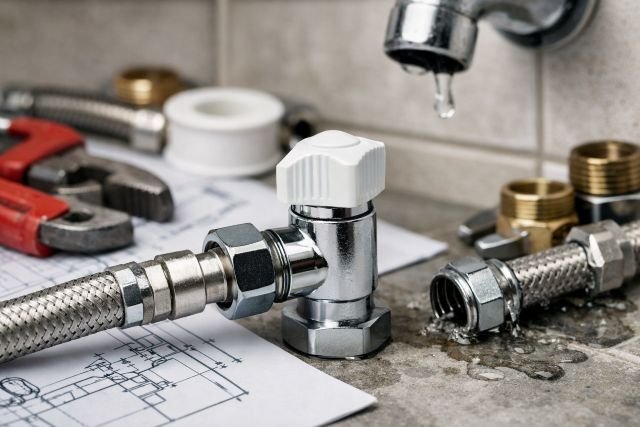
An angular stop valve (also commonly called an “angle stop” or “fixture shutoff valve”) is a small, L-shaped shutoff valve that changes water direction by 90 degrees while allowing you to stop water flow to a single fixture — like a sink or toilet — without turning off the main supply.
Most angular stop valves have one inlet (from the wall or floor) and one outlet (to a flexible supply line). When you close it, you isolate the fixture for repairs, replacements, or emergencies.
Angular stop valve uses in homes, commercial buildings, and industry
The most common reason people install an angular stop valve is simple: control at the fixture. If something leaks, you shut down one point — everything else keeps running.
Under-sink shutoffs (kitchen and bathroom)
This is the classic use: a valve under the sink feeding a faucet. It’s especially important because modern faucets often connect with flexible braided supply lines — quick to install, but still a potential leak point over time if stressed or corroded.
A realistic scenario: You notice a drip at the faucet supply connection. With an angular stop valve, you close one valve, swap the supply line, and restore water — no interruption to showers, toilets, or the rest of the building.
Toilet supply shutoffs
Toilets are one of the most frequent “sudden leak” sources: fill valves fail, supply hoses crack, or connections loosen. A functioning angular stop valve makes toilet repairs far easier and helps limit damage quickly.
Appliance connections (ice makers, dishwashers, bidets)
Wherever a single appliance needs a controlled water feed, an angle stop (or a similar local shutoff) prevents minor issues from becoming big one — especially with appliances tucked inside cabinets.
Commercial and multi-unit properties
In offices, retail, and multi-unit buildings, fixture-level isolation reduces downtime. Maintenance teams can service one restroom sink without shutting down an entire floor. The operational advantage is often more valuable than the part cost.
Light industrial or utility areas
In workshops, labs, or utility closets, angle-pattern shutoffs are used where space is tight and a right-angle turn is convenient for routing piping cleanly.
Key advantages of an angular stop valve
1) Fast damage control (and fewer “whole building” shutoffs)
When water damage happens, minutes matter. Industry insurance data often groups water damage and freezing among the most common property claims, with claim severity that can land in the five figures depending on the period measured.
Even when you don’t file a claim, restoration can be costly and disruptive. A simple local shutoff is one of the cheapest “risk reducers” you can install.
2) Easier maintenance and upgrades
Replacing a faucet, toilet fill valve, or supply line becomes straightforward because you can isolate one fixture. Many DIY and pro plumbing workflows assume you have fixture shutoffs available.
3) Cleaner plumbing layouts in tight spaces
Because the outlet exits at 90 degrees, an angular stop valve helps route supply lines neatly inside cabinets and behind fixtures—often reducing hose kinks and mechanical strain.
4) Better usability with quarter-turn designs
Quarter-turn (ball-style) shutoffs are widely recommended for ease and reliability: they close fast, show open/closed position clearly, and have fewer “stuck stem” moments than older multi-turn styles.
5) Safety and compliance advantages when chosen correctly
In many markets, plumbing components in contact with drinking water must meet health-effect requirements and “lead-free” definitions. In the U.S., EPA guidance explains the “lead-free” definition as a weighted average of 0.25% lead across wetted surfaces for many plumbing products.
NSF/ANSI 61 is a widely used health-effects standard covering components (including valves) that contact drinking water.
Choosing a compliant valve isn’t just paperwork — it’s about safer materials and reduced risk.
Quarter-turn vs multi-turn angular stop valves
Most homeowners only notice the difference when it matters — during a leak.
Quarter-turn (ball) angle stops
Quarter-turn valves typically use a ball mechanism; you rotate the handle 90 degrees to open/close. Their popularity comes from speed and simplicity. Many home improvement sources recommend quarter-turn ball valves due to reliability and fewer moving parts.
Multi-turn (compression) angle stops
Multi-turn valves require several turns to close and often rely on a washer/seat arrangement. They can be serviceable, but they’re more likely to seize if not exercised periodically, and they’re slower in emergencies.
Practical takeaway: If you’re upgrading or building new, quarter-turn is the typical “default best choice” for most residential fixture shutoffs — unless you have a special reason (like very specific flow control needs).
How to choose the right angular stop valve
Choosing the right valve is less about brand hype and more about matching the valve to your pipe, fixture, and water conditions.
Match the connection type to your plumbing
Common inlet connection styles include compression, sweat/solder, threaded, and push-fit—each suited to certain pipe materials and installer preferences. If you mismatch the connection style, you can create slow leaks that only show up days later.
Use drinking-water compliant materials where required
For potable water lines, look for valves that indicate compliance with applicable standards and “lead-free” requirements in your region. EPA guidance on lead-free plumbing requirements is clear about the 0.25% weighted average definition for many products.
Where NSF/ANSI 61 applies, it addresses health-effects evaluation for products/materials contacting drinking water.
Consider local water conditions
Hard water and sediment can shorten the life of any valve by wearing seals and increasing torque. If you have known mineral buildup, prioritize valves known for smooth operation and consider adding upstream filtration where appropriate.
Don’t oversize expectations: angle stops are for shutoff, not throttling
Many people partially close an angular stop valve to “reduce pressure.” That can create noise, turbulence, and accelerated wear. If you need pressure regulation, use a proper pressure regulator — not a fixture shutoff.
Common mistakes to avoid with an angular stop valve
This is where most problems come from — small errors that lead to drips, stuck handles, or sudden failure.
Mistake 1: Never operating the valve (until it’s an emergency)
A valve that sits untouched for years can seize. When you finally try to close it during a leak, it may not budge—or worse, it may start leaking around the stem once you disturb old packing.
Actionable tip: “Exercise” fixture shutoffs a couple of times a year: close gently, reopen gently, and verify no seepage.
Mistake 2: Overtightening compression fittings
Overtightening can deform ferrules, crack valve bodies (especially cheaper castings), and create leaks that show up later. Compression connections are “feel” fittings — snug and sealed, not torqued to exhaustion.
Mistake 3: Misusing thread sealant (or using it where it doesn’t belong)
Thread seal tape/paste is for tapered threaded joints — not compression threads. Putting tape on compression threads can interfere with proper seating and actually cause leaks.
Mistake 4: Installing the wrong valve orientation or outlet size
Angle stops come in different outlet sizes to match supply lines. Mixing sizes forces adapters and awkward hose bends, which adds stress at the connection and can shorten the supply line’s life.
Mistake 5: Ignoring early warning signs of packing or stem leaks
A small drip at the handle/stem area is often a packing issue. Packing leakage is a known valve failure mode when materials age, installation is off, or the stem/packing is worn.
Sometimes a careful packing nut adjustment helps — but persistent leaks are a replacement signal for many modern fixture valves.
Mistake 6: Choosing a valve that’s not appropriate for potable water
If a valve is used on a drinking water line, material compliance matters. EPA “lead-free” definitions and standards like NSF/ANSI 61 exist for a reason.
Using the wrong valve can create health and inspection issues, not just mechanical ones.
Mistake 7: Treating an angle stop as a permanent pressure-control device
Half-open valves can whistle, chatter, and erode internally. Use a proper regulator for pressure and leave angle stops either fully open or fully closed.
Troubleshooting: why an angular stop valve won’t close (or won’t reopen)
If you’re dealing with a stubborn valve, these are the typical root causes:
- Seized internal mechanism (mineral buildup/corrosion), common in older multi-turn valves.
- Stem/packing friction making the handle hard to turn.
- Internal wear preventing full closure, so water still trickles.
When a valve won’t fully shut off, many pros recommend replacement rather than gambling on partial repairs—especially for older styles that may fail after being disturbed.
Maintenance best practices that extend valve life
A little routine care goes a long way.
Exercise the valve and inspect connections
Operate the valve periodically and check:
- the outlet connection to the supply line
- the inlet connection to the pipe
- moisture at the stem/handle area
Watch for “hidden cabinet humidity”
A slow weep under a sink might not drip loudly, but it can warp cabinet floors over time. If you ever smell damp wood or see discoloration, check the valve and supply connections first.
Replace proactively during fixture upgrades
If you’re already swapping a faucet or toilet, replacing an old angular stop valve at the same time is often a smart move—especially if it’s multi-turn, stiff, or visibly corroded.
Real-world example: a small valve that prevents a big repair
A common scenario in apartments: a resident reports a running toilet. Maintenance shuts the angular stop valve, replaces the fill valve in 15 minutes, and restores service — no need to shut off the riser for multiple units.
Now imagine the same job without a working angle stop. You might shut water to multiple apartments, coordinate access, and risk complaints — turning a tiny repair into an operational headache.
FAQ: Angular stop valve quick answers
What is an angular stop valve used for?
An angular stop valve is used to shut off water to a single plumbing fixture (like a sink or toilet) without turning off the main water supply.
Is an angular stop valve the same as an angle stop?
Yes. In everyday plumbing language, “angular stop valve,” “angle stop,” and “fixture shutoff” are commonly used to mean the same right-angle shutoff valve installed at a fixture.
Which is better: quarter-turn or multi-turn angle stop valves?
Quarter-turn (ball-style) valves are generally preferred for faster shutoff and easier operation, and many home improvement authorities recommend them for reliability and fewer moving parts.
Why is my angle stop valve leaking at the handle?
That’s often a packing/stem seal issue. Packing leakage is a recognized failure mode and can be caused by aging materials, incorrect installation, or stem defects.
If tightening the packing nut doesn’t help, replacement is often the safest option.
Do I need a “lead-free” angular stop valve?
If the valve is on a line supplying drinking water, many jurisdictions require “lead-free” plumbing products. EPA guidance defines “lead-free” for many plumbing products as a weighted average of 0.25% lead across wetted surfaces.
Conclusion: Why the angular stop valve matters more than most people think
A properly installed angular stop valve is one of the highest value, lowest cost components in a plumbing system. It makes repairs faster, reduces disruption, and can drastically limit damage when something goes wrong. If you remember only one thing, make it this: the best time to confirm your angular stop valve works is before the day you need it in a hurry.
If you’re upgrading fixtures, choose a quality quarter-turn option, match the connection type correctly, and prioritize drinking-water compliant materials where required. Then “exercise” the valve periodically so it’s ready when you need it — because in plumbing, preparedness is what keeps small leaks from becoming big bills.