


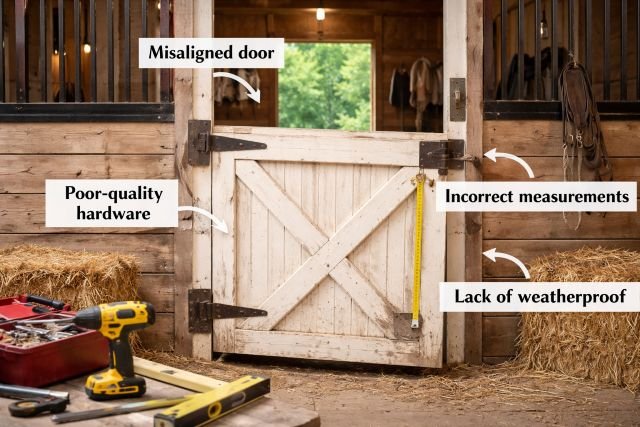
A stable door can be one of the most practical upgrades you make — fresh air without losing control of pets or toddlers, a welcoming “open” feel without sacrificing privacy, and a classic look that suits cottages and contemporary homes alike. But the design details matter more than most people realize. Get the design wrong, and you’ll end up with drafts, swelling, sticking, water ingress, weak security, or a door that simply doesn’t “work” for how you live.
- What is a stable door, and why do design details matter?
- Stable door design mistake #1: Choosing the wrong material for your climate and lifestyle
- Stable door design mistake #2: Underestimating security because it “feels like a back-door style door”
- Stable door design mistake #3: Getting the split height wrong for pets, kids, privacy, and comfort
- Stable door design mistake #4: Ignoring drafts and airtightness at the meeting rail
- Stable door design mistake #5: Overlooking thermal performance and compliance
- Stable door design mistake #6: Choosing the wrong threshold for your entryway
- Stable door design mistake #7: Getting glazing wrong (privacy, safety, and performance)
- Stable door design mistake #8: Not designing the swing direction around how you actually move
- Stable door design mistake #9: Skipping measurement strategy (and assuming “standard size”)
- Stable door design mistake #10: Treating installation quality as separate from design
- FAQs
- Conclusion: design it right before you install your stable door
This guide walks you through the biggest stable door design mistakes homeowners make before installation — plus what to do instead — so your door looks right, seals tight, and stays secure for years.
What is a stable door, and why do design details matter?
A stable door (sometimes called a split door or Dutch door) is divided horizontally so the top and bottom halves can open independently. The idea is simple; the execution isn’t. Because the door has two moving sections, you have more joints, more hardware, and more sealing challenges than a single-leaf door.
That’s why the “design phase” is where most costly problems are baked in — long before any installer arrives.
Stable door design mistake #1: Choosing the wrong material for your climate and lifestyle
A stable door lives (literally) on the boundary between indoors and outdoors. Material choice affects insulation, maintenance, how well it resists warping, and how long it holds crisp alignment.
Where people go wrong: picking purely on looks or price, without thinking about exposure (wind-driven rain, coastal air, intense sun) and everyday wear (kids, dogs, heavy traffic).
What to do instead:
- If you want a classic painted look, understand that timber needs ongoing protection and maintenance. It can be brilliant when cared for, but it’s not “fit and forget.”
- If low maintenance is the priority, modern composite or uPVC options often offer better stability and weather resistance.
- For period properties, you may need to balance authenticity with performance — especially if you’re in a high-exposure location. Weather classification and weathertightness expectations are often discussed via standards such as BS 6375 for external windows/doorsets.
Real-world scenario: a south-facing entrance that gets strong sun half the day. Some materials and darker finishes can move more with heat, increasing the chance the split line drifts out of alignment over time — making the halves harder to latch cleanly.
Stable door design mistake #2: Underestimating security because it “feels like a back-door style door”
A stable door can be secure — but you have to design it that way. The split introduces extra attack points (meeting rails, locks, and the joint between halves).
Where people go wrong: using light-duty locks, skipping multi-point locking, or choosing hardware that doesn’t meaningfully resist forced entry.
What to do instead:
- Look for doorsets tested to recognized security standards. In the UK context, Approved Document Q covers resisting unauthorised access for new dwellings.
- If you’re comparing products, you’ll often see PAS 24 referenced for enhanced security performance of doorsets/windows (and it’s also linked to general performance requirements).
- For broader European classification, EN 1627 “Resistance Classes” (RC) is commonly referenced for doors/windows.
Design tip that actually matters: ensure the top and bottom halves have robust locking when needed (not just a simple latch). If you plan to leave the bottom closed and top open regularly, the bottom half must still be a serious barrier.
Stable door design mistake #3: Getting the split height wrong for pets, kids, privacy, and comfort
The split line isn’t just aesthetic — it determines how usable the door is.
Where people go wrong: copying a photo online without considering who lives in the home.
What to do instead:
- If the goal is pet control, make sure the bottom half is tall enough that your dog can’t jump it easily (and consider future pets too).
- If the goal is ventilation and conversation with visitors, the top half should open comfortably without feeling like you’re leaning over a “wall.”
- If privacy matters (street-facing door), think carefully about glazing and the split height together.
Mini case study: a family installs a stable door with a very low split so they can “chat to neighbours.” Then their toddler learns to reach the handle and open the top half. A slightly higher split plus child-safe hardware would have prevented a daily headache.
Stable door design mistake #4: Ignoring drafts and airtightness at the meeting rail
A stable door has a natural weak point: where the halves meet. That joint needs excellent compression and sealing.
Where people go wrong: assuming “new door = no drafts,” then discovering cold air whistling through the split line.
What to do instead:
- Specify strong weather seals and a meeting-rail design that compresses properly when latched.
- Think about draught-proofing as part of door performance, not an afterthought. Energy Saving Trust notes that professional draught-proofing can be more effective because installers know what materials to use and where.
- If your home is older or listed, it’s even more important to repair and prep openings properly before adding seals — Historic England notes repairs can reduce air infiltration and heat loss significantly (they cite up to around a third in some cases, depending on context).
Stable door design mistake #5: Overlooking thermal performance and compliance
If your stable door is external, it affects comfort and energy use—and may need to meet building regulation expectations depending on your location and project.
Where people go wrong: choosing a door without checking its thermal performance (often expressed as U-values) or ignoring applicable requirements for replacements/new builds.
What to do instead:
- If you’re in England, Approved Document L provides statutory guidance on energy performance and conservation of fuel and power.
- Make sure you know whether you need documentation/certification for compliance in your project context (new build vs replacement can differ).
Practical takeaway: even a “good” door performs poorly if it’s badly sealed, badly installed, or paired with a threshold that leaks air.
Stable door design mistake #6: Choosing the wrong threshold for your entryway
Threshold design affects weather resistance, accessibility, and daily comfort (especially if you’re constantly stepping over it with shopping, buggies, or mobility aids).
Where people go wrong: picking a chunky threshold for “weatherproofing” that becomes a trip hazard—or choosing a low threshold that invites water ingress in exposed locations.
What to do instead:
- Match the threshold to exposure: sheltered porch vs fully exposed doorway are totally different realities.
- Consider accessibility requirements and best practices — Approved Document M provides guidance aimed at ensuring people can access and use buildings.
- If you’re in a high-rain or wind-driven-rain area, your threshold choice must work with weathertightness expectations (again, standards like BS 6375 are a useful reference point for performance classifications).
Stable door design mistake #7: Getting glazing wrong (privacy, safety, and performance)
Many people love stable doors with glazed top halves. The mistake is treating glazing as purely decorative.
Where people go wrong: installing clear glass on a street-facing door, choosing glass that’s hard to clean, or not considering security/performance implications.
What to do instead:
- If privacy matters, consider obscure/frosted glazing or a more selective glazed area.
- If security matters, ensure the glazed unit and door spec align with recognized security expectations (PAS 24 / relevant standards in your region).
- If you want more light but less exposure, glazing placement matters as much as glazing type.
Stable door design mistake #8: Not designing the swing direction around how you actually move
This sounds basic, but it’s incredibly common — especially in tight hallways, kitchens, and utility rooms.
Where people go wrong: choosing a swing that clashes with cabinets, radiators, stairwells, or the natural walking path. With a stable door, you also need to consider how each half will be used.
What to do instead:
- Stand in the doorway and imagine everyday moments: carrying laundry baskets, letting a dog out, taking bins through, greeting deliveries.
- If you’ll frequently open just the top half, make sure it won’t smack a wall light or cupboard door.
Stable door design mistake #9: Skipping measurement strategy (and assuming “standard size”)
Even if you’re buying an “off-the-shelf” size, old homes rarely behave like modern drawings.
Where people go wrong: measuring once, measuring the wrong points, or not checking for out-of-square openings.
What to do instead:
- Measure width and height at multiple points and consider frame depth too.
- Expect old openings to be imperfect; design tolerance and frame choice should account for that.
- Remember: stable doors depend on alignment. Small frame errors can become big functional problems at the split line.
Stable door design mistake #10: Treating installation quality as separate from design
A stable door needs correct fitting, correct shimming, correct sealing, and correct hardware setup—or the design won’t matter.
Where people go wrong: buying a premium door, then hiring the cheapest installer (or rushing a DIY install) without understanding how sensitive split doors are to alignment.
What to do instead:
- Choose an installer familiar with split-door hardware and sealing.
- Confirm how they’ll handle sealing, frame preparation, and hardware adjustment.
- If you’re improving energy performance, remember that draught-proofing and sealing details have real impact (Energy Saving Trust emphasizes the value of knowing the right materials and locations).
FAQs
What is the biggest mistake people make when buying a stable door?
The biggest mistake is treating a stable door like a normal single-piece door. The split line adds extra sealing and security requirements, so you need the right hardware, meeting-rail design, and weatherproofing strategy to avoid drafts and weak points.
Are stable doors secure?
They can be, but only if designed with robust locking and tested performance in mind. In the UK, guidance like Approved Document Q addresses resisting unauthorised access, and many doorsets reference enhanced security standards such as PAS 24.
Do stable doors let in drafts?
They can if the meeting rail and seals aren’t designed to compress properly. Prioritizing high-quality seals and correct installation is essential; draught-proofing guidance also emphasizes using the right materials in the right places.
What split height is best for a stable door?
It depends on your goals. For pets and toddlers, you usually want a higher bottom half. For ventilation and chatting with visitors, a slightly lower split can feel more open — just ensure safety and privacy still work for your household.
Do stable doors meet building regulations?
They can, but it depends on door specification, where you live, and whether it’s a new build or replacement. In England, Approved Document L relates to energy performance and Approved Document Q relates to security expectations for new dwellings; accessibility guidance is covered in Approved Document M.
Conclusion: design it right before you install your stable door
A stable door is one of those upgrades that feels “simple” until the details bite — drafts at the split, water at the threshold, misalignment, privacy regrets, or security you wish you’d taken more seriously. The good news is that most of these issues are completely avoidable if you make the right design decisions upfront: choose the right material, lock strategy, seals, glazing, threshold, and swing direction, and treat fitting quality as part of the performance — not a separate step.