

If you’re shopping for a pillow top mattress because you wake up with lower-back stiffness, you’re not alone. Back pain is common, and sleep setup can either help or quietly make things worse. The good news: a well-designed pillow top can give you that “ahh” pressure relief on the surface while still keeping your spine supported underneath — when you choose the right build and firmness.
- What a pillow top mattress actually is
- The back-pain “sweet spot” is usually support + pressure relief, not extreme firmness
- Top-rated pillow top mattress picks for back pain relief (2026)
- How to choose the right pillow top mattress for your back pain
- Common mistakes that make a pillow top mattress worse for back pain
- Real-world scenarios: which pillow top style fits best?
- FAQ: pillow top mattress and back pain relief
- Conclusion: choosing the right pillow top mattress for back pain relief
What matters most isn’t just “soft vs. firm.” It’s whether your mattress keeps your hips from sinking too far, supports your lumbar curve, and reduces pressure points so you don’t toss and turn. Research reviews often point toward medium-firm surfaces (in the real-world sense, not marketing labels) as a strong starting point for many people with nonspecific low back pain.
What a pillow top mattress actually is
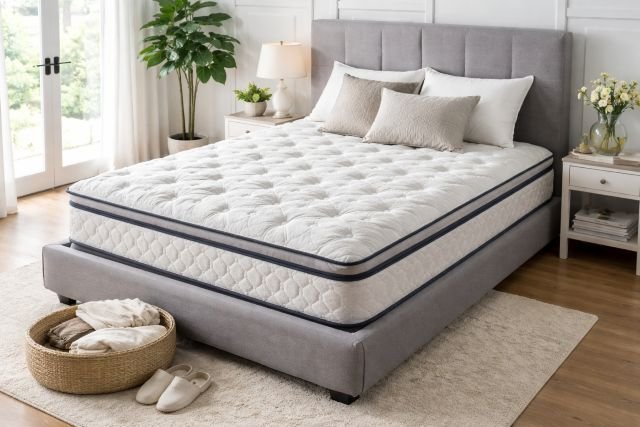
A pillow top mattress has an extra comfort layer stitched onto the top surface — like a built-in cushion. In modern designs, that “topper” can be made from foam, fiber fill, latex, or a mix. Some brands call it a Euro-top (a cleaner, more flush look with slightly firmer edge stitching).
For back pain relief, a pillow top works best when it does two jobs at once:
- Surface pressure relief: The top layer cushions shoulders/hips so you’re not forced into awkward angles.
- Deep support: Coils or dense foams underneath keep your pelvis and lower back aligned.
If you only get #1 (plushness) without #2 (support), you may feel comfortable at bedtime but wake up sore — especially if your hips sink and your lumbar spine twists overnight.
The back-pain “sweet spot” is usually support + pressure relief, not extreme firmness
One reason pillow tops get a bad reputation for back pain is that older-style pillow tops were often too plush and broke down faster. But today’s best pillow-top hybrids use zoned coils, sturdier foams, and reinforced lumbar sections specifically to keep your midsection from sagging.
A systematic review in Sleep Health found evidence favoring medium-firm (often self-adjusted/customized in studies) for sleep comfort, quality, and spinal alignment outcomes. Guidance for consumers also commonly advises “medium-firm” as a practical default when you’re unsure, because it balances support and cushioning.
Quick reality check: “Medium-firm” isn’t standardized. One brand’s medium may feel like another brand’s firm. That’s why trial periods and return policies matter.
Top-rated pillow top mattress picks for back pain relief (2026)
These picks are drawn from recent, reputable mattress testing roundups and brand specs, with an emphasis on models repeatedly highlighted for back support + plush comfort—the combination pillow-top shoppers usually want.
Saatva Classic (Euro-top hybrid) — best “hotel feel” with strong lumbar support
If you want a traditional luxury feel (not the slow-sink memory foam vibe), the Saatva Classic is a standout. It’s repeatedly recognized in back pain-focused awards and rankings, and reviewers often highlight its supportive coil system paired with a plush Euro-top.
Why it can work for back pain:
- The coil-on-coil hybrid structure tends to keep the spine lifted and stable.
- Multiple firmness options help you avoid the classic mistake: buying a pillow top that’s too soft for your body type.
Best for: back sleepers, combination sleepers, and anyone who wants cushion without feeling “stuck.”
WinkBed (Euro-pillow top hybrid) — strong for back pain with firmness choices
The WinkBed is a go-to recommendation in pillow-top guides and reviews, and its construction explicitly includes a Euro-pillow top in several firmness options. The brand even frames specific configurations around back pain shopping (while still emphasizing support layers under the plush top).
Why it can work for back pain:
- Euro-top for pressure relief, plus a supportive coil system designed to keep the spine aligned.
- Options matter: if you’re heavier or have pronounced lumbar issues, going firmer often prevents hip sink.
Best for: people who want a pillow top feel but need real support underneath.
Helix Midnight Luxe (plush pillow top + zoned lumbar support) — great when pain meets pressure points
If your back pain is mixed with shoulder/hip pressure (common for side sleepers and combo sleepers), the Helix Midnight Luxe is frequently praised for its pillow top feel plus targeted support.
Why it can work for back pain:
- Zoned lumbar support helps keep the midsection from dropping too low.
- The pillow top can reduce pressure points that otherwise rotate your spine out of neutral.
Best for: side sleepers with back discomfort, and couples needing a softer top without sacrificing support.
Stearns & Foster Lux Estate Pillow Top — premium cushioning with traditional support
For shoppers who want a luxury innerspring feel with a true pillow top finish, Stearns & Foster’s Lux Estate Pillow Top is often positioned as a “hotel upgrade” style mattress. Recent reviews note pressure-relieving comfort layers over a supportive innerspring core, with multiple firmness choices depending on the version.
Why it can work for back pain:
- You get plushness up top, but the support core is still innerspring-forward.
- Good fit for people who dislike the deep hug of all-foam beds.
Best for: people who want high-end cushioning but still prefer a buoyant, traditional feel.
Beautyrest Black (pillow top options) — cooling-forward luxury with multiple feels
Beautyrest Black has a wide range of firmness levels, including plush/pillow-top variants, and it’s widely reviewed with a focus on luxury materials and temperature features.
Why it can work for back pain:
- The key is selecting the right firmness: too plush can increase hip sink, but the right “medium-ish” feel can balance comfort and alignment.
- Helpful if you want a more traditional luxury mattress aesthetic and feel.
Best for: people who want a high-end pillow-top experience and can test in-store (or ensure the return policy works for them).
Brooklyn Bedding CopperFlex Pro Hybrid — a newer pillow-top favorite with support focus
Tom’s Guide’s 2026 pillow-top list highlights the Brooklyn Bedding CopperFlex Pro Hybrid as the top pick in their “best pillow-top mattresses” roundup. If you like a slightly more modern hybrid feel (often cooler and more responsive), it’s worth a serious look.
Why it can work for back pain:
- Hybrids often provide a stable support base with a plush comfort surface.
- Frequently positioned as a value-friendly way to get “luxury pillow-top comfort” without the highest luxury pricing.
Best for: shoppers who want pillow-top comfort plus a supportive hybrid core.
How to choose the right pillow top mattress for your back pain
1) Match firmness to your sleep position (and your hip-to-shoulder shape)
- Back sleepers: Usually do best with medium to medium-firm — enough cushion for the upper back, but not so soft that hips dip.
- Side sleepers: Often need more pressure relief at shoulders/hips, but still need lumbar support (zoned coils help).
- Stomach sleepers: Pillow tops can be tricky; too plush can arch the lower back. If you sleep partly on your stomach, lean firmer and thinner on the pillow top.
2) Don’t overbuy plushness — look for “progressive support”
A back-friendly pillow top usually feels soft at first touch, then firms up as you sink a bit deeper. That “ramp” of support is what keeps alignment intact.
3) Prioritize trial periods and easy returns (because marketing labels lie)
Even great mattresses can fail for your specific body mechanics. A trial lets you answer the only question that matters: Do you wake up better after 2–3 weeks?
Common mistakes that make a pillow top mattress worse for back pain
Choosing the softest option because the showroom feels amazing
Five minutes in a store often rewards plushness. Eight hours overnight rewards alignment.
Ignoring your foundation
A sagging box spring or slats spaced too wide can make a supportive mattress feel unsupportive fast.
Expecting a mattress to “fix” medical red flags
If your pain is severe, persistent, or includes numbness/weakness, treat the mattress as comfort support—not medical care. Sleep specialists stress that there’s no one-size-fits-all solution, and back pain needs individualized consideration.
Internal link idea: “Back Pain Sleep Positions That Reduce Morning Stiffness” (/sleep-positions-for-back-pain)
Real-world scenarios: which pillow top style fits best?
Scenario A: “I’m a back sleeper and my lower back feels tight in the morning.”
Start with a medium-firm hybrid Euro-top like Saatva Classic or WinkBed in a supportive feel. These are frequently highlighted for balancing cushion with structure.
Scenario B: “I’m a side sleeper, and my hips/shoulders ache — plus I get low-back soreness.”
Look for pillow-top hybrids with zoned lumbar support like Helix Midnight Luxe (plush top, reinforced middle).
Scenario C: “I want a luxury pillow top feel, but I run hot.”
Prioritize breathable covers and coil-based airflow; several modern pillow-top hybrids emphasize cooling features in their builds and reviews.
FAQ: pillow top mattress and back pain relief
Is a pillow top mattress good for back pain?
It can be — if it has a supportive core (usually quality coils or high-density foam) and a pillow top that relieves pressure without letting your hips sink too deeply. Many experts recommend focusing on balanced support + pressure relief rather than extreme firmness.
What firmness is best for back pain: plush, medium, or firm?
For many people with nonspecific low back pain, medium-firm is often a strong starting point, according to research summaries and reviews of clinical trials. That said, body weight and sleep position can push you slightly softer (lighter side sleepers) or firmer (stomach sleepers, heavier sleepers).
Are Euro-top and pillow top the same thing?
They’re similar in feel (extra plush layer on top). Euro-tops are usually stitched more flush with the mattress edges, which can make the surface feel a touch more uniform and stable.
How long does it take to know if a pillow top mattress helps my back?
Give it at least 2–3 weeks if possible (unless pain worsens sharply). Your body may need time to adjust, and new foams/quilting can slightly break in.
Do pillow tops wear out faster?
They can if the materials are low density or overly plush. Look for durable comfort foams, quality quilting, and strong underlying support — plus a good warranty and trial.
Conclusion: choosing the right pillow top mattress for back pain relief
A pillow top mattress can be a smart move for back pain relief when it combines plush comfort with serious support. Start by aiming for a “medium-firm-ish” balance, then narrow down based on your sleep position and whether you need extra lumbar zoning. If you want a classic luxury feel with supportive structure, models like the Saatva Classic and WinkBed are frequently recognized for back-friendly performance, while options like Helix Midnight Luxe add pillow-top plushness with targeted support for pressure points.