

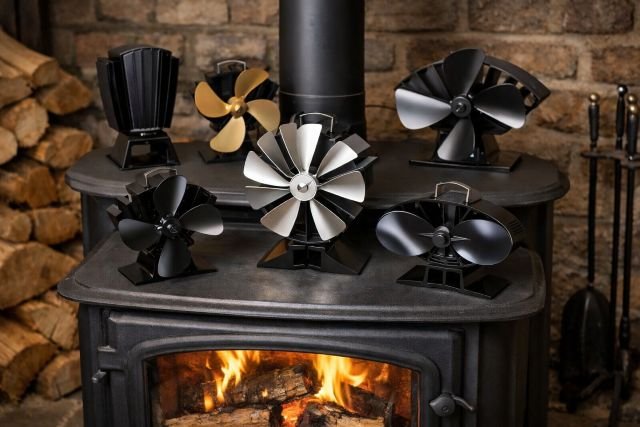
If you’re shopping for a fan for log burners, you’re probably chasing the same goal most stove owners have: get more warmth into the room (and fewer cold spots) without adding wiring, batteries, or noise. The good news is that heat-powered stove fans — often called thermoelectric stove fans — run purely from the heat your stove is already producing, using the Seebeck effect to generate just enough electricity to spin the blades.
- What a heat-powered fan for log burners actually does
- How to choose the best fan for log burners
- Top 7 fan for log burners that work without electricity
- Where to place a fan for log burners for the biggest difference
- Do stove fans actually save fuel?
- Safety and compliance notes that matter
- FAQ: fan for log burners
- Conclusion: choosing the right fan for log burners
In this guide, I’ll break down how these fans work, what specs actually matter, and the top 7 fan for log burners options that are genuinely worth considering — whether you want maximum airflow, a low start temperature, or a compact fan that fits awkward stove tops.
What a heat-powered fan for log burners actually does
A stove-top fan doesn’t create more heat. What it does is move warm air faster and more evenly, so heat doesn’t just pool at the ceiling or cling to the wall behind the stove. That usually makes a room feel warmer sooner and helps reduce the “hot near the stove, chilly across the sofa” problem.
These fans are self-powered: the base sits on the hot stove top, the top stays cooler, and that temperature difference drives a thermoelectric generator (TEG). That electricity powers a small motor, which turns the blades — no plugs required.
Quick definition (featured-snippet friendly)
A fan for log burners is a heat-powered stove fan that sits on the stove top and uses thermoelectric generation (Seebeck effect) to spin its blades and circulate warm air — without mains electricity.
How to choose the best fan for log burners
1) Airflow: CFM is your “how much air it moves” clue
Many brands use CFM (cubic feet per minute) to describe airflow. Bigger numbers usually mean stronger circulation, but design and placement still matter.
2) Start temperature: especially important in mild weather
Some fans start spinning around 50°C (great when your stove is just getting going). For example, Valiant highlights a low starting temperature of about 50°C for its Premium 4.
3) Safe operating range: don’t cook the module
Overheating is the fastest way to shorten a fan’s life. Caframo’s Ecofan instructions describe typical stove-surface use around 85°C–345°C (185°F–650°F) and warn that temperatures above 345°C/650°F can damage the fan.
4) Stove-top layout: flat top, flue position, and usable space
Many manuals advise avoiding the hottest zones (often near the flue collar) and positioning so cool air can flow over the fins.
5) Build quality + warranty
A heat-powered fan is a small device living in a harsh environment. A clear warranty and real operating guidance usually correlate with better engineering.
Top 7 fan for log burners that work without electricity
1) Caframo Ecofan AirMax (Model 812) — best “serious airflow” pick
If you want one of the more established, performance-focused options, the Ecofan AirMax 812 is widely cited for higher airflow and a broad operating temperature range (about 85°C–345°C / 185°F–650°F).
Why it’s a strong choice: it’s built by a long-running brand in this niche, and it comes with detailed operating instructions (including explicit overheat guidance). That’s exactly what you want for something sitting on a 300°C slab of steel.
Best for: larger rooms, open-plan spaces, and people who want “set it and forget it” reliability.
2) Valiant Premium 4 — best low-profile fan for log burners
Valiant’s Premium 4 is popular in the UK market and is specifically pitched as compact (around 199mm tall) while still pushing strong airflow; Valiant also claims up to 70% more airflow than competitor products and notes a low starting temperature of roughly 50°C.
In real homes, low-profile matters more than people expect — especially if you’ve got a convection stove top, a narrow shelf of usable flat area, or a kettle permanently hogging prime real estate.
Best for: smaller stove tops, alcoves, and anyone who wants faster startup performance.
3) VODA 4-Blade Heat Powered Stove Fan — best budget-friendly “does the job” option
VODA is one of the most common entry points for people trying a heat-powered fan for the first time. The brand markets improved circulation and even claims reduced fuel use and faster room warming (marketing claims should be taken as directional rather than guaranteed).
If your goal is simply to smooth out hot/cold spots and you don’t need premium materials, VODA’s 4-blade designs are often the value pick.
Best for: first-time buyers, guest rooms, cabins, and tighter budgets.
4) Signstek Heat Powered Stove Fan (6-blade models) — best for wider heat spread
If your stove area tends to create a narrow “blast” of warm air rather than a broad, gentle flow, a wider multi-blade fan can help distribute warmth across the room more evenly. Signstek markets its stove fans as designed to distribute heat more efficiently than smaller blade configurations.
This category is often chosen for bigger rooms or where seating is off to the side (so you want heat to travel horizontally rather than rising straight up).
Best for: wider rooms, awkward layouts, and “cold corner” problems.
5) Tomersun 4-Blade Heat Powered Stove Fan — best simple, lightweight everyday choice
Tomersun’s heat-powered fans are a common mid-range choice aimed at straightforward warm-air circulation without fuss. If you want something basic — put it on the stove, it spins, you forget about it—this is the type of product people buy.
The key here is expectations: you’re not buying a wind tunnel. You’re buying smoother comfort and faster mixing of warm air.
Best for: average-sized living rooms and occasional stove users.
6) GalaFire Heat Powered Stove Fan — best for quiet, minimalist warmth circulation
GalaFire’s positioning leans into quiet operation and a simple, no-assembly experience. If you’re sensitive to mechanical noise (or you love the natural sound of the fire), a fan that’s designed to be unobtrusive matters.
Best for: reading rooms, snug lounges, and noise-sensitive households.
7) Ecofan placement + safety-led approach — best “system” upgrade (fan + thermometer habit)
This last recommendation is a little different: the “best” setup isn’t only the fan—it’s pairing a good fan with good temperature awareness.
Ecofan’s own instructions strongly recommend avoiding overheating and using a stove thermometer; they explicitly warn that exceeding 650°F / 345°C may damage the fan.
If you’re investing in any premium thermoelectric fan, adopting the “thermometer + correct placement” habit is the upgrade that protects your purchase.
Best for: anyone who runs hot fires, burns long hours, or wants maximum lifespan.
Where to place a fan for log burners for the biggest difference
Most stove-top fans work best when they can do two things:
- sit on a hot, flat zone for strong power, and
- stay cool enough on top (and at the fins) to maintain a temperature difference.
Many manufacturer-style instructions caution against placing the fan directly in front of the stove pipe/flue area and emphasize airflow across the cooling fins.
A practical rule: start near the back/side of the stove top (not hugging the flue collar), then adjust based on how your room heats.
Do stove fans actually save fuel?
They can help you use the heat you already produced more effectively in the room by mixing air faster — but they don’t increase stove efficiency in the same way a better stove or better fuel does.
For context, agencies like the U.S. Department of Energy and the EPA focus efficiency and emissions improvements on the appliance and fuel quality (modern certified appliances, proper burning practices, etc.). A stove fan is best seen as a comfort optimizer, not a magic efficiency engine.
Safety and compliance notes that matter
A stove fan is not a substitute for correct stove installation, ventilation, or safety checks. If you’re in the UK, building guidance for ventilation exists in Approved Documents (e.g., Part F for ventilation guidance and Part J for combustion appliances via linked regulatory guidance sources).
And for the fan itself: temperature discipline matters. Manufacturer guidance like Ecofan’s explicitly warns against overheating and recommends using a stove thermometer.
FAQ: fan for log burners
What is the best fan for log burners?
For many people, “best” depends on your room size and stove-top space. Higher-airflow models like the Ecofan AirMax 812 are often chosen for bigger rooms, while compact low-start-temp designs like the Valiant Premium 4 suit tighter installations.
Do heat powered stove fans need electricity?
No. A heat-powered fan for log burners generates its own electricity from heat using thermoelectric generation (Seebeck effect).
What temperature should a stove fan run at?
It varies by model, but many premium fans are designed around typical stove-top temperatures and warn against overheating. For example, Ecofan documentation cites use around 185°F–650°F (85°C–345°C) and warns above 650°F / 345°C may damage the unit.
Where should I place a stove fan on a log burner?
Avoid the hottest zones (often near the flue collar). Manufacturer-style guidance commonly advises placing the fan so cool air can flow across the fins, and not directly in front of the stove pipe.
Are stove fans noisy?
Most are designed to be quiet because they run on small motors and limited power, but noise varies by build quality and balance. Brands like GalaFire position their fans as quiet, while premium fans often focus on blade design and stability.
Conclusion: choosing the right fan for log burners
A well-chosen fan for log burners is one of the simplest “no electricity” upgrades you can make for comfort: it helps push warmth out into the room, reduces cold spots, and makes the heat feel more immediate — especially in open-plan spaces.
If you want maximum performance, look toward established high-airflow designs like the Ecofan AirMax range and follow the temperature guidance closely. If you need compact practicality and a low start temperature, Valiant’s Premium 4 is built specifically for that niche. And if you’re testing the concept on a budget, VODA-style 4-blade fans are often the easiest entry point.