

If you’ve ever searched “plastic cup plastic,” you’re probably trying to answer one simple question: Which plastic cup is actually safe for my kids — and for everyday family use? The tricky part is that “plastic” isn’t one material. It’s a whole category of polymers, additives, coatings, and manufacturing choices that behave very differently when you pour in hot tea, acidic juice, or run cups through the dishwasher.
- What does “plastic cup plastic” really mean?
- The family safety baseline: what to avoid first
- Plastic types in cups: the quick “safer choice” hierarchy
- How to read labels without getting misled
- The big three exposure concerns
- A simple decision guide: choose the safest cup for your household
- The “resin code” mini-cheat sheet
- Real-world scenarios (so the advice sticks)
- Actionable tips to make plastic cups safer (even if you keep using them)
- Common questions
- Conclusion: Choosing the safest “plastic cup plastic” option
The good news is you can make smart, low-stress choices without becoming a chemist. In this guide, you’ll learn what “safe” really means for plastic drinkware, which plastics are generally better for families, what labels and resin codes can (and can’t) tell you, and how to reduce exposure to concerning chemicals and microplastics — especially for children.
What does “plastic cup plastic” really mean?
In plain English, plastic cup plastic is usually shorthand for the type of plastic your cup is made from and whether it’s appropriate for:
- hot vs. cold drinks
- repeated washing
- children (who are more sensitive to certain exposures)
- avoiding unwanted chemicals and plastic shedding over time
“Safest” in this context typically means: lower likelihood of chemical migration (leaching), fewer concerning additives, and better performance under heat and wear. Regulators evaluate many food-contact materials, but scientific debate and evolving evidence mean your best strategy is to choose safer materials and use them in safer ways. For example, even when a material is allowed for food contact, heating and scratching can increase migration and shedding.
The family safety baseline: what to avoid first
Before choosing the “best” plastic cup, it helps to know what tends to create the most concern in everyday home use.
Avoid repeated heat + old, scratched plastic
Heat and wear matter. Scientific and medical commentary continues to highlight that warming food or drinks in plastic can increase migration of plastic components into what you consume.
And the microplastics conversation is getting more specific: research and reporting in recent years increasingly emphasize that heating plastics (including some “microwave-safe” items) can accelerate microplastic/nanoplastic release.
Family rule of thumb: the more heat + the more scratches, the more you should lean toward glass, stainless steel, or ceramic — especially for kids.
Be cautious with BPA and “bisphenol” substitutes
Bisphenol A (BPA) has been widely discussed for years. The FDA’s position (based on its assessments for currently approved uses) is that BPA is safe at the levels currently occurring in foods.
At the same time, Europe’s food safety authority EFSA dramatically lowered its tolerable daily intake (TDI) for BPA in 2023, reflecting a more cautious interpretation of the evidence and concluding concern from dietary exposure at that new TDI.
What this means for families: If you want the most conservative approach, choose cups that are not only “BPA-free,” but also avoid polycarbonate-type #7 plastics and look for clearer disclosure on materials and testing.
Don’t assume “eco” cups are plastic-free
Many paper cups are lined with plastic to prevent leaks. If your goal is avoiding plastic contact, “paper” doesn’t automatically solve it.
Plastic types in cups: the quick “safer choice” hierarchy
No plastic is perfect, but some are generally considered better suited for drinkware, especially for cold or room-temperature use.
H2: Plastic cup plastic types that are typically safer for families
1) Polypropylene (PP, resin code #5)
Often used in reusable food containers and some drinkware. It tends to handle warmth better than many other common plastics, though “better” doesn’t mean “ideal for boiling liquids” or repeated harsh heat cycles.
2) High-density polyethylene (HDPE, #2)
Common in food packaging; often considered relatively stable for cold/room-temp use.
3) Low-density polyethylene (LDPE, #4)
Used in some flexible food-contact applications; more common in lids than in rigid cups.
Plastics families often choose to minimize for cups:
- Polystyrene (PS, #6): common in disposable foam cups; many families avoid for both environmental and exposure reasons.
- PVC (#3): more common in tubing/packaging than cups; concerns often relate to plasticizers.
- “Other” (#7): a catch-all category that can include polycarbonate and many blends.
How to read labels without getting misled
“BPA-free” isn’t the finish line
BPA-free only tells you one chemical may be absent. It doesn’t necessarily tell you:
- what replaced it (other bisphenols or additives)
- whether the cup sheds microplastics under heat and wear
- how it performs after months of dishwashing
If you’re choosing plastic, prioritize cups that also provide:
- clear material disclosure (e.g., “PP #5”)
- third-party certifications for food-contact safety when available
- use instructions (temperature limits, dishwasher rack placement)
“Microwave-safe” doesn’t mean “chemically inert”
“Microwave-safe” often focuses on whether an item warps, melts, or becomes dangerously hot — not whether it sheds microplastics or releases trace chemicals under repeated heating. The safest habit is still to transfer hot liquids/foods to glass or ceramic when possible.
The big three exposure concerns
1) Additives like phthalates (more relevant to some plastics than others)
Phthalates are a class of chemicals historically used as plasticizers in some applications. The FDA has reported that market use in certain food-contact applications appears to be decreasing based on its testing of samples over multiple years.
Practical takeaway: You don’t need to panic — but it’s still smart to choose reputable brands and avoid questionable, very soft plastics for drinkware.
2) Bisphenols (BPA and the “BPA-free” question)
As noted, FDA and EFSA do not fully align in their risk framing.
Practical takeaway: If you want the simplest conservative approach for kids, use:
- stainless steel or glass for hot drinks
- PP (#5) for lightweight reusable plastic cups (cold/room temp)
- avoid #7 unless the manufacturer is very transparent about what it is
3) Microplastics and nanoplastics
Microplastics have been detected in drinking-water systems, and the WHO has assessed the evidence base while calling for better research and standardized methods.
Meanwhile, newer reporting highlights that bottled water can contain large numbers of tiny plastic particles, with studies using advanced methods finding far higher counts than older microplastic-only approaches.
Practical takeaway: For families trying to reduce everyday plastic intake:
- use filtered tap water when safe and feasible
- reduce reliance on single-use bottles
- avoid heating plastic drinkware
A simple decision guide: choose the safest cup for your household
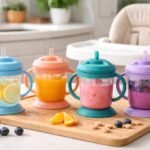
If the cup is for toddlers and young kids
Kids chew rims, drop cups, and you’ll wash them constantly. Priorities are durability, minimal additives, and minimal shedding.
Best picks:
- Stainless steel kids cups (often the most durable and conservative choice)
- Tempered glass with a silicone sleeve (great at home, less ideal for travel)
- PP (#5) plastic from reputable brands for lightweight, drop-friendly use
What to avoid:
- unknown plastics (no resin code/material listed)
- older, cloudy, scratched cups
- frequent hot-liquid use in plastic cups
If you need cups for school lunches and daily outings
You want light, tough, and leak-resistant.
Best picks:
- PP (#5) reusable cups/bottles used for cold or room-temperature drinks
- stainless steel bottles for water (especially if the bottle will sit in the sun)
Habit that helps:
- don’t leave sugary/acidic drinks sitting in plastic for long hours in heat
If you serve hot drinks (tea, coffee, hot chocolate)
This is where the “safest plastic cup” question often turns into “don’t use plastic.”
Best picks:
- ceramic mugs
- stainless steel tumblers with heat-rated lids
- glass mugs
If you must use a plastic option:
- look for reputable manufacturers with clear temperature limits and material disclosure
- retire the cup earlier at the first signs of wear
The “resin code” mini-cheat sheet
Resin codes are a starting point, not a guarantee. Still, they help you quickly sort cups:
| Resin code | Plastic | Typical family takeaway |
|---|---|---|
| #1 | PET | Usually single-use; not ideal for repeated hot washing |
| #2 | HDPE | Often a steadier choice for cold/room temp |
| #4 | LDPE | Often in lids; generally for cold/room temp |
| #5 | PP | Common “better pick” for reusable plastic drinkware |
| #6 | PS | Many families minimize/avoid for cups |
| #7 | Other | Mixed bag; includes polycarbonate and blends — needs scrutiny |
Real-world scenarios (so the advice sticks)
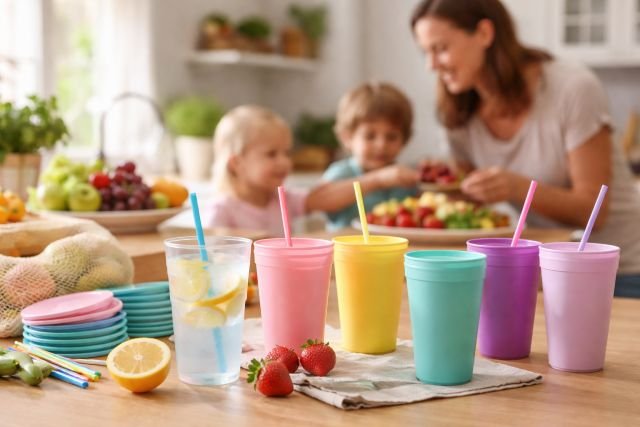
Scenario 1: “We use plastic tumblers for everything — water, juice, tea”
If tea is going into those tumblers daily, your family’s biggest easy win is switching hot drinks to ceramic or stainless steel and keeping plastic tumblers for cold drinks only. This one change reduces heat-driven migration risk without forcing a total kitchen overhaul.
Scenario 2: “My kid only drinks water from a clear ‘BPA-free’ bottle”
Clear bottles are often what parents prefer, but “clear + hard” plastics can be more likely to include certain “other” blends. If the bottle is #7 and the brand isn’t transparent, consider moving to stainless steel or PP #5.
Scenario 3: “We buy lots of bottled water”
If your goal is reducing plastic exposure, bottled water is a common place to start, especially given studies finding high levels of tiny plastic particles in bottled water.
A practical switch is a good water filter + reusable bottle strategy.
Actionable tips to make plastic cups safer (even if you keep using them)
Here are habits that typically reduce risk without making life annoying:
- Use plastic cups mainly for cold/room-temperature drinks.
- Replace cups that are scratched, cloudy, or smell “plasticky.” Wear increases surface shedding potential.
- Avoid harsh heat cycles. High-heat dishwasher drying can be rough; follow manufacturer guidance.
- Don’t store hot liquids in plastic for long periods (like sending warm drinks in plastic to school).
- Buy from brands that disclose material type (e.g., “PP #5”) and provide temperature guidance.
Common questions
What is the safest plastic for reusable cups?
For many families, polypropylene (PP, #5) is often treated as a “better” reusable plastic option because it’s widely used for food-contact items and tends to handle normal use better than some alternatives. Still, for hot drinks, stainless steel, glass, or ceramic are usually more conservative choices.
Is “BPA-free” plastic automatically safe?
Not automatically. “BPA-free” only speaks to BPA, not other additives or the cup’s behavior under heat and wear. Regulatory perspectives also differ internationally, with EFSA taking a more cautious stance on BPA exposure in its 2023 re-evaluation.
Do plastic cups release microplastics?
They can, especially as plastics wear, scratch, or are exposed to heat. Research and reporting increasingly highlight that heating plastic containers can increase microplastic/nanoplastic release.
Are paper cups safer than plastic cups?
Not always. Many paper cups are lined with plastic to prevent leaks, so they may still involve plastic contact and plastic-related environmental issues.
Conclusion: Choosing the safest “plastic cup plastic” option
The safest approach to plastic cup plastic is simple: use non-plastic for hot drinks, and when you do choose plastic, pick reputable, clearly labeled materials (often PP #5) and treat cups as wearable items — replace them when they scratch, cloud, or age.
Because scientific understanding and regulatory perspectives can differ (as seen with BPA evaluations across agencies), a family-safe strategy is less about chasing a perfect label and more about smart defaults: lower heat, less wear, better materials, and better habits. If you apply those principles, you’ll meaningfully reduce potential chemical migration and microplastic exposure — without making everyday life harder.