

Erection problems rarely show up out of nowhere. In many men, they build slowly — one “small” habit at a time — until performance becomes inconsistent, confidence drops, and intimacy starts to feel stressful. That’s why understanding erection all risks matters: the everyday choices that quietly strain blood flow, hormones, nerves, and mood can add up to a real, measurable decline in erectile function.
- What “erection all risks” really means
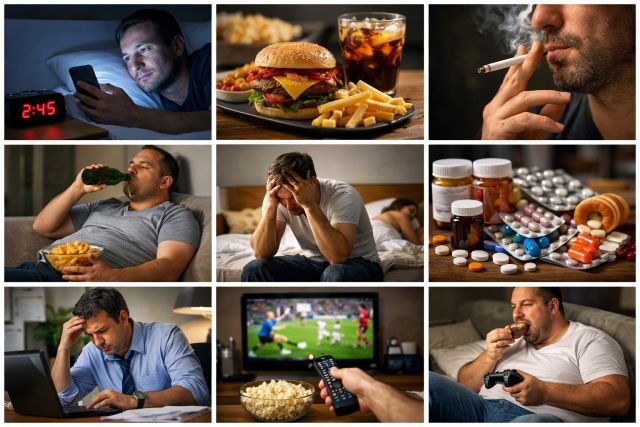
- Habit 1: Sitting for long stretches (especially screen-heavy evenings)
- Habit 2: Sleeping too little (or sleeping badly)
- Habit 3: Daily stress overload (and never downshifting)
- Habit 4: Smoking or vaping (even “socially”)
- Habit 5: Drinking more often than you think (and calling it “normal”)
- Habit 6: Eating like your arteries don’t matter
- Habit 7: Gaining belly fat and doing nothing about it
- Habit 8: Ignoring medication side effects (and not talking to your doctor)
- Habit 9: Training your arousal to one narrow stimulus (and carrying it into real life)
- The “quiet” warning signs you shouldn’t brush off
- What to do first (a realistic 14–30 day reset)
- FAQ
- Conclusion: reducing erection all risks without overcomplicating it
The good news is that many of the biggest erection all risks are modifiable. You don’t need perfection — you need awareness, a few smart swaps, and a plan that targets the most common lifestyle triggers. This article breaks down nine surprisingly common habits that make erections worse, why they work against your body, and what to do instead (without turning your life upside down).
What “erection all risks” really means
When people search erection all risks, they’re usually looking for two things at once: what causes erections to worsen over time, and what raises the risk that the problem becomes persistent (rather than occasional).
Medically, an erection depends on healthy blood vessels, intact nerves, balanced hormones (especially testosterone), and a brain that’s not stuck in stress mode. Conditions like diabetes, heart disease, high blood pressure, obesity, smoking, and mental health stressors can all contribute.
There’s also an important “hidden” part: erectile dysfunction can be a signal of broader cardiovascular health, because penile arteries are smaller and may show blood-flow problems earlier than the heart does.
If you want a quick gut-check: if your erections are getting less reliable over weeks to months, it’s worth treating it as a health clue — not just a bedroom issue.
Habit 1: Sitting for long stretches (especially screen-heavy evenings)
A lot of men think, “I work out sometimes, so I’m fine.” But one of the sneakier erection all risks is long, uninterrupted sitting, particularly leisure time on computers.
A large genetic-analysis study (Mendelian randomization) found that higher genetic susceptibility to leisure computer use was associated with markedly higher odds of erectile dysfunction, suggesting more than just coincidence.
Why it matters: prolonged sitting is linked with poorer vascular function, worse blood sugar control, weight gain, and lower overall circulation — exactly the systems erections rely on.
What helps most is not “one heroic workout,” but breaking up sitting. If you stand, walk, or do a quick set of bodyweight movements every hour, you’re repeatedly turning blood-flow systems back on.
Habit 2: Sleeping too little (or sleeping badly)
Sleep is not a luxury for erections — it’s part of the machinery.
Testosterone production is strongly tied to sleep, and research has shown sleep restriction can reduce testosterone levels in healthy young men. Lower testosterone doesn’t just affect libido; it can affect erection quality and recovery after arousal.
There’s also the sleep-disruption loop: poor sleep increases stress hormones, worsens insulin resistance, and makes workouts harder to sustain. If your sleep is fragmented, your body is basically trying to build erections with the battery half-charged.
A practical, realistic approach is to protect a consistent sleep window and treat snoring or possible sleep apnea seriously (sleep apnea is commonly linked with sexual health issues through oxygen dips and hormone disruption).
Habit 3: Daily stress overload (and never downshifting)
Stress isn’t “all in your head.” It has a physical effect: adrenaline and cortisol keep blood vessels tighter and push your body into a performance state that’s great for deadlines — but terrible for arousal.
Many men notice the pattern: erections are better on vacation, weekends, or after a truly relaxing evening. That’s not random. A calmer nervous system supports the blood-flow changes needed for erection.
If this habit is yours, the fix is not “avoid stress” (impossible). It’s building a predictable downshift ritual: a 10–15 minute walk after dinner, slow breathing before bed, strength training earlier in the day, or therapy/coaching if anxiety is persistent. Mayo Clinic also recognizes stress, depression, and anxiety as contributors to ED.
Habit 4: Smoking or vaping (even “socially”)
If you want the highest-impact habit to change for erections, it’s this one.
Smoking damages blood vessel function and nitric oxide signaling, which are essential for erections. A systematic review and meta-analysis found an association between smoking and increased risk of erectile dysfunction. More recent clinical reviews continue to emphasize smoking as a major contributor and discuss improvements with cessation.
Even if you only smoke “sometimes,” the vascular effects can still show up. Many men don’t notice it right away—until they do.
What to do: treat quitting as a performance upgrade, not a morality project. Use evidence-based cessation tools (nicotine replacement, prescription support, counseling), and track improvements in morning erections as a motivating metric.
Habit 5: Drinking more often than you think (and calling it “normal”)
Alcohol can be a double hit: it can reduce erectile response in the moment (nervous system effects) and worsen sexual function long-term with heavier use.
Meta-analyses have examined alcohol consumption and ED risk across large participant samples, supporting a relationship between alcohol and erectile dysfunction risk — especially as intake increases.
A common scenario: a man drinks most evenings to “take the edge off,” sleeps worse, wakes up less refreshed, works out less, gains abdominal fat, and notices erections fading — then drinks more to cope with the stress. That spiral is very real.
A helpful middle ground is a 2–4 week “reset” (not forever), then reintroducing alcohol with clear boundaries — especially avoiding heavy drinking close to sex or sleep.
Habit 6: Eating like your arteries don’t matter
Erections are a blood-flow event. So the same habits that harm cardiovascular health often harm erectile health — sometimes earlier.
NIDDK notes that a healthy diet can lower the risk of developing ED and improve symptoms. And major clinical sources list obesity, diabetes, high blood pressure, and high cholesterol among common contributors.
The sneaky habit here is not one burger — it’s the pattern: frequent ultra-processed foods, sugary drinks, late-night grazing, and low fiber. Over time, this shifts blood sugar control, inflammation, and waist size in the wrong direction.
If you want the simplest starting move: anchor one meal per day around protein + vegetables + a high-fiber carb, and swap sugary drinks for water or unsweetened options. That single shift often improves energy and reduces cravings, which then makes exercise and sleep easier.
Habit 7: Gaining belly fat and doing nothing about it
Weight changes don’t just affect confidence — they affect hormone balance, inflammation, and blood vessel function.
Clinical trials have shown that lifestyle change and weight loss can improve erectile function in obese men. For example, a randomized trial published in JAMA examined weight loss and increased physical activity and found improvements in erectile and endothelial function.
You don’t need dramatic weight loss for benefits. Many men see erection quality improve with modest reductions in waist circumference plus consistent movement. The biggest payoff comes from pairing resistance training with daily walking and improving sleep — because those three reinforce each other.
Habit 8: Ignoring medication side effects (and not talking to your doctor)
One of the most overlooked erection all risks is assuming ED is “just aging” while a medication is quietly contributing.
NIDDK lists medicines — such as some blood pressure drugs and antidepressants — as factors that can increase ED risk. Antidepressant-associated sexual dysfunction is widely reported, and recent studies still find high rates among users (exact rates vary by drug, dose, and measurement method).
This does not mean you should stop medications on your own. It means you should bring it up clearly and early. Many options exist: dose adjustments, switching within a class, adding an alternative medication, or using ED-specific treatment while protecting mental health.
A useful script: “This medication is helping, but my erections have changed since starting it. What alternatives or strategies do we have?”
Habit 9: Training your arousal to one narrow stimulus (and carrying it into real life)
This is delicate, and it’s also common: some men notice erections are strong with a specific type of high-intensity stimulation (often fast, novel, highly visual content), but less reliable with a real partner — especially when stress is high.
Research here is still debated and complicated, but studies have examined associations between problematic pornography consumption and ED in young men, suggesting a relationship for some users — especially when usage becomes compulsive or interferes with partnered intimacy.
The practical takeaway is not shame. It’s training. If your brain gets used to novelty on demand, real-life arousal (which includes timing, connection, and unpredictability) can feel slower. Some men benefit from reducing frequency, avoiding escalation to more extreme content, and rebuilding arousal with partnered intimacy, slower pacing, and less performance pressure.
The “quiet” warning signs you shouldn’t brush off
If you’re noticing any of the following consistently for a month or more, it’s worth treating them as real signals rather than bad luck: fewer morning erections, softer erections, needing much more stimulation, losing erection when changing positions, or erections that vanish when you feel pressured.
Because ED can be linked with cardiovascular risk factors, persistent changes are a good reason to check blood pressure, fasting glucose/A1C, lipids, sleep quality, and medication side effects.
What to do first (a realistic 14–30 day reset)
If you’re overwhelmed, don’t try to fix all nine habits. Pick the two with the highest payoff:
Start with sleep + movement breaks, or quitting smoking + cutting alcohol for a short reset. Then add nutrition improvements and stress downshifting.
If belly fat is part of the picture, focus on consistent steps, resistance training, and a simple food structure. Lifestyle change has evidence for improving erectile function in overweight men.
If you suspect meds are involved, make that appointment and discuss options rather than silently enduring it.
FAQ
What are the biggest erection all risks in daily life?
The biggest erection all risks are habits that reduce blood flow, disrupt hormones, or increase stress: prolonged sitting, poor sleep, smoking, heavy alcohol use, weight gain, ultra-processed diets, unmanaged stress, and ignoring medication side effects.
Can lifestyle changes really improve erections?
Yes. Clinical research shows that weight loss and increased physical activity can improve erectile and endothelial function in obese men, and major health resources support diet and lifestyle changes as part of ED prevention and management.
Is erectile dysfunction connected to heart health?
Often, yes. ED and heart disease share risk factors such as diabetes, smoking, and high blood pressure, and ED can appear earlier because penile arteries are smaller and more sensitive to reduced blood flow.
When should I see a doctor?
If erection problems persist for several weeks, get worse, or come with symptoms like chest pain, shortness of breath, or signs of diabetes/sleep apnea, see a clinician. ED can be a symptom of other health problems and may involve medication side effects, vascular issues, or hormonal changes.
Conclusion: reducing erection all risks without overcomplicating it
If you take one thing from this guide, let it be this: erection all risks are often cumulative. You don’t “fail” sexually overnight — your blood vessels, hormones, sleep, stress load, and habits slowly shift, and your erections follow.
The most effective strategy is to start small but high-impact: break up sitting, protect sleep, cut back alcohol, stop smoking, improve food quality, and address stress and medication side effects proactively. Because erections are a vascular and nervous-system event, the same changes that improve overall health often improve bedroom performance too.