

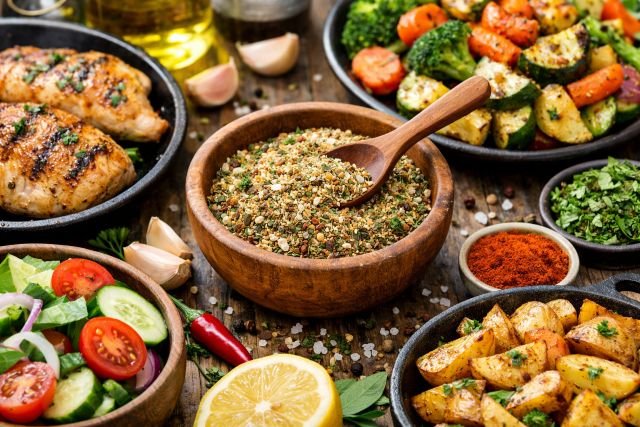
If you’ve ever stood in front of your spice cabinet wondering what to sprinkle on dinner, you’re not alone. The magic of a truly great all purpose seasoning is that it saves time and makes almost anything taste better — chicken thighs on a weeknight, sheet-pan vegetables, roasted potatoes, even scrambled eggs.
- What Is All Purpose Seasoning?
- The Best All Purpose Seasoning Has These 6 Qualities
- Why Seasoning Strategy Matters for Health, Too
- The Best All Purpose Seasoning for Chicken
- The Best All Purpose Seasoning for Veggies
- A “Goldilocks” DIY All Purpose Seasoning Blend
- How Much All Purpose Seasoning to Use (Without Overthinking It)
- Common Mistakes That Make Seasoning Taste “Off”
- Best Use Cases: Chicken, Veggies, and Beyond
- Featured Snippet: Quick Definition + Best Choice Criteria
- FAQ: People Also Ask About All Purpose Seasoning
- Conclusion: Your Go-To All Purpose Seasoning, Dialed In
But not every “all-purpose” blend is actually all-purpose. Some are basically salt with a little paprika. Others are so strongly themed (taco, curry, Cajun) that they only work in a narrow lane. The best all purpose seasoning hits a sweet spot: balanced salt, savory depth, gentle heat, and enough herbs and aromatics to taste like you planned the meal.
In this guide, you’ll learn what makes an all-purpose blend genuinely versatile, how to choose the right one for chicken and vegetables, and how to use it like a pro — whether you buy it or mix your own.
What Is All Purpose Seasoning?
All purpose seasoning is a pre-mixed spice blend designed to work across multiple foods and cooking methods — grilling, roasting, sautéing, air frying, and even soups. A good one typically includes:
- Salt (or a salt-free base with salt added separately)
- Aromatics like garlic and onion
- A warm backbone like paprika
- Herbs for freshness (oregano, thyme, parsley)
- Pepper or mild chili for lift
- Optional “umami boosters” (celery seed, mushroom powder, nutritional yeast)
The reason it works is simple: most savory foods benefit from the same flavor building blocks — salt + aromatics + fat + heat. A balanced blend helps you nail that combination faster.
The Best All Purpose Seasoning Has These 6 Qualities
1) Balanced salt (not salt-dominant)
Salt makes flavor pop, but too much turns a “seasoning” into a sodium bomb. Dietary guidance commonly cites staying under 2,300 mg sodium/day for adults.
A blend that’s mostly salt makes it easy to overshoot — especially if you also salt meat, use broth, or add cheese.
What to look for on the label: sodium per 1/4 tsp or 1/2 tsp. Lower-sodium blends give you more control.
2) Strong aromatics (garlic + onion)
Garlic and onion powders are the backbone of “tastes-good-on-everything.” They add savory depth that works across proteins and vegetables, and they hold up in high-heat cooking.
3) A “warm” spice base (paprika is king)
Paprika brings color and a gentle sweetness that flatters chicken, potatoes, and roasted vegetables. Smoked paprika leans barbecue-ish; sweet paprika is more neutral.
4) Herbs that don’t turn grassy
Too much dried herb can taste dusty. The best blends use herbs lightly so they support instead of shouting. Oregano and thyme are usually the most flexible.
5) Pepper or mild chili for lift (not pain)
A little black pepper or chili adds “wake up” energy. The blend should taste lively, not like a dare.
6) Optional umami support
This is the difference between “fine” and “wow.” Mushroom powder, tomato powder, nutritional yeast, or even a pinch of celery seed can deepen savoriness without making the blend taste like one specific cuisine.
Why Seasoning Strategy Matters for Health, Too
Many people want big flavor while watching sodium. Average sodium intake is often reported as well above recommendations, and the American Heart Association notes an average over 3,300 mg/day, while recommending no more than 2,300 mg/day (with an ideal 1,500 mg/day for many adults).
Here’s the good news: herbs and spices can help food taste satisfying even when you reduce salt. NIH/NHLBI explicitly encourages using herbs and spices instead of salt as a heart-healthy flavor strategy.
Research also supports that herbs/spices can enhance perceived saltiness in reduced-sodium foods.
You don’t have to make your seasoning “health food.” You just want it to be smart flavor—so you can season confidently without leaning on salt as the only lever.
The Best All Purpose Seasoning for Chicken
Chicken is the perfect test because it’s mild. If your blend is unbalanced, chicken exposes it.
For juicy chicken: pair the seasoning with fat + time
An all-purpose blend works best when it has something to cling to. Toss chicken with a little oil (or yogurt for a tangy marinade), then season.
Quick rule: season earlier for thicker cuts.
- Thin cutlets: season 10–15 minutes before cooking.
- Thighs/drumsticks: season 30–60 minutes before.
- Whole bird: season the night before if possible.
Use different amounts for different cuts
Breasts need a lighter hand; thighs can take more. Dark meat has more fat and richer flavor, so it tolerates bolder seasoning.
Keep the burn low if you’re using high heat
If your blend has sugar or lots of paprika, it can darken quickly in a hot skillet. That’s not “bad,” but it can taste bitter if it goes too far. For searing, use medium heat and finish in the oven or with a lid.
The Best All Purpose Seasoning for Veggies
Vegetables love seasoning, but they need one extra thing: surface contact.
Roasted and air-fried veggies
If you’re roasting broccoli, carrots, cauliflower, zucchini, or Brussels sprouts, do this:
- Dry the veg well.
- Toss with oil first.
- Add seasoning last so it sticks evenly.
If you season too early on watery vegetables (like zucchini), the spices can clump.
Sautéed veggies
Start with oil, add veg, then add seasoning halfway through. This prevents powdered garlic/onion from scorching on an empty pan.
Raw or quick-pickled veggies
All-purpose blends can work in dressings too — especially if the mix includes herbs. Combine olive oil + lemon + a pinch of seasoning, then toss cucumbers, tomatoes, or shredded cabbage.
Cleveland Clinic also highlights using citrus, herbs, garlic, and spices as flavor alternatives when reducing salt.
A “Goldilocks” DIY All Purpose Seasoning Blend
If you want one blend that works for chicken, vegetables, potatoes, and even popcorn, this formula is designed to stay neutral but exciting.
DIY blend (balanced, not overly salty)
- 2 tbsp garlic powder
- 2 tbsp onion powder
- 1 tbsp paprika (sweet or smoked)
- 2 tsp black pepper
- 2 tsp dried oregano
- 2 tsp dried thyme
- 1–2 tsp chili flakes or cayenne (optional, to taste)
- 1 tbsp kosher salt or skip salt and salt food separately
Why this works: garlic/onion build savory foundation; paprika adds warmth and color; herbs add lift; pepper adds bite; salt stays adjustable.
Storage tip: keep in an airtight jar away from heat and light for best flavor.
How Much All Purpose Seasoning to Use (Without Overthinking It)
Here’s a simple starting point. Adjust up or down based on saltiness of your blend.
- Chicken pieces (1 lb / ~450g): 1½ to 2½ tsp
- Ground meat (1 lb): 2 tsp
- Roasted vegetables (4 cups chopped): 1½ to 2 tsp
- Potatoes (4 cups cubed): 2 to 3 tsp
- Eggs (3 eggs scrambled): ¼ tsp
Pro tip: If your seasoning includes salt, start lower. You can always finish with a pinch at the end.
Common Mistakes That Make Seasoning Taste “Off”
Mistake 1: Burning garlic powder
Garlic powder turns bitter if it hits a scorching pan. Fix: add seasoning after the food is in the pan and there’s moisture/fat to buffer it.
Mistake 2: Using the same blend for everything without adjusting finish
Even the best blend benefits from a finishing note. Try:
- Lemon squeeze on chicken and veggies
- A drizzle of olive oil on roasted veg
- A spoon of yogurt or tahini sauce on spiced chicken
Mistake 3: Expecting one blend to replace every cuisine
All-purpose seasoning is your daily driver, not your entire garage. Keep one “global” blend for everyday cooking, then add one or two themed blends (Mexican, Indian, Cajun) for variety.
Best Use Cases: Chicken, Veggies, and Beyond
Weeknight sheet-pan dinner
Toss chicken thighs and mixed vegetables with oil + all purpose seasoning. Roast until browned. Finish with lemon. It tastes “restaurant-y” with almost no effort.
Meal prep that doesn’t get boring
Season a big batch of chicken, then change the sauce each day:
- Day 1: lemon + olive oil
- Day 2: yogurt + garlic
- Day 3: tomato sauce + herbs
Soups and stews
Add a small amount early for base flavor, then adjust at the end. A little seasoning can replace multiple spice jars when you’re cooking by feel.
Featured Snippet: Quick Definition + Best Choice Criteria
Definition: An all purpose seasoning is a versatile spice blend (usually garlic, onion, paprika, herbs, pepper, and salt) designed to season many foods, especially chicken and vegetables.
Best criteria: choose a blend with balanced salt, strong aromatics, gentle heat, and optional umami — so it works across roasting, grilling, and sautéing.
FAQ: People Also Ask About All Purpose Seasoning
What’s the difference between all-purpose seasoning and seasoning salt?
Seasoning salt is typically salt-first, with small amounts of spices for color and flavor. All purpose seasoning is more spice-forward and designed to add flavor complexity — not just saltiness.
Can I use all-purpose seasoning instead of salt?
Yes, but it depends on the blend. If your seasoning includes salt, you can often skip additional salt. If it’s salt-free, use it for flavor and add salt separately to control sodium.
Health agencies commonly emphasize sodium limits (often 2,300 mg/day for adults) and recommend using herbs and spices as flavor alternatives.
How do I keep seasoning from burning?
Add it after oil and food are in the pan, avoid extremely high heat, and don’t let powdered spices sit on a dry surface. For high-heat sears, season the meat and let it cook undisturbed — don’t scatter extra powder into the bare pan.
What’s the best all-purpose seasoning for low-sodium diets?
Look for salt-free or reduced-sodium blends and rely on herbs, spices, citrus, vinegar, garlic, and onion for flavor. NIH/NHLBI provides guidance on using herbs/spices instead of salt.
(If you have kidney disease or take certain medications, be cautious with potassium-based “salt substitutes” and ask your clinician.)
Can I use it on fish, tofu, or beans?
Absolutely. For fish, keep it lighter and finish with lemon. For tofu, season + oil, then bake or air fry for crisp edges. For beans, add early and finish with a splash of acid (lemon or vinegar).
Conclusion: Your Go-To All Purpose Seasoning, Dialed In
The best all purpose seasoning isn’t the loudest blend — it’s the one that plays nicely with chicken, veggies, potatoes, soups, and quick weeknight meals. Prioritize balanced salt, strong garlic/onion, a warm spice backbone like paprika, a touch of herbs, and optional umami for depth. That combination gives you maximum flexibility and consistent “wow” flavor.
And if you’re trying to cut back on sodium, leaning on herbs and spices is a well-supported strategy that can help food stay satisfying while you reduce salt.