

If you’re comparing a bath trap with a shower trap, you’re already ahead of most homeowners. Traps look like “just plumbing,” but the wrong choice can mean slow drainage, recurring hair blockages, or that unmistakable sewer smell when a water seal gets disturbed. In the first few minutes of a bathroom renovation, installers usually decide the trap type based on available space, outlet direction, and flow needs — because the trap is what keeps a small water seal in place to block sewer gases while still letting wastewater run freely.
- What is a bath trap?
- What is a shower trap?
- Bath trap vs shower trap: the key differences
- Quick comparison table
- Which one do you actually need?
- Common problems (and what they usually mean)
- Installation tips that prevent 80% of call-backs
- FAQs
- Conclusion: choosing the right bath trap (and when a shower trap makes more sense)
Below is a practical, real-world breakdown of how bath traps and shower traps differ, where people go wrong, and how to pick the right one for your setup.
What is a bath trap?
A bath trap is the water-seal trap fitted to a bathtub waste outlet. Its main job is simple: hold a small amount of water in a bend so sewer gases can’t travel back into the bathroom, while allowing bath water to drain away.
In many homes, the bath trap connects to a bath waste and overflow assembly. Bathtubs can dump a lot of water quickly, so the bath trap has to balance two things: maintain the seal and handle high-flow discharge without gurgling or self-siphoning.
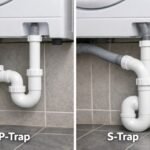
Modern bath setups usually use P-trap style geometry (or a close equivalent) because it tends to be more self-scouring than older designs and is easier to keep clean over time.
What is a shower trap?
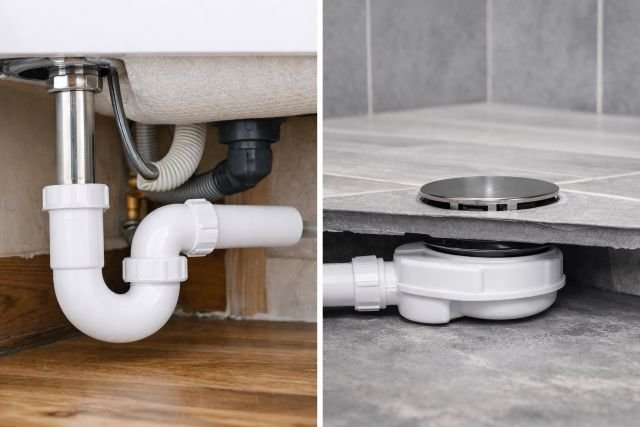
A shower trap is also a water-seal trap, but it’s designed to fit beneath a shower tray or wet-room drain where vertical space is limited. Many showers require low-profile traps with side outlets, slim bodies, and serviceable tops because you can’t always access the pipework from below.
Shower traps are commonly discussed in terms of:
- Height (to fit under trays/floors),
- Outlet direction (horizontal/vertical),
- Flow rate (especially for power showers and rainfall heads),
- Service access (easy cleaning from above).
Retailer guides commonly emphasize these selection points because shower installs vary widely by tray depth and floor build-up.
Bath trap vs shower trap: the key differences
1) Where they sit and how you access them
A bath trap is often accessible from the side of the tub (via a bath panel) or from below in some builds. A shower trap is frequently buried under a tray or in a floor void—so top access (removable grate and clean-out) becomes much more important in showers.
Real-world implication: If your shower trap can’t be cleaned from above, hair build-up becomes a “call-out” problem instead of a 5-minute maintenance task.
2) What they clog with (and how often)
Bath drains clog, too—but showers are the champions of hair accumulation. Plumbers cited by home-maintenance sources often identify hair as the dominant cause of slow shower drains; one widely shared estimate says hair accounts for around 90% of clogs in shower drains.
Why that matters for trap choice: Shower traps benefit from designs that are easy to open and clean, plus compatible hair-catcher inserts. Some shower-trap guides specifically describe traps retaining hair and debris to reduce downstream blockages.
3) Flow rate and “surge” drainage
A bathtub can release a larger volume in a shorter time than a typical shower. That “surge” can expose weaknesses in poor layouts — especially where pipe runs are long or venting is marginal.
Shower traps, on the other hand, must drain consistently under continuous flow. Many buying guides focus on matching the trap’s flow performance to the shower type and waste size.
Practical takeaway:
- Baths demand robust surge handling and good layout.
- Showers demand steady flow capacity and frequent-cleaning friendliness.
4) Trap seal depth and odor resistance
The trap seal is the depth of water sitting in the trap that blocks sewer gas. Many plumbing references and codes describe typical seal depths in the range of 2 to 4 inches (about 51–102 mm) as an effective balance between odor protection and self-scouring.
What homeowners notice: If a trap seal is lost (through siphonage, poor venting, or evaporation), the bathroom starts smelling like drains.
5) Space constraints and outlet direction
This is the most common reason shower traps look “different” from bath traps. Shower installations often need:
- Low height under shallow trays,
- Horizontal outlets to avoid joists,
- Rotating outlets or compact bodies to fit tight voids.
Buying guides for shower traps are heavily oriented around these constraints.
Bath traps typically have more room behind a panel or under the tub footprint, so you can often use a more standard profile.
6) Maintenance style: “open and clean” vs “set and forget”
Bathtub traps are usually cleaned less often because hair exposure can be lower (depending on household habits). Shower traps frequently need periodic cleaning because hair + soap residue is a perfect clog recipe.
If your household has long hair, pets, or heavy product use (conditioners, scrubs), design for maintenance — not just for installation.
Quick comparison table
| Feature | Bath Trap | Shower Trap |
|---|---|---|
| Typical access | Via bath panel / side access | Often top-access (grate/clean-out) |
| Common clog source | Soap residue, occasional debris | Hair + soap scum (very common) |
| Space constraints | Usually more forgiving | Often tight (tray/floor void) |
| Flow pattern | High-volume “dump” | Continuous flow |
| Best design priority | Surge drainage + reliable seal | Cleanability + steady flow |
Which one do you actually need?
Choose a bath trap when…
You’re installing or replacing a bathtub waste assembly and you have normal access (panel or underside). Prioritize:
- Correct alignment with the tub waste,
- Good seal retention,
- Proper pipe gradient and venting.
If your home is older and you discover a drum trap on the tub, that’s a major red flag for maintenance and clogging. Many plumbing resources recommend upgrading to a modern P-trap style during renovations because drum traps are harder to clean and more prone to buildup.
Choose a shower trap when…
You’re fitting under a tray or wet-room drain where height is limited and you need service from above. Prioritize:
- Low-profile height and correct outlet direction,
- Flow performance matched to shower output,
- Removable top for cleaning.
Common problems (and what they usually mean)
Slow shower drainage
Most often hair and soap accumulation in the trap area.
Actionable fix: Choose a shower trap with easy top access and use a hair catcher. Clean monthly if the shower is used daily.
Gurgling noises after draining
Often a venting/air-admittance issue or a layout problem (pipe fall, distance to vent). Codes commonly limit how far a fixture outlet can be from the trap weir to reduce siphonage risk.
Actionable fix: If gurgling persists after cleaning, have a plumber check venting and trap arm configuration.
Sewer smell
Usually a compromised or lost water seal. Recommended seal depths exist for a reason: too shallow loses seal easily; too deep can slow flow and collect debris.
Actionable fix: Confirm the trap has water in it (especially in seldom-used bathrooms). If it keeps losing seal, investigate venting and installation.
Installation tips that prevent 80% of call-backs
Match the trap to the build, not the other way around
A beautiful shower tray doesn’t matter if the trap won’t fit under it. Shower trap guides repeatedly stress sizing and outlet direction compatibility.
Don’t “overcomplicate” the trap run
Every extra bend increases clog risk and reduces self-scouring action. This matters more in showers because hair is constant.
Renovation moment: replace legacy tub drum traps
If you’re opening walls/floors anyway, that’s the cheapest time to modernize. Drum trap replacements are commonly recommended as upgrades for cleanliness and serviceability.
FAQs
What is the main difference between a bath trap and a shower trap?
A bath trap is designed around bathtub waste assemblies and surge drainage, while a shower trap is typically lower-profile and built for tight spaces with easier top access for cleaning under a shower tray.
Do bath traps and shower traps both stop sewer smells?
Yes. Both rely on a trapped water seal to block sewer gases. Plumbing references commonly discuss trap seals in the 2–4 inch (51–102 mm) range as a typical effective standard.
Why do shower traps clog more than bath traps?
Showers shed more hair and soap residue into the drain. Plumbing and home-maintenance sources commonly identify hair as the top cause of shower clogs, with one estimate placing it around 90% of clogs.
Should I replace an old bathtub drum trap?
If you’re renovating and have access, many plumbing resources recommend replacing drum traps because they’re harder to clean and more prone to buildup than modern P-trap designs.
Conclusion: choosing the right bath trap (and when a shower trap makes more sense)
The right bath trap choice isn’t about what looks similar on a shelf—it’s about access, space, and how the fixture drains. Bath traps need to handle bathtub “dump” drainage while maintaining a reliable seal, and shower traps need to fit tight voids while staying easy to clean because hair-related blockages are so common.
If you’re building new or renovating, treat the trap as a long-term maintenance decision: choose a bath trap that supports strong flow and service access (and replace old drum traps when you find them), and choose a shower trap that prioritizes low-profile fit, adequate flow capacity, and top-down cleaning.