

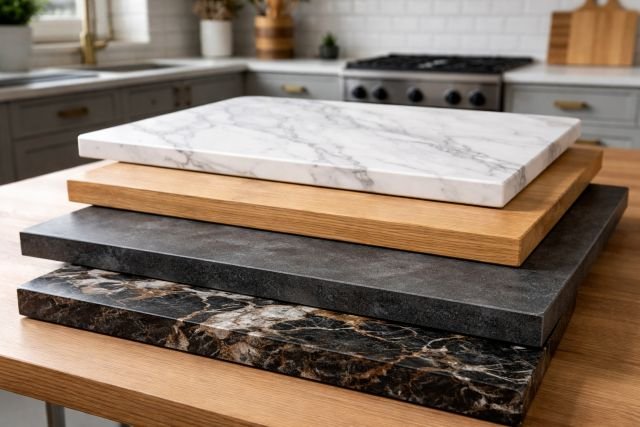
A table top has a tough job: it gets dragged, spilled on, cleaned, heated, knocked, and still needs to look good year after year. But “best” isn’t one-size-fits-all. A family dining table needs different performance than a café table, a patio table, or a kitchen island that doubles as a homework station.
- How I ranked table top materials
- Quick ranking: best table top materials (durability + looks)
- 1) Porcelain slab (and sintered stone): the “set it and forget it” table top
- 2) Quartzite: natural stone drama with serious performance
- 3) Granite: the classic long-lifer for a table top
- 4) Engineered quartz: the most popular “low-maintenance stone look”
- 5) Solid wood (hardwood): the most “livable” table top — because it’s fixable
- 6) Solid surface (acrylic): underrated for families because it’s repairable
- 7) Stainless steel: the professional-grade table top (that shows its life)
- 8) Concrete: gorgeous when done right, frustrating when done “almost right”
- 9) Laminate: the budget-friendly table top that has gotten better
- 10) Marble: the best-looking high-maintenance table top
- Table top material comparison (fast decision helper)
- How to choose the right table top for your space
- Actionable tips to make any table top last longer
- FAQ
- Conclusion: the best table top depends on your “rules of living”
This guide ranks the most popular table top materials by what matters in real life: scratch resistance, heat tolerance, stain resistance, structural strength, maintenance, repairability, and timeless looks. I’ll also point out the “gotchas” people discover only after living with a surface for a while — and how to avoid them.
How I ranked table top materials
When people say “long-lasting,” they usually mean a surface that stays good-looking and functional with normal use. So the ranking below weighs:
- Durability: scratches, chips, dents, cracks
- Heat resistance: hot mugs, serving dishes, pans (and thermal shock risk)
- Stain and moisture resistance: coffee, wine, oil, sauces
- Maintenance: sealing, oiling, special cleaners
- Repairability: can you fix damage without replacing the whole top?
- Aesthetics: how well it ages; whether wear looks “patina” or “damage”
You’ll also see design notes and “best for” recommendations so you can match material to lifestyle.
Quick ranking: best table top materials (durability + looks)
Here’s the short version before we go deep:
- Porcelain slab / sintered stone (elite durability + modern looks)
- Quartzite (natural) (stunning + very heat-tough, but needs sealing)
- Granite (natural) (proven longevity + great value, seal sometimes)
- Engineered quartz (low maintenance + consistent style, heat caution)
- Solid wood (hardwoods like maple/oak/walnut) (warm + repairable, needs care)
- Solid surface (acrylic/“Corian-style”) (seamless + repairable, heat caution)
- Stainless steel (commercial-tough, scratches become “look”)
- Concrete (industrial style, can crack/stain without perfect install)
- Laminate (budget-friendly, decent lifespan, limited repair options)
- Marble (iconic beauty, but etches easily — best for low-acid, low-stress use)
Now let’s break each one down so you know exactly what you’re signing up for.
1) Porcelain slab (and sintered stone): the “set it and forget it” table top
If your goal is a table top that shrugs off real life — heat, stains, sunlight, most scratches — porcelain slab (and closely related sintered surfaces) is hard to beat.
Why it lasts
Porcelain is fired at extremely high temperatures during manufacturing, which creates a dense, stable surface with excellent heat performance. Some industry explanations note firing temperatures around 1,200°C (2,200°F) in production, which helps explain why it handles heat so well.
What it looks like
Porcelain can convincingly mimic marble, limestone, concrete, and even oxidized metal — without many of the maintenance drawbacks. It’s a top pick if you want a clean, modern aesthetic or “marble look without marble problems.”
Real-world watchouts
- Edges can chip if the profile is thin and the edge takes a hard hit (chairs, belt buckles, cookware corners).
- Fabrication quality matters a lot (good substrate support, clean cutouts, proper installation).
Best for: busy dining rooms, kitchen islands, café tables, outdoor/patio tables (UV-stable designs), homes that want maximum durability with minimal maintenance.
2) Quartzite: natural stone drama with serious performance
Quartzite is a natural stone that often delivers the “wow” factor people want from marble—bold veining, depth, movement — but with far better durability in many cases.
Why it lasts
True quartzite is typically harder and more heat tolerant than softer carbonate stones (like marble). It’s often favored for high-use kitchens and statement surfaces.
The big trade-off: sealing
Quartzite is still natural stone and can be porous depending on the slab. Sealing is usually recommended for many natural stones. The Natural Stone Institute notes that, in many cases, sealing marble and granite “makes sense,” and mentions sealers with a life expectancy of 10–15 years (product-dependent).
(Quartzite sealing needs vary, but the same “porous stone + stains” logic applies.)
Best for: high-end dining tables, islands, and statement pieces where you want natural character plus strong durability.
3) Granite: the classic long-lifer for a table top
Granite has been a go-to for decades because it’s tough, available, and usually more forgiving than marble.
Why it lasts
Granite resists daily wear well: it tolerates heat, handles abrasion, and doesn’t show every little mark like some polished surfaces do. Many slabs hold up beautifully for decades with simple care.
Maintenance reality check
Some granites are factory-treated and less porous; others benefit from periodic sealing. Again, the Natural Stone Institute recommends sealing in many cases for marble and granite and explains why sealing improves resistance to spills and everyday mess.
Best for: families, rental properties, and anyone who wants “stone durability” without constant worry.
4) Engineered quartz: the most popular “low-maintenance stone look”
Engineered quartz (often just called “quartz”) is widely chosen because it delivers consistent patterns, easy cleaning, and strong stain resistance.
Why it lasts
Quartz is generally non-porous and doesn’t need the same sealing routine as many natural stones. It’s also a big style driver right now: NKBA trend reporting has highlighted quartz as a dominant countertop choice, with one widely cited survey figure putting quartz popularity expectations very high through the late 2020s.
The key limitation: heat
Quartz contains resins/binders, so it can be more vulnerable to heat damage or discoloration from very hot pans compared with many natural stones. Even quartz care guides emphasize using trivets and avoiding direct high heat contact.
Important safety note (fabrication, not home use)
Cutting engineered stone can generate hazardous respirable crystalline silica dust for workers. CDC/NIOSH notes engineered stone is typically over 90% crystalline silica.
OSHA also warns that stone cutting/finishing can expose workers to significant silica.
For homeowners, the key takeaway is: choose reputable fabricators who follow proper dust-control practices.
Best for: households that want a durable table top with easy cleaning and predictable design — just commit to trivets.
5) Solid wood (hardwood): the most “livable” table top — because it’s fixable
Wood is still one of the best-feeling surfaces to live with. It’s warm, quieter than stone, and it can be refinished when life happens.
Why it lasts (when you choose the right species)
Hardness varies dramatically by wood type. The Janka hardness test measures how much force it takes to embed a steel ball into wood, and it’s widely used as a proxy for dent/scratch resistance.
In practice: hard maple and white oak tend to resist dents better than softer species, while walnut is beloved for looks but can dent a bit more easily.
The maintenance truth
Wood is not “wipe and forget.” It needs protection from moisture and heat, and it benefits from periodic conditioning depending on the finish system. Cleaning guidance for butcher-block style surfaces often recommends thorough drying and the use of food-grade mineral oil/conditioners to help protect the surface.
Best for: dining tables, desks, and kitchen islands where warmth and repairability matter more than perfect stain immunity.
6) Solid surface (acrylic): underrated for families because it’s repairable
Solid surface materials (often recognized by brand families like Corian-style products) are popular in commercial spaces and homes where “easy cleanup” matters.
Why it lasts
A major advantage is repairability: scratches and some damage can often be sanded or restored instead of replaced, which is a big deal for a busy table top.
Trade-offs
- Heat can be an issue — use trivets.
- It can scratch more easily than stone, but that’s where repairability helps.
Best for: kid zones, craft-friendly kitchens, laundry-folding islands, and anyone who values seamless looks and fixability.
7) Stainless steel: the professional-grade table top (that shows its life)
Stainless steel is sanitary, heat tolerant, and extremely practical. It’s why professional kitchens love it.
The honest aesthetic
Stainless will scratch. But many people grow to love the “brushed patina” because it looks intentional over time — especially in industrial, modern, or minimalist spaces.
Best for: serious cooks, modern industrial interiors, baker’s stations, and high-use hospitality tables.
8) Concrete: gorgeous when done right, frustrating when done “almost right”
Concrete table tops can look incredible — especially with integral color, refined aggregate, or a smooth microtopping aesthetic.
Why it can fail early
Concrete can crack (sometimes hairline, sometimes structural), and stains can be a problem if sealing isn’t perfect or gets neglected. If you love the look, insist on an experienced installer and a sealing/maintenance plan you’ll actually follow.
Best for: design-forward homes that accept patina, small café tables, covered outdoor setups (with the right sealers).
9) Laminate: the budget-friendly table top that has gotten better
Laminate today can mimic stone patterns surprisingly well, and it’s easy to clean.
Lifespan expectations
Consumer-facing estimates commonly place laminate life in the 15–20 year range depending on quality and care.
The biggest limitation is repair: burns, deep cuts, or edge swelling from water intrusion can be difficult to truly “fix.”
Best for: rentals, starter homes, temporary remodel phases, and low-stress dining areas.
10) Marble: the best-looking high-maintenance table top
Marble is iconic. It photographs beautifully and elevates almost any space. But it’s the least forgiving material on this list for everyday dining and kitchen use.
Why it’s tricky
Marble is largely calcium carbonate, which reacts with acids (like lemon juice, vinegar, wine) and causes etching — a chemical surface dulling that isn’t the same as staining.
When marble does make sense
- A formal dining room table used gently
- A console table, side table, or decorative surface
- A “patina welcome” homeowner who likes character marks
Best for: style-first spaces where you accept patina as part of the charm.
Table top material comparison (fast decision helper)
| Material | Best strength | Biggest weakness | Maintenance level |
|---|---|---|---|
| Porcelain slab | Heat + stain + UV durability | Edge chipping risk | Low |
| Quartzite | Natural beauty + heat toughness | Often needs sealing | Medium |
| Granite | All-around durability | Some slabs need sealing | Low–Medium |
| Engineered quartz | Low maintenance + consistent looks | Heat caution | Low |
| Solid wood | Warm + refinishable | Moisture/heat sensitivity | Medium |
| Solid surface | Repairable + seamless | Heat/scratch sensitivity | Low–Medium |
| Stainless steel | Commercial tough + sanitary | Scratches show | Low |
| Concrete | Unique design | Cracks/stains possible | Medium–High |
| Laminate | Affordable + easy clean | Limited repairability | Low |
| Marble | Signature luxury | Etching from acids | High |
How to choose the right table top for your space
If you want the longest-lasting “looks new” surface
Choose porcelain slab or engineered quartz (with trivets). Porcelain tends to win if your household is hard on surfaces and you want fewer rules.
If you want the most natural, high-end look without daily stress
Choose quartzite or granite. Quartzite tends to look more “marble-like,” granite often gives better value and easier ownership.
If you want a table top that can be repaired again and again
Choose solid wood or solid surface. Scratches become a sanding/refinishing job instead of a replacement project.
If your table doubles as a cooking station
Choose porcelain, granite, quartzite, or stainless steel. With quartz, keep heat protection as a non-negotiable habit.
Actionable tips to make any table top last longer
- Use felt pads under décor and appliances to prevent micro-scratches.
- Wipe spills quickly — especially wine, oils, and acidic liquids.
- Use trivets and heat mats as a default habit (even on stone).
- For natural stone, follow a sealing plan that matches your slab and usage.
- For wood, keep moisture exposure brief and maintain the finish/oil routine that matches your surface type.
FAQ
What is the most durable table top material?
For most homes, porcelain slab is among the most durable table top options because it handles heat and stains extremely well and stays stable over time.
What table top material looks the best?
“Best-looking” is subjective, but quartzite and marble are often chosen for their natural veining and depth. The difference is that marble etches easily from acids, while quartzite generally holds up better in daily use.
Is quartz better than granite for a table top?
Quartz is usually lower maintenance and more consistent in color/pattern, while granite often offers better heat tolerance. With quartz, it’s smart to treat trivets as mandatory.
Does marble ruin easily on a dining table?
Marble doesn’t “ruin,” but it can etch quickly from lemon, vinegar, wine, and other acids—creating dull spots that many people interpret as damage. If you love patina, it can still be a great table top.
How long do laminate table tops last?
Many estimates put laminate around 15–20 years with normal use and decent care, though damage like burns or deep cuts can shorten its usable life because repairs are limited.
Conclusion: the best table top depends on your “rules of living”
If you want the easiest long-term win, pick a porcelain slab table top for maximum durability with minimal maintenance. If you want natural stone character without constant worry, quartzite or granite are strong, proven choices (just respect sealing where needed). If you care most about warmth and repairability, a hardwood table top can last generations because you can refinish it.
If you’d like, tell me where the table will be used (dining room, kitchen island, outdoor), who uses it (kids, heavy cooking, entertaining), and your style goal (modern, classic, rustic). I’ll recommend the top 2–3 materials and the ideal finish/edge thickness for that specific scenario.