


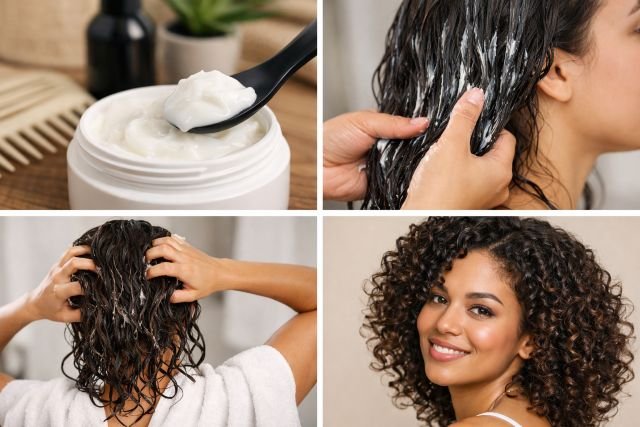
Curl definition looks effortless on other people… until humidity hits, your ends puff up, and your curl pattern loses shape by lunch. That’s exactly where curl defining cream earns its spot in your routine. A good curl defining cream helps curls clump, smooths frizz, boosts softness, and adds light hold — without the crunch that some gels can leave behind. When you apply it the right way (and pair it with the right supporting products), you can get that “defined but touchable” finish that lasts for days.
- What is curl defining cream?
- What does curl defining cream do?
- Curl defining cream vs gel vs mousse: what’s the difference?
- Who should use a curl defining cream?
- The best way to use curl defining cream for maximum definition
- Common mistakes that ruin definition (and how to fix them)
- What to look for in a curl defining cream
- Real-world styling scenarios
- FAQ: curl defining cream
- Conclusion: getting the most out of curl defining cream
Below, you’ll learn what curl defining cream actually does, how it differs from gel and mousse, which hair types benefit most, and a step-by-step method to get maximum definition — plus common mistakes that make curls look greasy, fluffy, or undefined.
What is curl defining cream?
A curl defining cream is a styling product designed to enhance your natural curl pattern by improving clumping (curls forming into defined groups), increasing slip for smoother styling, and reducing frizz while adding softness and shape. Unlike strong-hold stylers, most creams focus on definition + conditioning first, and hold second.
Think of it as the “bridge” between hydration and hold: it helps your curls lay neatly and form their pattern, so any hold product you add afterward (like gel) has a better structure to lock in.
What does curl defining cream do?
1) Helps curls clump for better definition
Definition is mostly about curl group formation. If your hair strands separate into thin, frizzy pieces, your curl pattern looks fuzzy. Curl creams help strands stick together in larger, smoother clumps so the curl shape reads clearly from root to tip.
2) Smooths the cuticle to reduce frizz
Frizz often gets worse when hair absorbs moisture from the air and swells. Hair fibers change with humidity, and the mechanical behavior of hair is known to be strongly influenced by relative humidity. Curl defining creams typically include conditioning agents and film-formers that help keep the surface feeling smoother and more uniform.
3) Adds light-to-medium hold (without stiffness)
Many creams use polymers that form flexible films — enough to support shape, but not usually enough to create a firm “cast” like gel. For example, ingredients such as VP/VA Copolymer are commonly used as film-forming fixatives in styling products.
4) Improves softness and manageability
Dermatologists note curly/coily hair is generally more prone to dryness and breakage than other hair types. Curl defining creams often contain emollients and conditioning agents that help curls feel softer and reduce tangling during styling.
5) Makes your style more consistent from wash day to wash day
A cream can reduce the “randomness factor” by making your curl formation more repeatable, especially if you struggle with uneven curl patterns around the crown, nape, or front pieces.
Curl defining cream vs gel vs mousse: what’s the difference?
Here’s the simplest way to choose:
| Product | Best for | Typical finish | Common downside |
|---|---|---|---|
| Curl defining cream | Soft definition, frizz smoothing, conditioning | Touchably defined, hydrated | Can weigh down fine/low-porosity hair |
| Gel | Strong hold, long-lasting definition, humidity resistance | Defined with a cast (can be scrunched out) | Can feel crunchy if overused |
| Mousse/Foam | Volume, lift, lighter hold | Airy definition, bouncy roots | Can feel drying on very dry hair |
Many people get their best results by layering: cream for shape + gel for hold, especially in humidity.
Who should use a curl defining cream?
Curl types that usually love it
- Wavy (2B–2C): helps waves clump and look polished (use a small amount)
- Curly (3A–3C): enhances ringlets, reduces halo frizz
- Coily (4A–4C): supports definition and softness, especially paired with a leave-in
Hair traits that benefit most
- Dryness or rough texture: creams add emollience and slip
- Frizz-prone hair in variable weather: hair responds to humidity via hydration-driven structural changes and temporary shape shifts.
- High-porosity hair: tends to lose moisture faster and can look puffy without smoothing products
When a curl cream might NOT be your best first styler
- Very fine hair that gets limp easily
- Low-porosity hair that gets product buildup quickly
- Anyone chasing big volume at the roots (mousse/foam often performs better there)
You can still use cream in these cases — just apply less, keep it off the roots, and consider pairing with a lightweight foam.
The best way to use curl defining cream for maximum definition
Getting amazing definition is more about application than the product itself. Here’s a routine that works for most curl patterns.
Step 1: Start on very wet hair (not damp)
For maximum clumping, apply curl defining cream when hair is soaking wet or very wet after rinsing conditioner. Water acts like a styling “primer” that helps strands group together.
If you apply cream to hair that’s only towel-damp, you’ll often get:
- smaller clumps
- more frizz
- uneven distribution (greasy spots + dry spots)
Step 2: Use the right amount (less than you think)
A common mistake is using “a handful” because curls feel thick. Start with:
- Wavy/fine: pea to nickel-size
- Curly medium density: nickel to quarter-size
- Coily/high density: quarter-size, then add a little more only if needed
Warm it between your palms first — this helps spread it evenly.
Step 3: Apply in sections, focusing mid-lengths to ends
Work in 2–4 sections (or more if your hair is dense). Apply primarily to:
- mid-lengths
- ends
Then use the leftover residue lightly on the top layer. This reduces weight at the roots and prevents flat crown syndrome.
Step 4: Use a “smooth then scrunch” technique
For maximum definition, combine two motions:
- Smooth: glide hands down the hair to align strands and reduce frizz
- Scrunch: lift ends upward to encourage curl formation
This method helps create neat clumps while keeping bounce.
Step 5: Decide if you need a topper (gel or foam)
Ask yourself: “Do my curls hold their shape for 6–12 hours without frizz?”
- If no, add a light-to-medium gel over the cream (especially in humidity).
- If you need volume, add mousse/foam at the roots, then scrunch.
Film-forming ingredients in hold products can help keep styles more stable against humidity-driven changes.
Step 6: Dry with minimal touching
Touching hair while it dries is basically a frizz invitation. Choose one:
- Air-dry: best for low-frizz environments
- Diffuse: best for speed + volume + stronger definition
Once fully dry, scrunch gently to soften if there’s any cast from a topper.
Common mistakes that ruin definition (and how to fix them)
“My hair looks greasy or weighed down.”
Most likely causes:
- too much cream
- applied too close to roots
- layered with heavy oils/butters
Fix:
- cut amount in half
- keep cream below cheekbone level
- clarify occasionally if buildup is an issue
“My curls are defined but feel dry.”
Possible cause: cream is doing styling, but you’re missing hydration underneath. Since curly hair is more prone to dryness, your base moisture matters.
Fix:
- apply a lightweight leave-in first
- then cream
- then seal with gel if needed
“My curls look fluffy with a frizzy halo.”
Most likely causes:
- applied on hair that wasn’t wet enough
- too much towel drying
- touching during drying
Fix:
- apply on wetter hair
- use a microfiber towel only to squeeze excess water
- hands off until fully dry
“Definition disappears on day 2.”
Fix:
- sleep protection (satin/silk)
- refresh with water + a tiny amount of cream emulsified in wet hands
What to look for in a curl defining cream
A strong formula usually combines:
- Conditioning agents for slip and softness
- Emollients to reduce roughness and puffiness
- Film-formers for flexible definition and light hold (e.g., VP/VA Copolymer).
- Humidity strategy depending on climate (some polymers and styling systems are less sensitive to humidity changes than others).
If you’re ingredient-sensitive (silicones, fragrance, etc.), choose accordingly — but remember: the “best” cream is the one your hair behaves well with consistently.
Real-world styling scenarios
Scenario 1: Fine, wavy hair that goes flat
You’ll get the best results using a tiny amount of curl defining cream (mostly on ends), then a foam at the roots for lift. Diffuse upside down for volume, then stop touching it.
Scenario 2: Medium curls with frizz in humidity
Use curl defining cream for smoothing + clumping, then gel on top for hold. Hair changes with humidity and hydration-driven bonding effects can influence shape and frizz behavior, so locking in the set matters more in humid weather.
Scenario 3: Coily hair needing softness + definition
Layer: leave-in → curl defining cream → optional gel for longer hold. Style in smaller sections to ensure even coverage and better coil definition.
FAQ: curl defining cream
Can I use curl defining cream every day?
Yes — especially for refresh days — but use a small amount and emulsify it with water in your hands first. Daily heavy application can cause buildup over time, depending on your hair and formula.
Do you apply curl defining cream before or after gel?
Typically before gel. Cream shapes and smooths; gel locks the shape in. If you reverse it, you can disrupt curl clumps and end up with patchy hold.
Is curl defining cream the same as leave-in conditioner?
Not exactly. Leave-in conditioner focuses on moisture and detangling; curl defining cream focuses on styling (definition + frizz control + light hold). Some products blur the line, but performance is the best test.
Will curl defining cream work on straight hair?
It can add light smoothing and reduce frizz, but it won’t create curls unless you’re styling with heat or your hair has a natural wave pattern waiting to be encouraged.
Why does humidity make my curls frizz up?
Hair fibers respond to water in the environment, and humidity can change hair shape and surface behavior through hydration-related effects. A good routine focuses on (1) strong curl clumps, (2) controlled drying, and (3) enough hold to maintain the set.
Conclusion: getting the most out of curl defining cream
If you want soft, touchable curls that still look defined, curl defining cream is one of the easiest upgrades you can make — as long as you apply it correctly. Use it on very wet hair, apply less than you think, smooth then scrunch for clumping, and add gel or foam strategically based on your hold and volume needs. And if your curls are naturally dryness-prone (which dermatologists commonly note for curly and coily hair), prioritizing hydration under your styler makes the definition last longer and look healthier.