

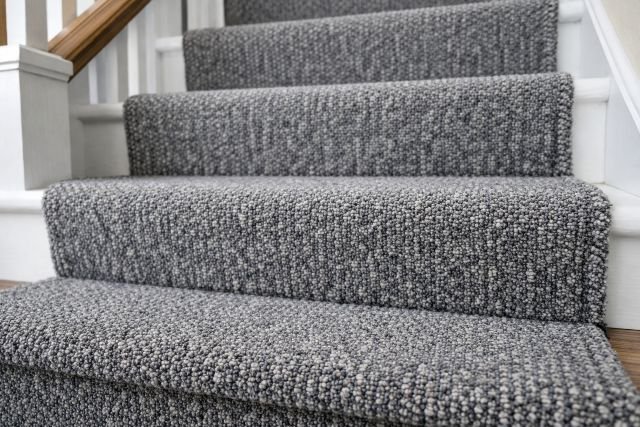
Stairs are where carpets get “stress-tested” every single day: tight turns, sharp nosings, constant foot traffic, and the occasional sprint up the steps with shopping bags. If you’re shopping for hard wearing carpet for stairs, you’re not just choosing a color — you’re choosing how well those fibers will resist flattening, hold their twist, and stay safe underfoot.
- What “hard wearing carpet” really means on stairs
- The toughest carpet constructions for stairs
- Best fibers for hard wearing stair carpet (and when to pick each)
- The specs that matter most when buying stair carpet
- Underlay: the hidden factor that makes (or breaks) stair durability
- Installation details that matter on stairs (more than you think)
- Style choices that hide wear
- Real-world scenarios: which hard wearing stair carpet fits your home?
- Safety and stair carpets: what homeowners often miss
- FAQs
- Conclusion: choosing hard wearing carpet that stays smart on stairs
That matters for more than looks. Falls are a major safety issue — especially for older adults. In the U.S., millions of older adults experience falls each year, and a meaningful share require medical care. Choosing a stair carpet that stays stable, doesn’t go shiny or slippery with wear, and is installed correctly is a real-world upgrade, not a cosmetic one.
This guide breaks down what “hard wearing” actually means on stairs, which materials perform best, what specs to look for when comparing quotes, and how to avoid the common fitting mistakes that ruin even premium carpet.
What “hard wearing carpet” really means on stairs
On stairs, durability isn’t one single feature — it’s the combination of:
- Crush resistance: How well the pile springs back instead of matting flat on treads.
- Edge strength: Stair nosings are brutal; weak construction frays here first.
- Twist retention: Twist is what keeps yarns standing up. Better twist = less fuzzing and “bloom.”
- Density + pile height balance: Lower pile height with higher density typically wears better than tall, loose pile.
- Correct rating/classification for intensity of use: In Europe/UK contexts, carpets are commonly classified under standards like EN 1307 / EN ISO 10874 into use classes (domestic vs contract; moderate vs heavy).
If you remember one thing: stairs punish “soft and lofty” carpets, and they reward dense, tightly constructed piles.
The toughest carpet constructions for stairs
Twist pile (cut pile) is the everyday workhorse
If you want a classic look that’s genuinely hard wearing, a tight, dense twist pile is the safest bet for most homes. Why? Twist pile resists crushing better than many plush styles when the yarn is tightly twisted and properly heat-set.
A key carpet-care training source notes that cut pile performance depends heavily on twist and twist retention, and that heat setting helps stabilize yarn twist — both directly tied to how long stairs keep their texture.
Practical takeaway: Ask for a “tight twist” or “high twist” stair carpet option, not a soft luxury pile.
Loop pile and textured loops: excellent for hiding wear (with one caution)
Loop piles (including berbers and textured loops) can be incredibly durable because loops don’t show footprints and shading the same way. That makes them ideal for family stairs where traffic marks drive you mad.
Caution: loops can snag (pets, sharp heels, moving furniture), so if you have cats that love to hook a claw into fabric, a dense twist pile can be less stressful.
Velvet/plush piles: beautiful, but rarely the “toughest” choice for stairs
Velvet and plush cut piles can look premium, but on stairs they often show tracking, shading, and crushing earlier — especially in lighter colors. If you still love the look, make density your non-negotiable and consider patterns that camouflage wear.
Best fibers for hard wearing stair carpet (and when to pick each)
Below is a quick comparison of common fibers used in stair carpets. Performance depends on construction too, but fiber choice sets the baseline.
| Fiber | Durability on stairs | Stain resistance | Feel | Best for |
|---|---|---|---|---|
| Nylon (polyamide) | Excellent resilience; great for high traffic | Very good with modern treatments | Medium-soft | Busy households, kids, rentals |
| Wool | Excellent natural resilience; long-wearing when dense | Naturally soil-resistant (not “stain-proof”) | Premium | Long-term homes, comfort + performance |
| Polyester | Softer but can crush more in high traffic | Strong stain resistance | Soft | Lower traffic stairs, budget upgrades |
| Polypropylene (olefin) | Can be tough, but less resilient; may flatten | Very stain resistant | Varies | Basements/secondary stairs |
Nylon: the safest “tough daily use” pick
If your goal is truly hard wearing carpet on stairs, nylon is hard to beat because it’s known for resilience (spring-back). Pair it with a dense twist and you get a stair carpet that holds up without looking tired quickly.
Wool: premium durability when you choose the right construction
Wool often gets described as a luxury fiber, but it’s also a serious performer in the right build — especially dense, well-made twist or loop piles. It’s commonly chosen for its comfort and ability to age gracefully.
Blends can be the sweet spot
Wool-nylon blends can offer a practical middle ground: wool’s feel plus nylon’s added toughness. If you’re comparing two similar-looking carpets, the blend with better density and twist usually wins.
The specs that matter most when buying stair carpet
1) Density beats thickness (most of the time)
A respected industry source (Carpet and Rug Institute) emphasizes that for a given carpet weight, lower pile height and higher density generally provide better performance value, and density relates to tufting structure.
Translation: a carpet can feel thick in the shop but still wear badly if the pile is tall and loosely packed.
What to do in-store: press your fingertips into the sample and try to “spread” the pile. If you can easily see backing or it separates readily, it’s more likely to crush on stairs.
2) Twist level and heat-setting
Twist is one of the best predictors of how a cut pile holds up on stairs. Better twist helps fibers stay upright and reduces fuzzing. Heat setting helps twist stay locked in.
What to ask: “Is this yarn heat-set? Is it a high-twist construction suitable for stairs?”
3) Choose the right use-class rating
If you’re in a market that uses EN classifications, check the use class for heavy domestic or even light commercial/contract where appropriate. EN 1307 classifies carpets by intended area and intensity of use.
Rule of thumb: for stairs in a busy household, aim at least for heavy domestic (and confirm the warranty covers stairs).
4) Warranty that explicitly includes stairs
This one is overlooked constantly. Some warranties are stricter on stairs because they’re high-impact wear zones. Always get the stair coverage in writing — especially for “wear,” “appearance retention,” and “texture retention.”
Underlay: the hidden factor that makes (or breaks) stair durability
A stair carpet isn’t hard wearing if the underlay is wrong.
Too soft and spongy → the carpet flexes excessively, the pile breaks down faster, and edges can loosen. Too thin and cheap → the carpet takes more impact and wears sooner.
What you want: a quality underlay suited to stairs that supports the carpet without over-compressing. When installers talk about a stair underlay being “firm,” they’re usually steering you toward longer carpet life and a more stable tread feel.
Installation details that matter on stairs (more than you think)
Even the best hard wearing carpet can fail fast if fitted poorly. Stairs concentrate stress at the nosing and on the turning points, so workmanship matters.
Waterfall vs cap-and-band (Hollywood) fitting
- Waterfall: carpet runs straight down to the next tread. Often faster and can suit some styles.
- Cap-and-band: carpet is shaped tightly over the tread and riser, giving a tailored look and reducing movement.
Many homeowners find cap-and-band feels more secure underfoot and looks sharper. Your fitter can recommend what matches your carpet construction best.
The nosing is the danger zone
If you’ve ever seen carpet fraying right on the edge of the step, that’s the nosing problem. Correct tensioning, gripper placement, and edging technique are critical here.
Style choices that hide wear
You can pick the toughest carpet in the world and still hate how it looks if it shows every mark.
Color: mid-tones are the “easy living” zone
Very light stairs show dirt; very dark stairs show lint, dust, and shading. Mid-tones and heathered colors tend to look good longer.
Pattern and flecking: the cheat code for busy stairs
A subtle fleck, heather, or textured pattern masks:
- tread shading
- minor stains
- wear lines on the main traffic path
This is especially helpful in hall-and-stair installations where people brush the wall side repeatedly.
Real-world scenarios: which hard wearing stair carpet fits your home?
Scenario 1: Busy family, kids, constant up-and-down
Go for nylon twist pile, medium tone, dense construction, firm underlay. This combination is built for daily impact and resists matting better than softer piles.
Scenario 2: Pets (especially cats) and you hate snags
Choose a dense twist pile rather than an open loop. Still prioritize high density and stair-rated warranty.
Scenario 3: You want the premium feel but need durability
Pick a dense wool or wool-nylon blend in a twist or textured loop, and insist on professional stair fitting (tight finish at nosings).
Safety and stair carpets: what homeowners often miss
Stairs are a known risk area for slips, trips, and falls. UK stair-safety discussions frequently highlight the scale of stair incidents and the value of design and safety measures.
A hard wearing stair carpet can support safety because it:
- provides consistent traction compared with smooth hard surfaces
- reduces slip risk when properly fitted and kept taut
- can visually define the stair edge when paired with the right color contrast
That said, carpet is only part of stair safety. Good lighting, secure handrails, and tidy edges matter too.
FAQs
What is the best hard wearing carpet for stairs?
A dense, high-twist carpet in nylon (polyamide) is often the best all-round hard wearing choice for stairs because it resists crushing and keeps its appearance under heavy daily traffic. Construction matters as much as fiber — look for high density and a stair-rated warranty.
Is loop pile carpet good for stairs?
Yes — loop pile can be very durable and great at hiding wear, especially in textured loops. The main downside is snagging risk, so it may not be ideal for homes with pets prone to pulling loops.
What carpet pile is most durable on stairs?
Dense twist pile and well-made loop pile are typically the most durable for stairs. Lower pile height combined with higher density generally improves performance for the money.
How do I stop stair carpet wearing out on the edges?
Edge wear is usually a mix of carpet choice and fitting quality. Choose a dense construction, ensure proper tensioning and gripper placement, and keep stairs vacuumed so grit doesn’t act like sandpaper on the nosing.
Do I need special underlay for stairs?
You don’t always need “special,” but you do need the right underlay. Stairs usually benefit from a firmer, supportive underlay that prevents excess movement and helps the carpet wear evenly.
Conclusion: choosing hard wearing carpet that stays smart on stairs
If you want hard wearing carpet for stairs that looks good after thousands of footsteps, prioritize construction first: high density, tight twist (or a robust loop), and stable installation. Use-class ratings (like EN 1307 / EN ISO 10874) help you sanity-check whether a carpet is meant for heavy use, while industry guidance consistently points toward lower pile height + higher density for better performance value.
Match that with the right fiber — often nylon for maximum resilience, or wool/wool-blends for premium long-term wear — and don’t cheap out on underlay or fitting. Done right, your stair carpet won’t just survive daily life; it’ll keep your hallway looking sharp and feeling confident underfoot for years.