


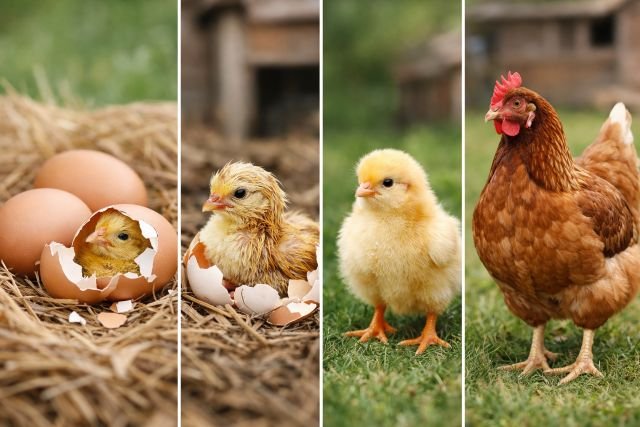
Understanding the life cycle of a chicken is essential whether you are raising backyard hens, managing a small poultry operation, or simply curious about how chickens grow and develop. Chickens follow a natural and predictable development pattern, but the actual timing of each stage can vary depending on breed, nutrition, environment, and purpose. Some chickens are raised for eggs and live many years, while others are bred for meat and mature extremely fast.
- What is the life cycle of a chicken?
- Egg formation and fertilization
- Incubation and embryo development
- Hatching and the newborn chick stage
- Chick growth from week two to week six
- Juvenile stage and sexual development
- Adult chickens raised for egg production
- Adult chickens raised for meat
- Molting and seasonal changes
- Senior stage and lifespan
- Factors that affect how long each stage lasts
- Frequently asked questions
- Conclusion
This detailed guide explains the life cycle of a chicken from the moment an egg is laid to the senior years of a mature bird. You will learn how long each stage really takes, what happens during each phase, and what factors influence growth and productivity.
What is the life cycle of a chicken?
The life cycle of a chicken refers to the biological stages a chicken passes through during its lifetime. These stages include egg development, incubation, chick growth, juvenile maturation, adulthood, and aging. While every chicken experiences the same basic stages, the length of each stage depends heavily on genetics, daylight exposure, feeding quality, and management practices.
Egg formation and fertilization
A chicken’s life begins before incubation even starts. Hens lay eggs whether or not a rooster is present, but only fertilized eggs can develop into chicks. Fertilization happens internally before the shell forms. Once laid, a fertilized egg remains dormant until it is exposed to proper incubation temperatures.
Freshness is critical at this stage. Eggs stored too long or handled poorly often result in lower hatch rates. Most poultry experts agree that eggs intended for hatching should be incubated as soon as possible for best results.
Incubation and embryo development
Once incubation begins, the egg enters one of the most important stages in the life cycle of a chicken. Under proper conditions, a chicken egg typically hatches in about 21 days. According to Purina Mills, this 21-day incubation period is standard for most chicken breeds, though slight variations can occur due to temperature or humidity changes. Research from the University of Kentucky confirms that maintaining a consistent incubation temperature around 99 to 100 degrees Fahrenheit is critical for normal embryo development.
During incubation, the embryo grows rapidly. By the final days, the chick positions itself for hatching and absorbs the remaining yolk, which provides energy after it emerges from the shell. This explains why newly hatched chicks can survive briefly without food, though warmth and water are essential immediately.
Hatching and the newborn chick stage
Hatching marks the transition from egg to living chick. This stage can take several hours as the chick slowly breaks through the shell. Newly hatched chicks are wet, weak, and extremely sensitive to temperature changes.
During the first week of life, chicks rely entirely on external heat sources. This early period is the most fragile part of the chicken life cycle. Chicks must learn to drink water, eat starter feed, and regulate their body temperature. Problems during this phase often result from chilling, dehydration, or unsanitary conditions.
Chick growth from week two to week six
After the first week, chicks become noticeably stronger and more active. Feather growth accelerates, balance improves, and feed consumption increases. Between two and six weeks of age, chicks grow rapidly and begin developing the traits that will define their adult behavior.
By the end of this stage, many chicks are partially feathered and better able to tolerate cooler temperatures. This phase plays a major role in shaping long-term health, as proper nutrition and low stress lead to stronger immune systems and better adult productivity.
Juvenile stage and sexual development
Around six weeks of age, chickens enter the juvenile phase. At this point, they are no longer considered chicks but are not yet mature adults. Female chickens are called pullets, while males are called cockerels.
Pullets usually approach laying age between 18 and 22 weeks. According to the University of Wisconsin Extension, genetics and daylight exposure strongly influence when a pullet begins laying eggs. The Old Farmer’s Almanac also reports that many hens begin laying around 18 to 20 weeks under ideal conditions.
Cockerels often mature faster behaviorally than pullets. They may begin crowing and showing territorial behaviors weeks before reaching full physical maturity. Managing flock dynamics during this stage is important to reduce aggression and stress.
Adult chickens raised for egg production
Once a hen begins laying eggs, she enters the adult stage of the life cycle of a chicken. Egg production increases quickly after the first egg and usually peaks during the first one to two years. According to the University of Minnesota Extension, hens typically lay the most eggs during their first two laying years, after which production gradually declines.
Backyard hens may continue laying eggs for three to four years and live much longer. Research from the University of Wisconsin Extension suggests that backyard chickens commonly live six to eight years, depending on care and environmental conditions. While egg output decreases with age, older hens often remain healthy and active members of the flock.
Adult chickens raised for meat
Meat chickens follow a very different timeline. Broiler breeds such as Cornish Cross are genetically selected to grow rapidly. University of Minnesota Extension notes that these chickens often reach market weight in six to eight weeks, while slower-growing heritage meat breeds may take ten to twelve weeks.
Scientific studies published through ScienceDirect show that broilers can reach approximately two kilograms within five to seven weeks under optimized conditions. Because of their fast growth, broilers require careful feeding and management to prevent health issues related to weight gain.
Molting and seasonal changes
After the first year of life, most chickens experience molting. Molting is a natural process where chickens shed old feathers and grow new ones. This stage often occurs annually and is influenced by changes in daylight length.
During molting, egg production usually drops or stops entirely. This is normal and temporary. Nutrients are redirected toward feather regrowth, which is why molting birds may appear less productive but are not unhealthy.
Senior stage and lifespan
The final stage in the life cycle of a chicken is the senior phase. Aging chickens slow down physically and produce fewer eggs, but many remain content and healthy with proper care. University of Minnesota Extension states that hens may live anywhere from five to ten years, with productivity peaking early but lifespan extending far beyond peak laying years.
Older chickens benefit from easy access to food and water, protection from extreme weather, and minimal flock stress. While they may no longer be productive layers, they still play a role in flock stability and behavior.
Factors that affect how long each stage lasts
The timeline of the chicken life cycle is influenced by breed genetics, nutrition quality, daylight exposure, housing conditions, and overall management. Broiler breeds grow faster than laying breeds, while heritage breeds tend to mature more slowly but live longer. Poor nutrition or stressful environments can permanently affect growth and productivity at every stage.
The Food and Agriculture Organization of the United Nations highlights that modern poultry production timelines have been shaped by genetics and optimized management, demonstrating how environment and care directly influence the chicken life cycle.
Frequently asked questions
Many people ask how long it takes for a chicken egg to hatch. Under proper incubation conditions, most chicken eggs hatch in about 21 days, according to Purina Mills.
Another common question is when chickens start laying eggs. Most hens begin laying between 18 and 22 weeks, depending on breed, light exposure, and nutrition, as noted by the University of Wisconsin Extension.
People also wonder how long chickens live. Backyard chickens commonly live six to eight years, though some may live longer with excellent care. Egg production, however, is strongest during the first few years.
Conclusion
The life cycle of a chicken follows a clear but flexible timeline. From a 21-day incubation period to weeks of chick growth, followed by juvenile development and adult productivity, each stage plays a crucial role in the bird’s overall health and lifespan. While meat chickens may complete their life cycle in just a few months, laying hens can live for many years, producing eggs long after their peak seasons.
Understanding how long each stage really takes allows you to make better decisions about feeding, housing, and flock management. When chickens are raised with proper nutrition, care, and low stress, every stage of the chicken life cycle becomes more predictable and rewarding.