


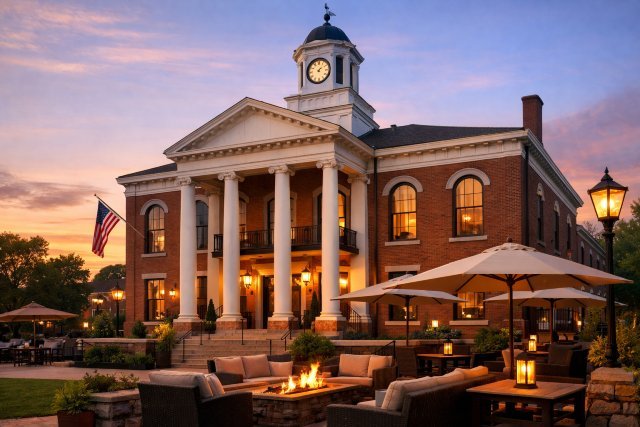
If you’ve been searching for the kind of getaway that feels rooted — the kind where the building itself has stories — Litchfield Courthouse Hotel delivers a rare mix: historic gravitas with boutique-hotel ease. This is the sweet spot for travelers who want character without giving up comfort, design, or a great meal steps from their room.
- Why a courthouse hotel is the kind of stay you remember
- The story behind Litchfield Courthouse Hotel
- Litchfield Courthouse Hotel today: what the stay feels like
- What to do near Litchfield Courthouse Hotel
- Who Litchfield Courthouse Hotel is best for
- Practical tips to get the most out of your stay
- FAQs
- A quick note on why stays like this matter to the local economy
- Conclusion: why Litchfield Courthouse Hotel is worth the trip
In Litchfield, Connecticut, the former county courthouse has been reimagined as The Abner, a boutique property with an unmistakable “only-here” feel: courthouse-era details, an intimate scale, and modern hospitality built around thoughtful service.
Why a courthouse hotel is the kind of stay you remember
Most hotels are interchangeable. A courthouse hotel isn’t.
Adaptive reuse — turning a landmark building into something new — creates a travel experience that’s hard to replicate. You’re not just sleeping in a room; you’re stepping into a preserved piece of town identity that has been carefully updated for today’s traveler.
It’s also part of a bigger travel trend. Heritage tourism (travel motivated by authentic historic places and stories) is a well-documented driver of longer stays and higher visitor spending. The Advisory Council on Historic Preservation highlights heritage tourism as travel to experience places and activities that genuinely represent the past and present.
And if you like the idea of sustainability with substance, adaptive reuse can significantly reduce environmental impact compared with demolition-and-new-build approaches — one life-cycle assessment case study reported large reductions in global warming potential and other environmental impacts when historic buildings are reused.
The story behind Litchfield Courthouse Hotel
The building’s transformation matters because it wasn’t “themed” into history — it is history.
The former Litchfield County Courthouse was built in the late 19th century and later closed as a courthouse in 2017, before being redeveloped into a boutique hotel with an upscale restaurant.
Today, that same landmark lives a new life as The Abner: an intimate, design-forward property that keeps the courthouse soul intact while upgrading everything travelers actually care about — sleep quality, bathrooms, noise control, climate comfort, dining, and social spaces.
Litchfield Courthouse Hotel today: what the stay feels like
The first impression is not “generic lobby.” It’s more like walking into a place with a point of view.
The Abner is positioned as a boutique hotel in the heart of Litchfield, with 20 guest rooms, an on-site restaurant called The Courtroom, and a seasonal rooftop bar called Verdict:.
That scale is a feature, not a limitation. Smaller hotels tend to feel calmer, more personal, and more curated — especially for couples’ weekends, solo resets, and low-key celebrations.
Rooms: boutique comfort in a landmark shell
Boutique rooms usually trade “lots of square footage” for “lots of thought.” Expect the kind of comfort upgrades that matter most after a day of exploring:
- strong bed-and-linen focus (the difference between sleeping and recovering)
- high-quality showers and modern climate control
- design details that nod to the building’s previous life rather than masking it
The property positions each room as having its own character — an approach that aligns with courthouse conversion design, where original layouts and structural elements influence the final room mix.
Food & drink: The Courtroom and the rooftop “Verdict:”
Staying somewhere historic is even better when you don’t need to leave the building for a great evening.
On-site dining at The Courtroom gives the hotel a natural “anchor” space for dinner, brunch, or a nightcap. Then there’s Verdict:, the seasonal rooftop bar — ideal if you like a “one more drink, then we’re done” moment with a view over town.
Location: walkable Litchfield, not highway-adjacent
One of the underrated luxuries of a small-town escape is walkability. A courthouse hotel is typically central by definition — these buildings were built to be civic focal points.
That makes Litchfield Courthouse Hotel a strong base for:
- town green strolls and historic architecture spotting
- café mornings and shop browsing without getting in the car every time
- short drives out to trails, farm stands, and countryside scenery
Litchfield’s broader appeal has been drawing increased attention as part of a growing boutique-hotel scene in the area.
What to do near Litchfield Courthouse Hotel
A great historic stay gets even better when the surrounding itinerary feels “curated” without being overplanned. Litchfield makes that easy because history, culture, and outdoors all sit close together.
Step into America’s legal history
If you like the courthouse-to-hotel concept, you’ll probably enjoy pairing it with the town’s legal heritage.
The Tapping Reeve House and Litchfield Law School museum experience explores what it was like to come to Litchfield for education in the 19th century — and it’s closely tied to the story of America’s first law school.
Make it a two-speed weekend: town + trails
A courthouse hotel stay is naturally “slow travel.” Lean into that:
- Day 1: arrival, town wander, dinner on-site, rooftop drink if open
- Day 2: museum/architecture morning, scenic drive + trail time, early dinner, cozy night in
- Day 3: unhurried breakfast, last walk, checkout without feeling rushed
Who Litchfield Courthouse Hotel is best for
This kind of property shines for a few specific traveler types.
Couples who want a romantic weekend that feels elevated but not stiff. The historic setting does the heavy lifting — your photos and memories come with built-in atmosphere.
Friends’ mini-reunions who value one strong “hub” location. Boutique scale makes it easy to meet up, grab drinks, and head out on foot.
Solo travelers looking for calm, safety, and a sense of place. Historic towns often feel restorative because the pace is slower and the “what now?” decision fatigue is lower.
Design and architecture fans who love adaptive reuse, courthouse-era stonework, and thoughtful preservation.
Practical tips to get the most out of your stay
The difference between a “nice weekend” and a “why don’t we do this more often?” weekend usually comes down to a few choices.
Book with your vibe in mind. Boutique hotels often have meaningful differences between room categories; choose based on light, layout, and where you’ll spend your time (in-room reading vs. mostly out exploring).
Travel in shoulder season if you can. Historic New England towns are at their best when you can actually hear your footsteps on the sidewalk. Early fall and late spring often balance scenery with breathing room.
Treat the hotel like part of the itinerary. With an on-site restaurant and rooftop bar, it’s worth planning at least one “we’re staying in tonight” block.
FAQs
Is Litchfield Courthouse Hotel the same as The Abner?
Yes — Litchfield Courthouse Hotel commonly refers to The Abner, a boutique hotel created inside the former Litchfield County Courthouse, with 20 guest rooms, The Courtroom restaurant, and a seasonal rooftop bar called Verdict:.
When did the courthouse become a hotel?
The courthouse closed in 2017 and later reopened after redevelopment as a boutique hotel, with reporting around its opening window in late summer 2024.
What makes a courthouse hotel different from a normal boutique hotel?
A courthouse hotel combines adaptive reuse (preserving a landmark building) with modern hospitality. This creates unique layouts, authentic architectural details, and a strong sense of place that’s hard to replicate in new construction.
Is staying in a historic building less comfortable?
Not when it’s done well. The point of a modern conversion is to preserve the character while upgrading the essentials — quiet comfort, bathrooms, climate control, and service standards — so you get history and ease.
What are the best nearby attractions?
Top picks include the Tapping Reeve House and Litchfield Law School museum experience and other arts/history stops around town.
A quick note on why stays like this matter to the local economy
Hotels that draw visitors into walkable town centers typically spread spending across restaurants, shops, and attractions — exactly what travel economists measure as “visitor economy” impact.
Connecticut’s tourism reporting highlights the scale of visitor activity — tens of millions of visitors, billions in visitor spending, and significant lodging revenue in recent years.
That context helps explain why a landmark redevelopment like a courthouse-to-hotel conversion can feel bigger than “just another opening.” It’s preservation, placemaking, and travel demand meeting in one address.
Conclusion: why Litchfield Courthouse Hotel is worth the trip
At its best, Litchfield Courthouse Hotel is the kind of stay that makes you feel like you arrived — not just checked in. You get the emotional pull of a historic courthouse setting, the convenience of an intimate boutique property, and the pleasure of modern comforts that make relaxing effortless.
If you want a weekend that feels distinctive without requiring complicated planning, this is a strong choice: central location, on-site dining, rooftop energy in season, and a town built for slow, satisfying exploring.