


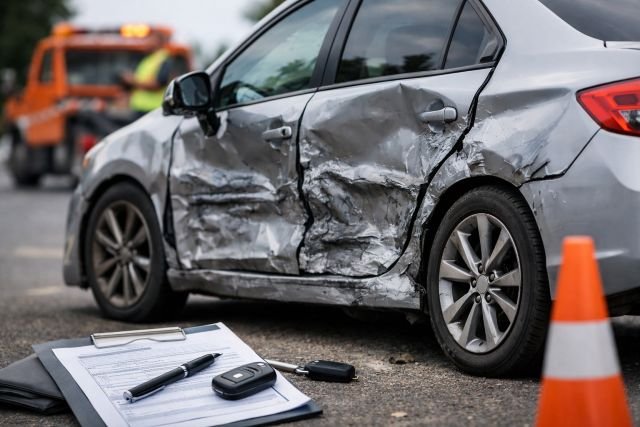
Near side car damage is one of those issues that can look minor in a driveway photo and still become a serious repair once a shop starts disassembly. The reason is simple: the side of a vehicle has far less “crumple space” than the front, so even a low-speed impact can push force into doors, pillars, rocker panels, and safety systems. Add modern sensors and driver-assistance technology, and the true scope of damage is often bigger than what you can see.
- What “Near Side” Means in Car Damage
- The Most Common Causes of Near Side Car Damage
- Near Side Car Damage: Cosmetic, Structural, and Safety-Critical
- What Near Side Damage Typically Includes on a Vehicle
- Near Side Car Repair Costs and Why They Vary So Much
- Real-World Cost Scenarios for Near Side Damage
- What to Do Next After Near Side Car Damage
- Near Side Car Damage and Insurance: How the Process Usually Works
- How to Prevent Near Side Damage in the Future
- FAQs About Near Side Car Damage
- Conclusion: Making the Right Call After Near Side Car Damage
If you’re dealing with near side car damage right now, you’re probably asking the practical questions. How bad is it, really? Is it safe to drive? How much will it cost? Will insurance cover it? This guide walks you through the causes, the real cost drivers, and the smartest next steps so you can protect your safety, your time, and your wallet.
What “Near Side” Means in Car Damage
In collision and repair language, “near side” generally means the side of the vehicle closest to the occupant being discussed, most commonly the driver. In other words, if the driver-side door area takes a hit, that’s typically described as near-side damage for the driver. “Far side” is the opposite side of the occupant, which can matter for injury analysis and for how the vehicle moved during impact.
From a repair perspective, near-side damage isn’t limited to what looks dented. A side impact can affect the door shell, hinges, latch alignment, intrusion beams, the B-pillar area, the rocker panel below the doors, and sometimes the quarter panel behind the rear door. On many vehicles, the near-side also contains critical wiring routes, airbag sensors, blind-spot monitoring hardware, mirror-mounted cameras, and other components that are easy to disrupt and expensive to restore correctly.
The Most Common Causes of Near Side Car Damage
Near-side damage most often happens when the side of the vehicle is exposed and another object meets it at an angle that scrapes or strikes rather than glancing off.
Intersection collisions are one of the biggest culprits. A classic “T-bone” impact tends to land into the door area, which is exactly where a car has less room to absorb energy. Even when the exterior looks repairable, the impact can shift pillar alignment or crush the rocker panel in a way that changes how the door closes or how the car behaves in a future crash.
Lane-change and merge contact causes a different pattern. Sideswipes can run along the length of the vehicle, often involving the mirror, front door, rear door, and rear quarter. These can look cosmetic, but the cost rises quickly because paint typically needs blending across multiple panels for a clean match, and because mirrors are packed with electronics on many newer models.
Parking lots create their own version of near-side damage. A slow-speed scrape against a pole, a misjudged garage entry, or a careless door swing can crease a body line. Creases are more complex than shallow dents because the metal or aluminum can stretch, making repair harder and sometimes making panel replacement more sensible than pushing and filling.
Curb strikes and underbody contact can also create near-side damage that people misread. A hard curb hit can bend suspension components on that side, knock the alignment out, or damage a wheel and tire. The visible scuff on the rim can be the smallest part of the bill.
Finally, weather and debris events can produce near-side damage that’s deceptively localized. A falling branch can hit the edge of a roof, pillar, and door frame area all at once, and that combination can raise concerns about sealing, wind noise, and structural integrity.
Near Side Car Damage: Cosmetic, Structural, and Safety-Critical
It helps to separate near-side car damage into three categories, because the category usually determines both cost and urgency.
Cosmetic damage includes scrapes, paint transfer, dings, and dents that do not change the way doors close, do not affect the structural shape of the body, and do not involve safety systems. Cosmetic doesn’t automatically mean cheap, because paintwork is labor-intensive and matching modern finishes can require repainting adjacent panels. Still, cosmetic damage is the category most likely to be safely delayed if the car drives normally and the doors seal correctly.
Structural damage is where the repair becomes more serious. The side structure includes pillars, rocker panels, and reinforcement sections that support the passenger cell. When these areas are bent, even slightly, it can change door alignment, compromise sealing, and, most importantly, reduce the way the vehicle is designed to manage crash energy. Structural work typically requires careful measurement, manufacturer repair procedures, and specialized equipment. It also increases the odds that the estimate will grow once a shop removes trim and finds hidden deformation.
Safety-critical and technology-related damage is the category that surprises people most. Near-side impacts can affect side airbags, curtain airbags, airbag sensors, seat belt pretensioners, and the wiring that supports them. They can also disturb blind-spot monitoring sensors, mirror cameras, or other advanced driver assistance systems. Even when a sensor is not directly hit, repairs that involve removing, replacing, or painting parts near sensors can trigger requirements for scanning and calibration so systems function properly afterward.
What Near Side Damage Typically Includes on a Vehicle
On many cars, near-side damage involves the doors first. Doors are not just outer skins anymore; they often include window regulators, intrusion beams, wiring harnesses, speakers, side airbags, and complex latches. A door that looks “mostly okay” may still need internal reinforcement work, hinge replacement, or precise alignment if the pillar or rocker was pushed.
The rocker panel is another frequent victim. It sits low, along the side under the doors, and it plays a structural role. Rocker panel damage can also indicate that the vehicle’s floor edge or mounting points experienced force, which can affect overall body alignment and sometimes suspension geometry.
Pillars matter because they connect the roof to the body and maintain the integrity of the cabin. Damage near the A-pillar can affect windshield fit and wind noise. Damage near the B-pillar can affect door closure and side-impact protection. Damage near the C-pillar can involve the rear structure and sometimes the mounting areas for sensors or trim.
Mirrors and quarter panels become expensive quickly because they often combine multiple operations. Mirrors are expensive parts; quarter panels often require extensive labor because they’re integrated into the body rather than simply bolted on.
Near Side Car Repair Costs and Why They Vary So Much
Near side car repair costs vary so widely because the side of a vehicle is a dense mix of visible panels and hidden structures, and because modern repairs are increasingly tied to technology and calibration requirements. Two cars can have the same-looking scrape, and one can cost a few hundred while the other climbs into the thousands due to parts pricing, paint complexity, labor rates, and sensor involvement.
A small, simple dent repair without paint can be relatively affordable. But once paint is involved, the cost grows. Once multiple panels need blending, the cost grows again. And once structural sections, airbags, or ADAS components are involved, the repair can enter a completely different tier.
Quarter panel work is a good example of the swing. Depending on severity, material type, and the method of repair or replacement, this area can range from relatively manageable to very expensive. Add in the possibility of a rear door edge, a tail lamp, a bumper corner, or blind-spot sensors, and the price can rise quickly.
Door repairs also vary. If the door skin can be repaired and painted, the job may stay reasonable. If the door shell must be replaced, the cost includes not only the new shell but also transferring internal components, addressing wiring, and ensuring correct fit and function. On some vehicles, programming or recalibration may be needed after replacement of electronics-related parts.
Structural pulls, measurements, and verification work are major cost drivers because they require time, equipment, and expertise. A reputable shop won’t guess. They’ll measure, follow manufacturer procedures, and document results.
Another modern cost driver is scanning and calibration. Many repairs require a pre-repair scan to identify stored fault codes and a post-repair scan to verify systems are functioning. Calibrations may be needed depending on what was repaired, removed, replaced, or even repainted. This is one reason why the same visible damage can cost more on a newer car than an older one.
Real-World Cost Scenarios for Near Side Damage
Imagine a parking-lot sideswipe that scuffs the paint on both the front and rear driver-side doors. If there’s no denting and the shop can correct it with refinishing and blending, the cost often lands in a lower band, but it still might feel higher than expected because paint labor and materials add up. Dark colors and pearl or tri-coat finishes can increase complexity.
Now consider a moderate impact at an intersection where the driver-side door is dented, the mirror is broken, and the rocker panel shows deformation. Even if airbags do not deploy, this scenario often involves door repair or replacement, rocker work, paint blending, and a careful check of alignment. The bill commonly climbs because multiple operations stack together.
Finally, consider a more severe near-side impact with airbag deployment. At that point, the repair may include airbags, sensors, seat belt components, interior trim, structural sections, and verification steps that insurers and repair standards require. This is the kind of case where a vehicle can approach a total loss threshold, depending on value, age, and local repair economics.
What to Do Next After Near Side Car Damage
The first decision is safety. If the door won’t latch properly, if you notice the steering pulling, if the wheel is off-center, if the car vibrates, or if you see warning lights on the dash, treat the vehicle as not safe to drive until inspected. Near-side impacts can create problems that appear only once you’re moving at speed, such as wind noise from poor sealing, instability from alignment issues, or system faults from damaged sensors.
The next step is documentation. Take clear photos in good light from multiple angles. Get wide shots that show the full side of the vehicle and close-ups that show depth, creases, cracked trim, broken glass, and any misalignment. If the wheel or tire on that side took a hit, photograph it too. If warning lights are present, photograph the instrument cluster.
After that, get a repair estimate from a reputable collision center. Ideally, the shop should be comfortable discussing manufacturer repair procedures, post-impact inspections, and scanning and calibration needs where applicable. Near-side car damage often involves hidden issues, so it’s normal for the estimate to change after teardown. Ask how the shop handles supplements so you’re not surprised by delays.
Then decide whether to involve insurance. If the damage is purely cosmetic and clearly below your deductible, paying out-of-pocket may make sense. If the damage spans multiple panels, involves doors that don’t close cleanly, suggests structural deformation, includes safety system concerns, or might involve sensors and calibrations, insurance is often the smarter route because hidden costs can escalate.
Choosing the right shop matters. Fast is nice, but correctness is better. Look for a shop that communicates clearly, documents the process, and stands behind the work. On newer vehicles, capability with advanced driver assistance systems and post-repair verification is particularly important.
Once repairs are completed, validate the outcome beyond appearance. Make sure doors close smoothly, gaps are consistent, seals work properly, and there’s no unusual wind noise. Drive the car at normal speeds and confirm it tracks straight and the steering wheel is centered. Confirm there are no warning lights. If your car has blind-spot monitoring, lane assistance, or parking sensors, verify they behave normally and ask the shop what verification steps were completed.
Near Side Car Damage and Insurance: How the Process Usually Works
Insurance claims for near-side damage often unfold in phases. An initial estimate is written based on visible damage, then the vehicle is disassembled and a supplement is created if hidden damage is found. This is especially common on side impacts because internal brackets, reinforcement bars, wiring mounts, and sensor attachments aren’t visible until trim and panels come off.
If the repair cost approaches a significant portion of the vehicle’s value, the insurer may consider total loss. This threshold varies by location and insurer practices, but the general idea is that once repair becomes economically impractical, total loss becomes likely. Airbag deployment and structural involvement increase that likelihood because costs rise fast.
Another consideration is diminished value. If your vehicle is newer, has high resale value, or sustained significant damage, it may be worth exploring whether a diminished value claim is relevant in your situation. The rules and viability depend heavily on where you live and the kind of coverage involved, so it’s best treated as a local research item rather than an assumption.
How to Prevent Near Side Damage in the Future
Prevention is never perfect, but you can reduce near-side exposure with habits that give you time and space. Slowing slightly at intersections, scanning cross-traffic even on green, and avoiding lingering in other drivers’ blind spots can reduce the chances of a near-side hit. In parking lots, choosing a space that reduces door-ding exposure can save money over time, even if it costs you a few extra steps.
If your vehicle has blind-spot monitoring, treat it as a backup, not a replacement for shoulder checks. Technology helps, but it doesn’t eliminate every scenario, especially in complex merges, tight traffic, or poor weather.
FAQs About Near Side Car Damage
What is near side car damage?
Near side car damage refers to damage on the side of the vehicle closest to the occupant being discussed, usually the driver. It often involves doors, rocker panels, pillar areas, and sometimes safety systems or sensors.
Is it safe to drive with near-side damage?
It depends on what was affected. If a door doesn’t latch, panel gaps look dramatically off, the car pulls while driving, airbags deployed, or warning lights appear, it’s safer to avoid driving until a qualified shop inspects it. Side damage can hide structural misalignment and safety system issues.
How much does near side car damage cost to repair?
Costs range from relatively small for minor cosmetic repairs to very high when structural sections, airbags, or ADAS-related components are involved. The biggest cost drivers are paint blending across multiple panels, hidden structural work discovered during teardown, and scanning or calibration needs on newer vehicles.
Can sensors be affected even if the body damage looks minor?
Yes. Many sensors sit behind trim, in mirrors, or near corners. Even if the outer panel looks repairable, impacts can shift mounts or disturb wiring, and some repairs require calibration afterward depending on the vehicle and the work performed.
Why do side repairs take longer than expected?
Side repairs often require disassembly to reveal hidden damage, careful measurement and alignment work, and multiple paint and curing stages. If parts are backordered or calibrations must be scheduled, timelines can extend.
Conclusion: Making the Right Call After Near Side Car Damage
Near side car damage is easy to underestimate because the side of a vehicle can look “mostly fine” while hiding alignment shifts, structural deformation, or safety and sensor issues that matter. The best approach is to treat it like a safety-first decision: confirm the vehicle is safe to drive, document the damage thoroughly, and get an estimate from a repair facility that will inspect beyond the surface and follow manufacturer procedures when needed.
If you handle it this way, you’ll reduce the chances of paying twice, dealing with lingering wind noise or door-fit problems, or discovering too late that an assistance feature isn’t working as designed. Near side car damage is stressful, but with the right steps, you can get back to a vehicle that looks right, drives right, and protects you the way it should.