


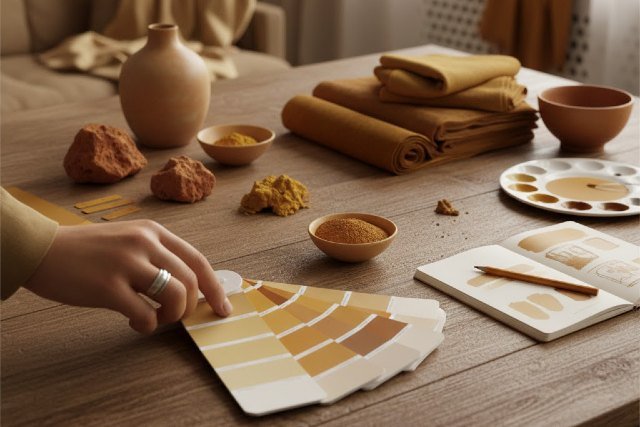
Few colors carry the depth, warmth, and cultural resonance of Ochre. Found in ancient cave paintings, Renaissance masterpieces, and today’s most refined design palettes, ochre remains a timeless earth tone that connects nature, history, and creativity. Whether you’re a designer working in interiors, branding, fashion, or digital media, understanding the origins, variations, and modern applications of ochre can transform how you use color.
- What Is Ochre? Understanding the Earth Tone
- A Brief History of Ochre in Art and Design
- Ochre in Modern Design: Why It Still Matters
- Color Psychology: Why Designers Love Ochre
- Types of Ochre: Variations Every Designer Should Recognize
- How Ochre Enhances Interior Design
- Using Ochre in Branding and Digital Design
- Fashion’s Relationship With Ochre
- Why Ochre Is Perfect for Sustainable Design Trends
- FAQs About Ochre
- Conclusion: Why Designers Should Embrace Ochre
Within the first hundred words and throughout this complete guide, you’ll see Ochre explored from multiple perspectives — its meaning, psychology, uses, and enduring influence. Designers who master ochre gain access to a color that is both grounded and versatile, making it a staple in any thoughtful palette.
What Is Ochre? Understanding the Earth Tone
Ochre is a naturally occurring earth pigment composed primarily of clay and iron oxide. Its color ranges from muted yellowish brown to deep golden red, depending on mineral content and heat exposure during processing. Historically, ochre has been one of humanity’s earliest pigments, used for over 300,000 years in prehistoric art, burial rituals, and early forms of communication.
Studies published by institutions such as the Smithsonian and the Natural History Museum highlight ochre’s significance in early human culture, noting how its durability and availability made it indispensable across continents. Because it withstands millennia without fading, ochre remains visible in prehistoric cave sites such as Lascaux and Blombos Cave, offering a unique link between ancient humans and modern designers.
Today, artists and designers still prize ochre for its natural warmth, matte texture, and ability to harmonize with neutral or vibrant palettes.
A Brief History of Ochre in Art and Design
Ochre’s journey spans civilizations and artistic movements, making it one of the most enduring pigments in history. Ancient Egyptians used ochre in tomb murals and cosmetics, often blending it with oils to create long-lasting paints. Greek and Roman artisans applied varying forms of yellow, red, and burnt ochre to pottery and frescoes, creating the warm visual language still associated with Mediterranean aesthetics.
During the Renaissance, ochre continued to play a vital role. Painters like Leonardo da Vinci and Caravaggio relied on ochre for underpainting, skin tones, and shadow building. Its stable drying properties helped artists develop depth and realism long before synthetic pigments existed.
By the 19th and 20th centuries, ochre became essential in naturalist and expressionist movements. Painters such as Vincent van Gogh, Paul Gauguin, and Georgia O’Keeffe used ochre tones to convey landscapes, emotion, and atmosphere.
Today, ochre appears across fields — from branding to interior design — demonstrating its perennial appeal.
Ochre in Modern Design: Why It Still Matters
The term Ochre has resurfaced strongly in contemporary design because modern creatives seek warmth, authenticity, and nature-inspired solutions. As digital spaces become more polished and streamlined, designers increasingly turn to earth tones that evoke comfort and grounding.
Ochre achieves this beautifully.
Its visual characteristics make it perfect for:
• Warm minimalism in interior design
• Organic branding for lifestyle and wellness brands
• Seasonless fashion palettes
• UI design requiring subtle contrast and depth
• Sustainable product design narratives
Unlike bright yellows or bold reds, ochre’s muted saturation ensures it feels refined rather than overpowering.
Color Psychology: Why Designers Love Ochre
Color psychology research often associates ochre with stability, creativity, and natural warmth. Because it originates from earth minerals, it evokes feelings of grounding and reassurance. Many designers find that ochre balances emotion and neutrality better than more intense yellows.
Some psychological associations include:
• Stability and rootedness
• Warmth without intensity
• Creativity and artistic heritage
• Maturity and sophistication
• Nature and sustainability
These attributes make ochre an ideal choice for brands and spaces aiming to convey timelessness and trust.
Types of Ochre: Variations Every Designer Should Recognize
While Ochre is often referred to as a single color, multiple distinct variations exist:
Yellow Ochre
The most widely recognized form, offering warm golden hues ideal for natural lighting effects and organic branding.
Red Ochre
Rich and dramatic, often used in paintings and interiors that require bold but grounded warmth.
Brown Ochre
Deep, earthy, and neutral, suitable for rustic design and muted palettes.
Burnt Ochre
Created by heating ochre to intensify its tone, resulting in toasted, copper-brown hues seen frequently in heritage-inspired designs.
Understanding these variations allows designers to tailor color direction with precision.
How Ochre Enhances Interior Design
Ochre has become a favorite among interior designers due to its ability to elevate a room without overwhelming it. The color pairs effortlessly with woods, stone textures, black accents, white walls, and natural fabrics. Its warmth fosters inviting, lived-in environments that feel modern yet timeless.
In Scandinavian and Japandi interiors, ochre acts as a grounding counterpoint to cool neutrals. In Mediterranean and bohemian styles, it helps create spaces that feel sun-kissed, textured, and cozy.
Interior designers often incorporate ochre in textiles, wall colors, pottery, and vintage decor pieces, leveraging the hue to add depth and personality.
Using Ochre in Branding and Digital Design
For branding, ochre communicates authenticity and craftsmanship. Many eco-friendly brands use ochre within their identity systems because the color feels organic and trustworthy. It works especially well for wellness companies, artisanal goods, lifestyle products, outdoor equipment, and restaurants focusing on natural ingredients.
In UI and digital design, ochre brings warmth to clean layouts. It can serve as a button color, background tint, or accent for illustrations. Because it offers strong visibility without harsh contrast, ochre is also excellent for accessibility-focused design systems.
Fashion’s Relationship With Ochre
Fashion designers have long celebrated ochre for its seasonless quality. The color appears in fall collections as earthy and warm, while in spring and summer it evokes sunlit landscapes and natural materials. Its versatility makes it suitable for both minimal and maximal styles.
Luxury brands often use ochre in leather goods, knitwear, and outerwear, while contemporary designers integrate it into gender-neutral palettes. Since ochre complements many skin tones, it remains a favored color in global fashion markets.
Why Ochre Is Perfect for Sustainable Design Trends
As sustainability becomes central to modern design, ochre gains relevance because it symbolizes nature, grounding, and ecological awareness. Its origin as a natural pigment reinforces ethical storytelling, while its muted tones align with minimalist and eco-aesthetic trends.
Designers aiming to express environmental values, heritage craft, or organic processes frequently use ochre as a core palette element.
FAQs About Ochre
What colors pair best with ochre?
Ochre pairs well with neutrals like beige, cream, black, charcoal, muted greens, and deep blues. These combinations create balanced palettes suitable for interiors, branding, and fashion.
Is ochre warm or cool?
Ochre is a warm color due to its golden and earthy undertones. Its warmth makes spaces feel cozy and natural.
Is ochre a neutral color?
Yes — and no. Ochre can behave like a neutral when muted, blending seamlessly into natural palettes, but richer ochres carry more intensity and character.
Where is ochre commonly used today?
Ochre is widely used in interior design, branding, digital interfaces, sustainable design, and fashion collections due to its versatility and timeless appeal.
Conclusion: Why Designers Should Embrace Ochre
Ochre remains one of the most meaningful, versatile, and enduring colors in the design world. Its roots in ancient history, combined with its modern relevance, make it a powerful tool for creatives across every discipline. Whether you’re crafting a visual identity, designing an interior space, developing a digital interface, or building a fashion collection, ochre can bring warmth, authenticity, and depth to your work.
As designers increasingly seek organic, timeless, and human-centered aesthetics, ochre stands out as the earth tone that bridges past, present, and future. Mastering its variations and applications ensures your designs feel grounded, memorable, and inspired.