


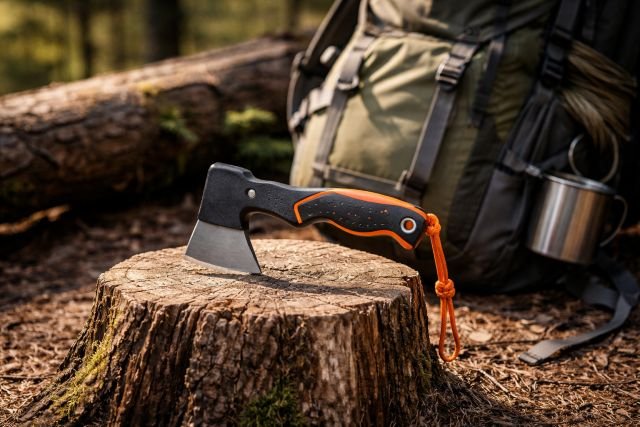
If you’re hunting for the smallest axe that still feels capable on a backcountry trip, you’re already thinking like a weight-conscious backpacker: every ounce needs to earn its spot. The trick is that “small” can mean two different things — short overall length for easy packing, or low total weight for long miles — and the best choice depends on what you actually do at camp.
- What counts as the “smallest axe” for backpacking?
- When a tiny axe makes sense — and when it doesn’t
- How to choose a smallest axe that’s still effective
- Top compact options: smallest axe picks that balance weight and capability
- How to carry a smallest axe safely
- Use it like a low-impact backpacker: wood, fire, and rules
- Keeping it sharp in the field
- Safety: why compact axes still deserve big respect
- FAQ
- Conclusion: choosing the smallest axe that’s actually worth carrying
A compact hatchet can be handy for splitting wrist-size kindling, rough shelter work in emergencies, or processing wood where it’s legal and appropriate. But it’s also a sharp, high-energy tool that demands respect. Emergency departments treat a meaningful number of axe-related injuries — one NEISS-AIP analysis of 2006–2016 data found 1,866 axe injuries in the study sample (out of 18,250 power saw + axe injuries), with the vast majority involving males. That doesn’t mean “don’t carry one.” It means: choose the right size, carry it safely, and use it deliberately.
Smallest Axe for Backpacking: Lightweight, Sharp, Reliable
If you’re hunting for the smallest axe that still feels capable on a backcountry trip, you’re already thinking like a weight-conscious backpacker: every ounce needs to earn its spot. The trick is that “small” can mean two different things — short overall length for easy packing, or low total weight for long miles — and the best choice depends on what you actually do at camp.
A compact hatchet can be handy for splitting wrist-size kindling, rough shelter work in emergencies, or processing wood where it’s legal and appropriate. But it’s also a sharp, high-energy tool that demands respect. Emergency departments treat a meaningful number of axe-related injuries — one NEISS-AIP analysis of 2006–2016 data found 1,866 axe injuries in the study sample (out of 18,250 power saw + axe injuries), with the vast majority involving males. That doesn’t mean “don’t carry one.” It means: choose the right size, carry it safely, and use it deliberately.
In this guide, you’ll learn how to pick a smallest axe for backpacking that’s truly lightweight, sharp, and reliable, plus how to stay on the right side of Leave No Trace and local rules.
What counts as the “smallest axe” for backpacking?
Most backpackers use “axe” to mean a small hatchet: a one-handed chopping tool designed for light wood processing. For backpacking, the sweet spot is typically:
- Length: roughly 9–14 inches (short enough to pack inside or strap outside)
- Weight: roughly 20–26 ounces (light enough to justify, heavy enough to bite)
Shorter and lighter can work — but there’s a catch: as tools shrink, you lose leverage and striking power, so you often need more swings to do the same job. That can increase fatigue and the chance of mistakes. In other words, “smallest” is only smart if it’s still controllable.
When a tiny axe makes sense — and when it doesn’t
A compact hatchet can be worth it when:
You routinely camp where fires are allowed and common, and you want to split small wood efficiently. Leave No Trace guidance emphasizes using small pieces of dead and downed wood and avoiding cutting branches off trees. A hatchet can help you turn hand-breakable sticks into quick-start kindling — especially after rain.
It’s usually not worth it when:
You’re in high-elevation, desert, or heavily used zones where wood is scarce (or fires are restricted), or you’re committed to stove-only cooking. Leave No Trace also highlights that true low-impact fires are small and that avoiding a fire can be the best choice depending on conditions.
And a practical note: many land agencies allow collecting only “dead and down” wood for immediate campfire use, and rules vary by location (including bans, seasonal restrictions, and transport limits). For example, the U.S. Forest Service notes in one national forest context that campers may collect dead and down wood for an evening campfire but may not cut standing trees. The BLM similarly notes that collecting dead/down wood for immediate campfire use may be allowed except where posted. Always verify local rules before you pack an axe.
How to choose a smallest axe that’s still effective
Weight-to-work ratio (the backpacker’s “value” metric)
A featherweight hatchet feels great on mile 12—but if it takes twice as long to split kindling, you may end up swinging longer while tired. The “best” smallest axe is often the one that’s light enough to carry and heavy enough to do the job quickly.
Handle length and control
Shorter handles pack easier, but they also reduce leverage. If you’re buying your first backpacking hatchet, a 13–14″ tool can feel more stable for controlled swings than ultra-short options — while still being pack-friendly.
Steel, edge geometry, and real-world sharpness
For backcountry use, you want an edge that can get very sharp and stay that way through light knotty wood. Don’t obsess over exotic steel names; instead look for:
- a factory edge that bites cleanly
- an easy-to-maintain bevel you can touch up in camp
Reliability means “won’t loosen, won’t snap, sheath won’t fail”
The most common reliability problems for small axes are: head looseness on wooden handles (especially when wet/dry cycles repeat), or cheap sheaths that don’t retain the bit well. A “reliable” smallest axe includes a secure cover and a carry method that keeps the edge from contacting your pack fabric or your body.
Top compact options: smallest axe picks that balance weight and capability
Below are well-known compact tools with published specs from manufacturers/retailers. The right pick depends on whether you prioritize minimal size, minimal weight, or maximum durability.
| Model | Approx. length | Approx. weight | Why it’s backpack-friendly |
|---|---|---|---|
| Gränsfors Bruks Hand Hatchet | 9.5 in | 23 oz | Very compact; premium build and long warranty/guarantee listing from retailers |
| Gerber Pack Hatchet | 9.46 in | 20.8 oz | One of the smallest/most packable; full-tang design and published weight |
| Fiskars X7 Hatchet | 14 in | commonly listed ~1.4–1.5 lb | Longer handle for control; designed for portability and kindling work |
| Council Tool Flying Fox Woodsman Hatchet | under 16 in handle | head weight 1 lb 11 oz | More “work” than ultralight; solid spec sheet from manufacturer |
Best “true smallest axe” for inside-the-pack carry
If your definition of smallest is “short enough to disappear in a pack,” the ~9.5-inch class tools stand out. The Gränsfors hand hatchet is repeatedly listed at 9.5 inches and 23 ounces by retailers. The Gerber Pack Hatchet lists 9.46 inches and 20.8 ounces on a product page, which is impressively compact for a usable edge.
In practice: this size is excellent for splitting small kindling and carving rough stakes, but it’s not a joyful tool for larger rounds. Keep expectations aligned with physics.
Best small axe for control (especially for beginners)
If you’re newer to axes, a bit more length can help. The Fiskars X7 is explicitly positioned as an easy-to-carry option for hikers/outdoor use and kindling chopping. The extra handle length can make your swing feel more predictable, especially when you’re cold, tired, or working in gloves.
Best “small but serious” for more wood processing
Some backpackers want compact and capable. The Flying Fox is edging into “camp hatchet” territory, with a heavier head spec that favors splitting and deeper bites. It’s not the smallest axe by weight, but it may be the smallest axe that still feels like real chopping power.
How to carry a smallest axe safely
A sharp tool belongs in a secure sheath and ideally in a position where:
- the bit cannot touch your back if you slip
- the tool can’t fall out when bushwhacking
- you can’t reach in and grab the edge accidentally
Many hikers strap hatchets externally, but inside-the-pack carry can be safer if the sheath is trustworthy and the head is positioned away from fabric tension points.
A practical rule: if you can shake your packed bag upside down and the axe could move, your setup isn’t secure enough.
Use it like a low-impact backpacker: wood, fire, and rules
Here’s where most people get tripped up: carrying a hatchet doesn’t mean you should use it often.
Leave No Trace advises avoiding cutting or breaking branches from standing or downed trees and recommends dead and down wood that burns quickly, plus using small pieces (no larger than an adult wrist) that can often be broken by hand. That guidance is a strong hint that in many places, you may not need an axe at all.
On the rules side, land management policies vary. One U.S. Forest Service page notes you can collect dead and down wood for an evening campfire without a permit in that forest, but you may not cut standing trees. The BLM’s public guidance similarly notes that collecting dead/down wood for immediate campfire use may be allowed except in posted areas.
So the “expert” backpacker approach looks like:
- check fire restrictions before your trip
- prioritize stove cooking when conditions are risky
- if fires are allowed, keep them small and use dead/down sticks
- don’t turn your campsite into a wood-processing station
Keeping it sharp in the field
A smallest axe earns its keep when it’s sharp enough to bite without forcing your swing.
For backpacking, a light touch-up kit beats a heavy sharpening system. A few minutes of maintenance prevents the “I’m swinging harder because it’s dull” spiral — the exact moment when accidents happen.
Also, don’t ignore the sheath: grit inside a sheath can dull an edge faster than you’d expect, especially if you re-sheath while the bit is dirty.
Safety: why compact axes still deserve big respect
Even if you only split kindling, you’re using a sharp blade with momentum. That NEISS-AIP study sample (2006–2016) still captured 1,866 axe-related injuries. And NEISS-AIP data is built from a network that supports national estimates for nonfatal injury ED visits.
Backpacking-relevant safety habits that actually help:
- Stop sooner: fatigue is your enemy.
- Create a stable work zone: flat ground, clear feet, no spectators close by.
- Split with controlled strokes: you’re not in a lumberjack competition.
- If conditions are sketchy (rain, numb hands, darkness), don’t “push through.”
FAQ
What is the best smallest axe for backpacking?
The best smallest axe for backpacking is the one that matches your real use: ~9.5-inch hatchets maximize packability, while 13–14″ hatchets can feel more controllable for many hikers. If your trips are mostly stove-based or fires are often restricted, the “best” choice may be skipping the axe entirely.
How heavy should a backpacking hatchet be?
Many compact backpacking hatchets land around 20–26 ounces. Lighter tools carry easier but may require more swings; heavier heads split more efficiently but cost you pack weight.
Is it legal to cut wood while backpacking?
Rules vary by location and season. In some areas, collecting dead and down wood for an on-site campfire may be allowed, while cutting standing trees is prohibited. Always check local regulations and fire restrictions before your trip.
Do I even need a smallest axe for backpacking?
Often, no. Leave No Trace recommends small pieces of dead and down wood and avoiding cutting branches from trees — many fires can be made with sticks you can break by hand. If you rarely make fires, a stove and a good lighter setup usually beat an axe.
Conclusion: choosing the smallest axe that’s actually worth carrying
A smallest axe for backpacking can be a smart, satisfying tool — lightweight, sharp, and reliable — when it fits your trip style and local conditions. The winning formula is simple: pick a compact hatchet with a secure sheath, enough handle to control your swing, and enough head weight to do the job without exhausting you.
Just remember: modern backcountry best practice isn’t “process more wood,” it’s “leave less trace.” Follow Leave No Trace guidance on dead-and-downed wood and small fires, and confirm local rules before you swing steel in the backcountry.