

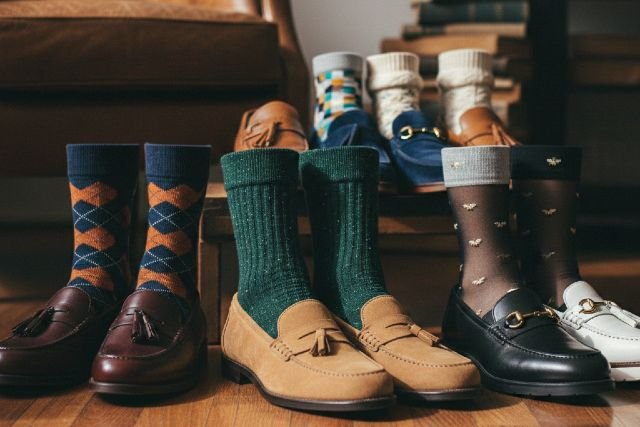
Wearing socks with loafers used to feel controversial, but today it’s a normal — and often stylish — choice. Whether you’re dressing for the office, a casual weekend, or a smart summer look, the right socks can elevate loafers from basic to intentional. The key is understanding how color, pattern, and fabric interact with your trousers, your shoes, and the overall formality of your outfit.
- Why socks with loafers actually work
- The golden rule of socks with loafers
- The best sock colors to wear with loafers
- Choosing patterns that work with loafers
- The best sock fabrics for loafers
- No-show socks versus visible socks with loafers
- Real-world outfit examples
- Common mistakes to avoid
- FAQs about socks with loafers
- Conclusion
In this detailed guide, you’ll learn exactly how to wear socks with loafers the right way, which colors always work, when patterns make sense, and what fabrics feel best for comfort and style. By the end, you’ll know how to confidently style socks with loafers in any season or setting.
Why socks with loafers actually work
Loafers sit in a unique style category. They’re dressier than sneakers but more relaxed than oxfords, which makes them incredibly versatile. Because loafers expose more of the ankle area, whatever sits between your trousers and shoes becomes highly visible. That’s exactly why socks matter so much when wearing loafers.
Socks with loafers work best when they feel intentional rather than accidental. They add polish in professional settings, improve comfort during long days on your feet, and allow subtle personal expression through color or texture. Problems usually arise only when the sock choice clashes with the outfit’s formality, such as thick athletic socks paired with sleek leather loafers.
The golden rule of socks with loafers
The most important rule to remember is that socks should usually complement your trousers before your shoes. When sock color is close to the trouser color, it creates a clean vertical line that looks more refined and makes the legs appear longer. Traditional menswear principles emphasize harmony across the lower half of an outfit, which is why matching socks to trousers is often more flattering than matching them to loafers alone.
In simple terms, socks with loafers look best when the color aligns with the trousers, the fabric matches the season, and any pattern feels proportional to the outfit.
The best sock colors to wear with loafers
Navy socks are one of the safest and most versatile choices when wearing loafers. They pair effortlessly with navy trousers, most shades of denim, and even grey tailoring. Navy also works equally well with brown or black loafers, making it a reliable option for both business and smart casual outfits.
Grey socks are another excellent choice, especially in charcoal or mid-grey tones. Charcoal socks work well for dressier looks, particularly with black loafers and tailored trousers, while lighter grey feels more relaxed and modern. Grey is often more forgiving than black, which can sometimes feel too harsh in daytime outfits.
Black socks still have their place, especially with black loafers and dark trousers. They tend to look best in more formal or evening-leaning outfits. However, black socks can feel heavy when paired with lighter clothing, so they’re best reserved for darker color palettes.
Brown socks can work beautifully with loafers when the rest of the outfit leans warm. Tan trousers, olive chinos, and textured fabrics like tweed pair naturally with brown socks. The key is choosing a muted or darker brown rather than trying to match the exact shade of the loafers.
Cream and off-white socks have become increasingly popular, particularly in casual and fashion-forward outfits. They pair especially well with suede loafers, relaxed trousers, and summer looks. When styled intentionally, lighter socks add contrast and personality without looking sloppy.
Choosing patterns that work with loafers
Patterns are where socks with loafers can really shine, but restraint is important. Subtle textures and small-scale patterns tend to look the most refined. Ribbed socks add depth without feeling flashy, while micro-dots or fine stripes introduce interest without overwhelming the outfit.
Bolder patterns can work when the rest of the outfit is simple. Argyle socks, wide stripes, or creative motifs are best paired with solid trousers so the eye has a place to rest. If your trousers already have a pattern, such as checks or herringbone, simpler socks usually look more balanced.
A good rule of thumb is that the more formal the outfit, the quieter the sock pattern should be. Casual outfits allow more freedom, while professional settings benefit from subtlety.
The best sock fabrics for loafers
Fabric choice affects both comfort and appearance. A sleek loafer paired with the wrong sock material can throw off the entire look, even if the color is right.
Merino wool is widely considered the best all-around sock fabric. It regulates temperature, manages moisture effectively, and resists odor naturally. Research from the International Wool Textile Organisation shows that wool fibers can absorb significant moisture vapor without feeling wet, which is why merino socks remain comfortable across different climates. Woolmark also highlights wool’s natural odor resistance and breathability compared to many synthetic fibers.
Cotton socks are breathable and soft, but they tend to hold moisture rather than wick it away. This can lead to discomfort during long wear, especially in warm weather. Many foot-health sources recommend moisture-wicking materials over cotton for people who experience sweaty feet.
Silk-blend socks are elegant and smooth, making them a good match for tailored outfits and formal loafers. While they’re not the most durable option, they provide a refined finish for special occasions.
Performance blends that include nylon or polyester are particularly useful for no-show socks. These materials help socks retain their shape, dry quickly, and stay in place. Editors testing no-show socks often note that performance fabrics and heel grips are what prevent slipping inside loafers.
No-show socks versus visible socks with loafers
No-show socks are popular because they preserve the sockless appearance while offering protection and comfort. They’re especially practical in warm weather, with cropped trousers, or when wearing suede or driving loafers. Well-designed no-show socks with heel grips can stay in place all day, making them a reliable option for everyday wear.
Visible socks, on the other hand, have become a deliberate style choice rather than a mistake. In business casual and smart casual settings, visible socks can add polish and visual interest. Fashion publications like Esquire have highlighted visible socks as a modern styling move, particularly when paired with relaxed tailoring or summer outfits.
The key difference is intention. When socks are chosen thoughtfully, they enhance loafers rather than distract from them.
Real-world outfit examples
In a professional office setting, brown penny loafers paired with navy trousers look sharp with navy socks or subtle navy micro-patterns. The socks blend seamlessly with the trousers while allowing the loafers to stand out.
For a smart casual weekend outfit, suede loafers with chinos and a knit polo work well with olive, tan, or softly patterned socks that echo the trouser color. This keeps the outfit relaxed but cohesive.
During summer, loafers paired with lightweight trousers and linen shirts benefit from thin no-show socks made from performance blends. They maintain the sockless look while preventing discomfort and odor.
For those who want to experiment with personality, grey trousers and black loafers pair nicely with charcoal socks featuring small accents in burgundy or deep green. This adds interest without overpowering the outfit.
Common mistakes to avoid
One of the most frequent mistakes is wearing athletic socks with dress loafers. Switching to thin merino or dress socks immediately improves the look. Another common issue is choosing sock colors that clash with trousers, which disrupts the visual line of the outfit. Matching socks closer to trouser color solves this instantly.
Poorly fitting no-show socks that slip are another frustration. Choosing better construction and proper sizing makes a noticeable difference. Finally, wearing cotton socks when dealing with sweaty feet often leads to discomfort, which is why moisture-wicking fabrics are usually a better choice.
FAQs about socks with loafers
Many people wonder whether socks should be worn with loafers at all. The answer is yes. Socks with loafers improve comfort, hygiene, and styling flexibility. If a sockless look is preferred, no-show socks are the most practical solution.
Another common question is whether socks need to match loafers. In most cases, socks look better when they coordinate with trousers rather than shoes, as this creates a cleaner and more polished appearance.
Patterned socks are absolutely acceptable with loafers as long as they’re balanced with the rest of the outfit. Subtle patterns suit dressier looks, while bolder designs work best in casual settings.
For those concerned about sweaty feet, merino wool and moisture-wicking blends are generally the best fabrics. Wool’s ability to manage moisture and resist odor makes it particularly effective for long wear.
Conclusion
Mastering socks with loafers comes down to intention and balance. When sock color aligns with trousers, patterns stay proportional, and fabrics suit the season, loafers instantly look more polished and comfortable. Whether you prefer no-show socks for summer or visible socks for smart casual outfits, thoughtful choices make all the difference.