

Steel Buildings have become one of the most efficient solutions for modern commercial construction. In the first 100 words, it’s important to note that steel structures offer unmatched speed, durability, cost control, and long-term performance, making them ideal for warehouses, retail centers, office complexes, industrial facilities, and more. As developers and business owners prioritize sustainability, faster timelines, and long-term value, steel buildings consistently outperform traditional materials like wood and concrete. This article explores how steel buildings improve efficiency across financial planning, construction, energy performance, operational costs, and future scalability.
- Why Steel Buildings Are Changing the Commercial Construction Landscape
- Faster Construction Timelines: A Major Efficiency Advantage
- Cost Efficiency Throughout the Project Lifecycle
- Durability and Strength: Built for Long-Term Commercial Use
- Improved Sustainability and Environmental Efficiency
- Space Efficiency and Flexible Design Options
- Steel Buildings Reduce Operational Downtime
- Technology Integration Enhances Efficiency Further
- Why Steel Buildings Are Ideal for High-Growth Commercial Sectors
- Common Questions About Steel Buildings
- Conclusion: Why Steel Buildings Lead in Efficiency
Why Steel Buildings Are Changing the Commercial Construction Landscape
Steel has always been a preferred material in large-scale infrastructure, but in recent years, its use in commercial building projects has surged. Companies now seek reliable, scalable, and cost-efficient structures that align with modern business demands. Steel buildings offer exactly that. Their structural benefits — combined with advancements in prefabrication and engineering — allow businesses to build faster without sacrificing quality.
In industries where timelines and budgets determine profitability, steel is increasingly becoming the standard rather than the exception.
Faster Construction Timelines: A Major Efficiency Advantage
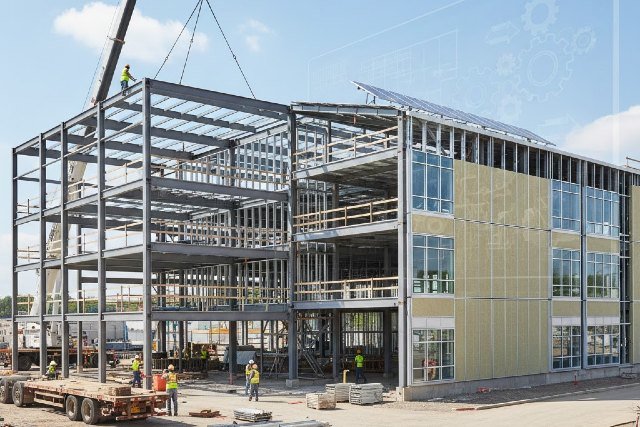
One of the major reasons developers choose steel buildings is the dramatic reduction in construction time. Prefabricated components are engineered and manufactured offsite, then delivered ready for assembly.
A study by the American Institute of Steel Construction (AISC) found that structural steel framing can reduce construction schedules by up to 20% compared to concrete.
Steel’s advantages in speed stem from:
Precision Engineering
Steel components are laser-cut and pre-drilled, which eliminates onsite modifications. This precision reduces the likelihood of delays and cost overruns — problems that frequently occur in traditional construction.
All-Weather Assembly
Because steel buildings rely on bolted connections rather than extensive curing or drying time, crews can assemble components even in challenging weather. This ability keeps projects moving regardless of seasonal conditions.
Reduced Labor Requirements
Steel building systems require smaller crews and fewer specialized trades. This reduces labor costs significantly while also minimizing risks associated with workforce shortages — a major pain point in the construction industry.
Cost Efficiency Throughout the Project Lifecycle
Steel buildings offer considerable cost benefits not just during construction but across the entire lifespan of the project.
Predictable Upfront Costs
Prefabricated steel structures come with clear pricing. Since most components are manufactured offsite, there’s little room for surprise expenses due to measurement errors, material waste, or delays.
For example, a retail developer building a 10,000 sq. ft. facility can expect more stable cost estimates using pre-engineered steel components than traditional methods relying heavily on variable materials like lumber.
Lower Long-Term Maintenance
Steel buildings require minimal repairs due to their resistance to rot, pests, and warping. Wood structures may need recurring treatments, replacements, or structural checks over time, but steel remains stable for decades with minimal intervention.
Energy Efficiency Leading to Reduced Utility Bills
Many steel buildings incorporate insulated metal panels (IMPs) or energy-efficient coatings designed to reflect heat. As a result, commercial facilities can reduce cooling costs by 10–30% depending on climate.
Study reference: U.S. Department of Energy – https://www.energy.gov
Durability and Strength: Built for Long-Term Commercial Use
Commercial buildings must withstand heavy usage, environmental stresses, and long-term operational demands. Steel excels because of its exceptional strength-to-weight ratio and durability.
Fire Resistance
Steel offers superior fire resistance, making it ideal for warehouses, manufacturing plants, and data centers where safety and compliance are top priorities. Most steel building components meet or exceed fire safety codes with minimal additional treatment.
Wind and Seismic Performance
Modern steel structures are engineered to withstand severe wind loads and seismic activity. In regions prone to hurricanes or earthquakes, steel buildings remain one of the most dependable solutions.
Pest and Rot Resistance
Steel does not attract termites, rodents, or insects — common threats to wooden structures. This not only reduces maintenance but also protects the building’s structural integrity.
Improved Sustainability and Environmental Efficiency
Sustainability is now a major factor in commercial development. Steel buildings contribute to greener construction in multiple ways.
Recyclable and Reusable Materials
Steel is one of the most recycled materials on the planet. According to the Steel Recycling Institute, more than 88% of steel is recycled globally.
This means steel buildings significantly reduce waste at the end of their lifecycle.
Reduced Construction Waste
Because steel components are prefabricated, there is far less waste compared to materials cut onsite. Businesses benefit from cleaner, more organized worksites and reduced disposal costs.
Energy-Efficient Building Envelopes
With insulated panels, cool-roof technology, and precision-built joints, steel buildings create tight building envelopes that maintain indoor temperatures more effectively. This leads to lower HVAC usage and smaller carbon footprints.
Space Efficiency and Flexible Design Options
Aside from cost and speed, steel buildings offer substantial advantages in design flexibility.
Clear-Span Interiors
Steel structures can achieve large, column-free spaces (often exceeding 200 feet). This is crucial in:
Manufacturing plants
Retail showrooms
Distribution centers
Aircraft hangars
Event venues
Clear-span spaces enhance operational efficiency by allowing business owners to adapt floor plans without structural limitations.
Mezzanine and Expansion Options
Steel buildings can be expanded laterally or vertically with minimal disruption. Businesses experiencing growth can add square footage without demolishing existing infrastructure.
Architectural Customization
Modern steel buildings support architectural enhancements such as:
Glass facades
Custom entrances
Brick or stone exteriors
Contemporary rooflines
This dispels the myth that steel buildings must look “industrial.” Many corporate offices and retail centers now use steel frameworks with high-end finishes.
Steel Buildings Reduce Operational Downtime
Steel buildings are engineered for reliability and minimal repair needs. This means businesses can operate with fewer interruptions.
For example, a logistics company using a steel distribution center may experience fewer maintenance shutdowns because steel roofs and frames withstand heavy equipment vibrations and large temperature swings.
Additionally, steel buildings resist corrosion and water damage when properly coated, ensuring that operations continue smoothly even in harsh environments.
Technology Integration Enhances Efficiency Further
Modern steel buildings can easily incorporate smart building technologies. Prefabricated designs allow engineers to integrate:
Advanced HVAC systems
Solar panel mounts
LED lighting systems
Automated climate control
Security technology
For instance, integrating solar panels is easier on steel roofs due to their strength and stability. Many commercial clients benefit from long-term energy savings by pairing steel construction with renewable energy systems.
Why Steel Buildings Are Ideal for High-Growth Commercial Sectors
Several industries increasingly rely on steel buildings due to efficiency demands, including:
Manufacturing
Logistics and warehousing
Agricultural processing
Retail chains
Automotive centers
Data centers
Cold storage facilities
These sectors benefit from the combination of clear-span spaces, durability, cost stability, and rapid construction that steel provides.
Common Questions About Steel Buildings
Are steel buildings cheaper than traditional buildings?
Often, yes. Steel buildings can reduce construction costs by 10–20% due to faster assembly, lower labor requirements, and minimal maintenance over the building’s lifespan.
How long do steel buildings last?
A properly maintained steel building can last 50–70 years or more. Galvanized coatings and modern engineering significantly extend longevity.
Are steel buildings energy efficient?
Absolutely. Steel buildings often use insulated panels and energy-efficient coatings that reduce heating and cooling costs. They also support renewable energy installations easily.
Can steel buildings withstand harsh weather?
Steel buildings are engineered to meet strict wind, snow, and seismic loads, making them suitable for diverse climates and extreme weather conditions.
Are steel buildings good for commercial expansion?
Yes. Steel buildings are highly modular and can be expanded quickly without major structural changes.
Conclusion: Why Steel Buildings Lead in Efficiency
In conclusion, Steel Buildings deliver exceptional efficiency across every stage of commercial development — from planning and construction to long-term operations and future expansion. Their speed, strength, cost-effectiveness, and sustainability make them one of the most practical solutions in today’s competitive commercial landscape. Businesses looking for reliability and long-term performance consistently benefit from choosing steel. Whether you’re developing a warehouse, retail space, office building, or industrial facility, steel offers the efficiency needed to meet modern business demands while delivering lasting value.
If you’re planning a new commercial project, now is the perfect time to explore how steel buildings can transform your construction and operational strategy.