


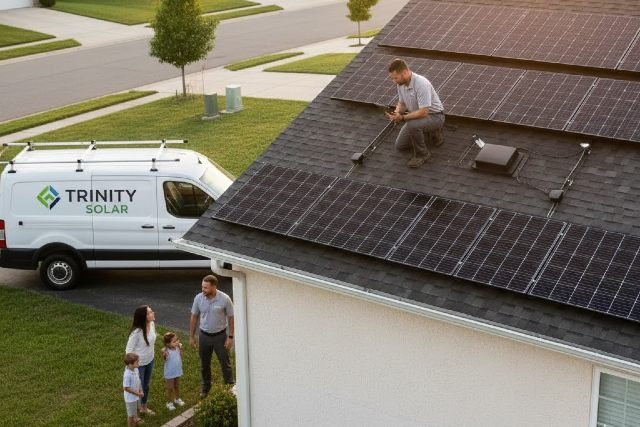
Choosing a solar provider requires careful consideration, especially when long-term investment, system performance, and customer support are at stake. Trinity Solar has become one of the most recognized names in the residential solar industry, particularly on the East Coast. Known for its family-owned roots, full-service installation model, and long-standing community reputation, Trinity Solar continues to attract homeowners looking for reliable renewable energy solutions.
- What Is Trinity Solar? Understanding the Company
- Trinity Solar Pricing — What Homeowners Should Expect
- Trinity Solar Quality — Panels, Equipment, and Performance
- Service and Customer Experience with Trinity Solar
- Trinity Solar for Business vs. Residential Customers
- Potential Disadvantages of Trinity Solar
- Trinity Solar vs Other Major Solar Companies
- FAQs About Trinity Solar
- Conclusion
Within the first 100 words of this review, it’s clear that Trinity Solar stands out for three core reasons: competitive pricing, dependable solar equipment, and a customer-focused service model. But is it the right choice for every homeowner? This in-depth, honest review examines pricing, quality, service, performance, and real experiences to help you make an informed decision.
What Is Trinity Solar? Understanding the Company
Founded in 1994, Trinity Solar has grown into one of the largest privately held solar installers in the United States. The company operates primarily in states like New Jersey, New York, Massachusetts, Connecticut, Rhode Island, Maryland, and Pennsylvania.
Unlike national solar giants that outsource parts of their process, Trinity Solar manages nearly everything in-house — from sales and system design to installation and customer support. This vertical integration reduces turnaround time, ensures consistent project quality, and creates a single point of contact throughout the homeowner’s solar journey.
According to data published by the Solar Energy Industries Association (SEIA), the U.S. residential solar market has grown at an average annual rate of over 30% in the last decade. Companies like Trinity Solar play a significant role in this expansion.
Trinity Solar Pricing — What Homeowners Should Expect
Solar pricing is a major factor for homeowners considering installation. Trinity Solar uses a personalized quoting approach, meaning prices vary depending on roof condition, energy needs, and panel selection. However, many customer reports indicate that Trinity Solar’s pricing falls near or slightly below regional averages.
Upfront Costs and Installation Fees
Most homeowners report Trinity Solar installations ranging from mid-tier to moderately premium pricing. While not the cheapest contractor on the market, they offer value through bundled services and long-term warranties. Price transparency improves during the consultation phase, where technicians assess your home’s layout and design needs.
Solar Financing Options
Trinity Solar provides several payment models to fit different budgets:
Pay-in-full
Solar loan
Solar lease
Power Purchase Agreement (PPA)
This flexibility makes the company appealing to homeowners who want options beyond upfront payment. Many choose PPAs or leases for affordability, though ownership (via purchase or loan) provides the highest long-term savings.
Long-Term Savings Potential
Solar savings depend heavily on local electricity rates, incentives, and system size. Using data from the U.S. Energy Information Administration, electricity rates continue rising nationwide. With this upward trend, solar offers meaningful long-term cost protection.
Homeowners typically report:
Lower electric bills within the first month
Predictable energy rates
Strong ROI in areas with high utility costs
Because Trinity Solar focuses on high-efficiency systems, many clients see accelerated savings compared to lower-quality solar providers.
Trinity Solar Quality — Panels, Equipment, and Performance
Solar Panels Used by Trinity Solar
Trinity Solar uses tier-one solar panel manufacturers known for reliability and durability. While the specific brands may vary over time, they are generally recognized for:
High energy output
Strong temperature tolerance
Robust manufacturer warranties
These variables matter for long-term performance, especially in regions prone to heat waves, snow, or humidity.
Inverters and System Components
The company offers microinverters or string inverters with power optimizers, depending on the home’s design. Microinverters, known for increasing shade tolerance and boosting energy production, are commonly recommended.
Their equipment ensures consistent output across different seasons and environments.
Installation Quality and Workmanship
One of Trinity Solar’s main competitive advantages is its in-house installation team. Many national solar providers outsource installations to third parties, creating inconsistencies in quality.
Trinity’s installations are typically praised for:
Clean panel alignment
Professional wiring
Solid roof-mounting procedures
Minimal disruption during installation
This consistency is a major benefit for homeowners planning to stay in their homes long term.
Service and Customer Experience with Trinity Solar
Customer Support and Responsiveness
Service is one of the most frequently discussed components of any solar installation. Trinity Solar is known for straightforward support and a family-owned service approach that prioritizes clear communication.
Customers commonly highlight:
Timely responses
Knowledgeable technicians
Efficient scheduling
Supportive post-installation assistance
Warranty and Long-Term Protection
Trinity Solar offers:
A workmanship warranty
A production guarantee (in some financing models)
Manufacturer warranties
The combination of installation and equipment protection gives homeowners peace of mind. A strong warranty is extremely important, given that solar systems are 25-year investments.
Real Customer Experiences
Reviews from customers across New England and the Mid-Atlantic indicate a high satisfaction rate, particularly regarding installation quality and professionalism. Some negative reviews mention scheduling delays or communication gaps, which can occur in fast-growing companies.
However, Trinity Solar’s longstanding reputation and repeat customers suggest reliability and accountability over time.
Trinity Solar for Business vs. Residential Customers
Although Trinity Solar is best known for residential services, it also supports commercial projects. Businesses benefit from:
Energy bill reductions
Sustainability improvements
Potential tax incentives (depending on jurisdiction)
Commercial installs tend to be larger and more complex, but Trinity Solar’s full-service model translates effectively across both sectors.
Potential Disadvantages of Trinity Solar
While Trinity Solar is a strong provider, there are a few considerations homeowners should be aware of.
Limited Service Area
Trinity Solar currently serves select East Coast states. Homeowners outside these regions cannot access its services.
Mixed Experiences with Sales Representatives
Some reviews note pushy sales tactics, although this varies by region and representative. As with any solar purchase, homeowners should review contract terms carefully.
Scheduling Delays During Peak Seasons
Due to high demand, installation timelines may extend during busy months. However, Trinity Solar typically maintains transparency regarding expectations.
Trinity Solar vs Other Major Solar Companies
Homeowners often compare Trinity Solar to companies such as Sunrun, Tesla Solar, and Sunnova.
Compared to many competitors, Trinity Solar stands out for:
In-house installation (vs outsourcing)
Regional expertise
Family-owned service culture
Flexible financing choices
Stronger customer satisfaction consistency
Companies like Tesla offer lower prices but may provide less personalized service. Sunrun offers broad coverage but relies heavily on leases and PPAs.
Homeowners choosing Trinity Solar often prioritize trust, quality, and long-term stability over rock-bottom pricing.
FAQs About Trinity Solar
Is Trinity Solar expensive?
Trinity Solar’s pricing is moderate and competitive, often providing good value for the quality of equipment and service.
Does Trinity Solar offer financing?
Yes. Options include loans, leases, PPAs, and full cash purchases.
What warranties does Trinity Solar provide?
The company offers workmanship warranties and equipment warranties through panel manufacturers.
How long does installation take?
Most projects take several weeks from consultation to completion, depending on permitting timelines.
Is Trinity Solar worth it?
For homeowners seeking high-quality equipment and reliable installation, Trinity Solar is often worth the investment.
Conclusion
Choosing a solar provider is a major decision, and Trinity Solar stands out as a trustworthy option for homeowners seeking reliable installation, strong warranties, and long-term energy savings. With competitive pricing, high-quality solar equipment, and attentive service, Trinity Solar offers a balanced solution that appeals to customers looking for both value and performance. While no company is perfect, Trinity Solar’s commitment to in-house operations and customer satisfaction helps it maintain a solid reputation in the solar industry. For those evaluating the best path toward clean, renewable energy, Trinity Solar remains a strong contender with a proven track record.