


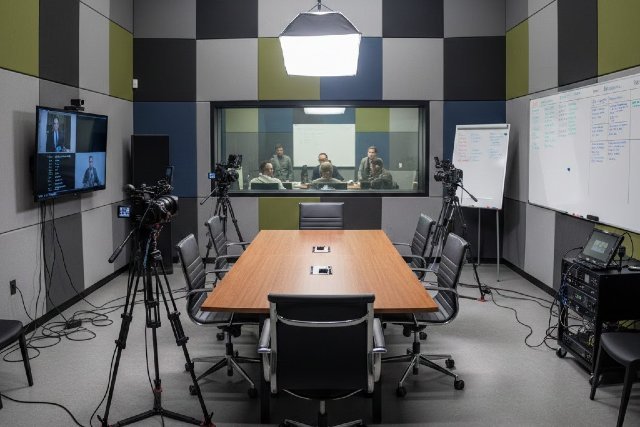
In today’s fast-paced media and content industry, studios are under constant pressure to deliver polished, high-quality output with minimal errors. Whether it’s film, television, advertising, podcasts, or digital content, the margin for mistakes is shrinking. This is where a Back Casting Room becomes not just useful, but essential. A Back Casting Room acts as the control nerve center of production, ensuring consistency, accuracy, and professional standards before content reaches the final stage.
- What Is a Back Casting Room and Why It Matters
- How a Back Casting Room Improves Production Quality
- The Role of a Back Casting Room in Workflow Efficiency
- Why Every Studio Type Benefits from a Back Casting Room
- Back Casting Room vs Traditional Editing Rooms
- Enhancing Collaboration Through a Back Casting Room
- Technical Advantages of a Back Casting Room
- Real-World Scenario: Back Casting Room in Action
- Common Questions About Back Casting Rooms
- Building Trust and Professional Reputation
- The Future of Studio Production and Back Casting Rooms
- Conclusion: Why a Back Casting Room Is No Longer Optional
Studios that invest in a Back Casting Room often experience smoother workflows, fewer reshoots, and better collaboration across departments. As production complexity increases, relying solely on on-set decisions or post-production fixes is no longer enough. A dedicated space for reviewing, aligning, and refining content can dramatically improve production quality and efficiency.
What Is a Back Casting Room and Why It Matters
A Back Casting Room is a dedicated studio space where production teams review performances, audio, visuals, lighting, and timing in real time or near real time. Unlike traditional casting rooms or editing bays, this room is designed specifically to evaluate output from a backward perspective, meaning teams assess what has already been captured and compare it against creative and technical benchmarks.
This approach allows directors, producers, sound engineers, and technical supervisors to identify issues early. According to a report by the Motion Picture Association, production inefficiencies and reshoots can increase project costs by up to 30 percent. A Back Casting Room directly addresses this issue by catching errors before they snowball into expensive fixes.
In modern studios, the Back Casting Room is no longer a luxury. It is a strategic asset that protects budgets, timelines, and creative integrity.
How a Back Casting Room Improves Production Quality
Production quality is rarely compromised by one major mistake. It is usually affected by a series of small oversights such as inconsistent lighting, uneven audio levels, or performances that do not align with the intended tone. A Back Casting Room creates a controlled environment where these details can be evaluated without distractions.
By reviewing scenes immediately after capture, teams can adjust camera angles, refine dialogue delivery, and recalibrate lighting setups. Research from Adobe’s Digital Media Trends report highlights that real-time feedback loops significantly improve creative output and reduce post-production bottlenecks. A Back Casting Room enables this feedback loop in a structured and efficient way.
Studios that consistently use Back Casting Rooms often report higher client satisfaction because the final output aligns more closely with the original creative vision.
The Role of a Back Casting Room in Workflow Efficiency
Efficiency is one of the strongest arguments for integrating a Back Casting Room into studio operations. Without it, feedback is often delayed until post-production, when changes are more time-consuming and expensive. With a Back Casting Room, decisions are made faster and with better context.
For example, during a commercial shoot, a creative director can immediately review a take in the Back Casting Room and confirm whether the messaging aligns with brand guidelines. If not, adjustments can be made on the spot. This reduces downtime and prevents miscommunication between departments.
A study by PwC on media production workflows found that studios with integrated review systems completed projects up to 25 percent faster. A Back Casting Room functions as that integrated review system, bridging the gap between production and post-production.
Why Every Studio Type Benefits from a Back Casting Room
The value of a Back Casting Room extends across different studio types. Film and television studios use it to ensure narrative consistency and technical precision. Advertising studios rely on it to maintain strict brand compliance. Podcast and audio studios use it to monitor sound quality, pacing, and audience engagement.
Even smaller content studios benefit significantly. With the rise of streaming platforms and social media, content volume has increased, but quality expectations remain high. A Back Casting Room helps smaller teams maintain professional standards without expanding post-production budgets.
This adaptability is why Back Casting Rooms are becoming a standard feature in modern studio design rather than an optional add-on.
Back Casting Room vs Traditional Editing Rooms
It is important to distinguish a Back Casting Room from a traditional editing room. While editing rooms focus on assembling and polishing content after production, a Back Casting Room focuses on evaluation and alignment during production. This proactive approach reduces the burden on editors and minimizes revision cycles.
Traditional editing rooms often operate in isolation from the production floor. In contrast, a Back Casting Room encourages collaboration by bringing decision-makers together at the right moment. This collaborative environment improves creative clarity and technical accuracy.
Industry experts from the American Society of Cinematographers emphasize that early evaluation of footage significantly enhances visual consistency. A Back Casting Room makes this early evaluation practical and repeatable.
Enhancing Collaboration Through a Back Casting Room
Collaboration is at the heart of successful production, and a Back Casting Room is designed to support it. By providing a shared space for review, it ensures that everyone is aligned on expectations and outcomes. Directors, producers, and technical staff can discuss improvements with concrete visuals and audio rather than abstract descriptions.
This shared understanding reduces friction and accelerates decision-making. According to Harvard Business Review, teams that collaborate with visual context make decisions up to 60 percent faster. A Back Casting Room provides that visual context in a controlled studio environment.
Over time, this collaborative culture leads to stronger team dynamics and more consistent output quality.
Technical Advantages of a Back Casting Room
From a technical standpoint, a Back Casting Room offers significant advantages. It allows for calibrated monitors, accurate sound reference systems, and controlled lighting conditions. These elements ensure that what the team sees and hears during review matches the final delivery as closely as possible.
This accuracy is critical in professional production. Netflix, for example, publishes strict technical delivery specifications for content creators. Studios that review their work in a Back Casting Room are better equipped to meet these standards without last-minute surprises.
By catching technical issues early, studios reduce the risk of content rejection or costly rework.
Real-World Scenario: Back Casting Room in Action
Consider a mid-size video production studio working on a brand campaign. During filming, the team uses a Back Casting Room to review each scene immediately. They notice that the product color appears inconsistent under certain lighting conditions. Because the issue is identified early, the lighting setup is adjusted before the next take.
Without a Back Casting Room, this issue might only be discovered during post-production, requiring color correction or even reshoots. The studio saves time, money, and client trust by addressing the problem in real time.
This type of scenario plays out repeatedly in studios that adopt Back Casting Rooms as part of their standard workflow.
Common Questions About Back Casting Rooms
Many studio owners ask whether a Back Casting Room is necessary for smaller teams. The answer is yes, because even small inefficiencies compound over time. A Back Casting Room helps teams work smarter, not harder.
Another common question is whether a Back Casting Room replaces post-production review. It does not replace it, but it enhances it by reducing the number of issues that reach post-production in the first place.
Studios also wonder about cost. While there is an initial investment, studies from Deloitte show that process optimization investments often pay for themselves within one to two years through reduced rework and faster delivery times.
Building Trust and Professional Reputation
Trust is a critical currency in the creative industry. Clients expect studios to deliver consistent quality and meet deadlines. A Back Casting Room supports both by minimizing errors and improving predictability.
When clients know that a studio has a structured review process, they feel more confident in the outcome. This confidence translates into repeat business and positive referrals, which are essential for long-term growth.
By demonstrating a commitment to quality control, a Back Casting Room enhances a studio’s professional reputation.
The Future of Studio Production and Back Casting Rooms
As production technology evolves, the role of the Back Casting Room will only expand. With the integration of AI-assisted monitoring, real-time analytics, and remote collaboration tools, Back Casting Rooms are becoming smarter and more connected.
Industry forecasts from Gartner suggest that by 2030, most professional studios will adopt integrated review environments as a standard practice. Early adopters of Back Casting Rooms are positioning themselves ahead of this curve.
This forward-looking approach ensures that studios remain competitive in an increasingly demanding market.
Conclusion: Why a Back Casting Room Is No Longer Optional
A Back Casting Room is more than just an extra room in a studio. It is a strategic investment in quality, efficiency, and trust. By enabling real-time review, improving collaboration, and reducing costly errors, it transforms the way studios operate.
From large film studios to small content creators, the benefits of a Back Casting Room are universal. As production standards continue to rise, studios that prioritize structured review and alignment will consistently outperform those that do not.
In a competitive industry where flawless production is the expectation, a Back Casting Room is not optional. It is essential for delivering consistent, professional, and high-impact content.