

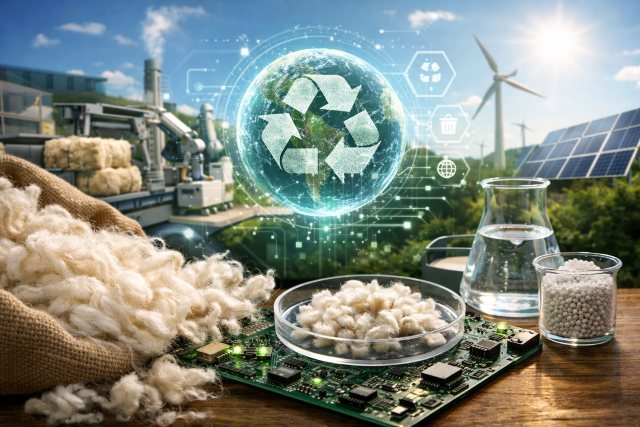
If you’ve ever held onto a favorite wool sweater because it “still has life in it,” you already understand the idea behind Woolrec. Wool has an unusual superpower in the textile world: it’s naturally durable, repairable, and (when handled correctly) highly recyclable. Woolrec takes that everyday truth and scales it into a system — one that keeps wool fibers in use longer, reduces landfill pressure, and supports a circular economy where “waste” becomes feedstock.
- What is Woolrec?
- Why Woolrec matters in 2026 and beyond
- How Woolrec works (step-by-step)
- What makes wool recycling uniquely powerful
- Woolrec in sustainable fashion: what it changes for brands
- Common challenges in Woolrec — and how to solve them
- Actionable Woolrec tips for consumers
- FAQ: Woolrec, wool recycling, and sustainability
- Conclusion: Woolrec turns wool waste into a circular advantage
And that matters now more than ever. The global textiles system still behaves mostly like a straight line: extract resources → produce clothing → discard it. The Ellen MacArthur Foundation has long warned that this model is economically and environmentally costly, with over USD 500 billion in value lost each year due to underutilization and lack of recycling.
What is Woolrec?
Woolrec is the recovery, recycling, and reintegration of wool fibers from post-consumer garments and pre-consumer production waste into new, usable materials — often yarns, fabrics, insulation, or other nonwovens.
If you’ve seen Woolrec described as a “concept bridging recycling, eco-innovation, and responsible production,” that’s accurate: it’s not only a process, it’s a model for designing wool systems where end-of-life is planned from the start.
Woolrec definition
Woolrec is a wool recycling approach that collects, sorts, and reprocesses wool textiles so the fibers can be reused in new products, reducing waste and lowering demand for virgin materials.
Why Woolrec matters in 2026 and beyond
The textile waste problem is bigger than most people realize
Textiles production and disposal create a huge footprint across emissions, pollution, and resource use. In the Ellen MacArthur Foundation’s analysis, textiles production generates around 1.2 billion tonnes of greenhouse gas emissions annually, and microfiber pollution adds another layer of harm.
The World Bank also highlights the scale of the sector, including the pressures from rising consumption and disposal patterns and the enormous value lost when clothing is barely worn and not recycled.
Regulation is pushing the industry toward circularity
In the EU, separate collection of textiles has been a major policy direction, and Extended Producer Responsibility (EPR) is increasingly shaping how brands plan for the end-of-life of products. The EU’s textile waste policy trajectory emphasizes separate collection, stronger sorting and recycling capacity, and EPR schemes to accelerate circular design.
For brands, Woolrec isn’t only about “doing good.” It’s becoming a way to stay compliant, reduce risk, and build supply resilience in a world where waste and carbon are priced more aggressively.
How Woolrec works (step-by-step)
Woolrec programs generally follow a chain that looks simple on paper, but the outcomes depend heavily on execution.
1) Collection: capturing wool before it becomes landfill
Collection can include:
- Post-consumer returns (take-back programs, drop-offs, resale partners)
- Post-industrial offcuts (factory trimmings, deadstock)
- Unsold inventory redirected into recycling rather than destruction
The key is contamination control. Wool that’s blended, coated, heavily soiled, or mixed with non-textile components (zippers, heavy synthetics, elastane) becomes harder to recycle into high-value outputs.
2) Sorting: the “make or break” stage for quality
Sorting is where Woolrec becomes either premium circularity or low-grade downcycling.
Good sorting separates by:
- Fiber content (100% wool vs blends)
- Color families (to reduce re-dyeing)
- Yarn/fabric structure (knits often behave differently than wovens)
- Wear level and damage type
This stage is also where brands can win by designing for recyclability: fewer blended compositions, standardized trims, detachable components, and clear labeling.
3) Processing: mechanical “pulling” and fiber reformation
A large share of wool recycling today is mechanical: garments are “pulled” back down toward a fibrous state and respun or reformed. The International Wool Textile Organisation (IWTO) describes wool recycling routes that include closed-loop mechanical recycling back into yarn (especially effective for some knitwear), and open-loop recycling into products like insulation or padding.
One technical reality: mechanical recycling can shorten fibers and reduce strength, which is why blending recycled wool with some virgin fiber (or longer recycled fibers) is common. Research reviews of mechanical textile recycling emphasize this fiber degradation challenge as a key limitation to overcome.
4) Reuse and remanufacture: turning recovered fiber into products people want
Where Woolrec becomes truly “future-facing” is when recycled wool isn’t treated as a compromise — when it’s positioned as a premium material with traceability, performance, and design value.
A real-world example of how mature recycled-wool ecosystems can look is the Prato textile district in Italy, internationally recognized for long-running expertise in wool material reuse and recycling.
What makes wool recycling uniquely powerful
Wool is made for long life (and multiple lives)
IWTO cites research indicating wool products can have two or more uses and a long “active life” range (not just the first owner).
That durability matters because the best sustainability outcome is almost always:
- use longer
- reuse
- then recycle
Woolrec supports all three — especially when brands design for repair, resale, and eventual fiber recovery.
Woolrec supports circular economy outcomes that are measurable
The Ellen MacArthur Foundation’s “new textiles economy” framing focuses on keeping materials at their highest value and ensuring they re-enter the economy rather than becoming waste.
That aligns naturally with Woolrec, because recycled wool can re-enter:
- apparel (coats, knitwear, suiting where feasible)
- interior textiles (upholstery, rugs, blankets)
- building products (insulation, acoustic panels)
- industrial uses (padding, composites)
Woolrec in sustainable fashion: what it changes for brands
It reshapes the business model from “sell more” to “keep value”
One of the most practical mindset shifts Woolrec brings is this: a wool garment is not the end product — it’s a material asset with residual value.
Brands can build systems around that value by:
- offering buy-back credits for wool products returned in good condition
- partnering with resale platforms for “reuse-first” routing
- sending damaged or unsellable wool into Woolrec recycling streams
This is how circular fashion becomes operational, not just aspirational.
It helps brands prepare for EPR and traceability expectations
As EPR expands, brands will increasingly need:
- accurate composition and SKU-level material data
- end-of-life routing evidence (reuse vs recycle vs waste)
- design changes that reduce end-of-life costs
EU textile waste policy direction is explicitly oriented toward stronger collection, sorting, reuse, and recycling systems.
Common challenges in Woolrec — and how to solve them
Challenge 1: Blends and trims complicate recycling
Wool + elastane, heavy synthetics, bonded laminates, and complex trims create separation difficulty.
What to do:
Design for disassembly: detachable trims, standardized buttons, and fewer blended compositions in products intended for circular streams.
Challenge 2: Fiber quality loss in mechanical recycling
Mechanical recycling can produce shorter fibers that are harder to spin into high-performance yarn — one reason downcycling is common across textiles.
What to do:
Use smart blending strategies (recycled + longer fibers), prioritize categories that tolerate shorter fibers (insulation/nonwovens), and invest in better sorting to keep premium streams clean.
Challenge 3: Collection systems aren’t convenient enough
Even motivated customers won’t recycle if it’s hard.
What to do:
Make returns “default easy”: prepaid mailers, retail drop boxes, pickup partnerships, and clear rewards.
Actionable Woolrec tips for consumers
If you want to support Woolrec as a shopper, focus on decisions that improve fiber recovery later:
- Buy fewer, better wool pieces you’ll keep for years
- Choose high-wool-content garments (simpler compositions recycle more cleanly)
- Repair early (small fixes preserve resale and reuse potential)
- Wash gently and less frequently to extend garment life
- Use take-back programs or donation channels that route textiles responsibly
That’s not perfectionism — it’s leverage. Wool’s durability means your choices compound over time.
FAQ: Woolrec, wool recycling, and sustainability
What does Woolrec mean?
Woolrec means recycling wool fibers — recovering wool textiles and reprocessing them into new materials so wool stays in circulation instead of becoming waste.
Is recycled wool actually sustainable?
It can be, especially when it replaces virgin fiber demand and keeps materials out of landfill. The sustainability impact depends on sorting quality, processing efficiency, and whether the recycled output displaces virgin production (instead of becoming additional consumption). Circular economy research stresses the importance of keeping materials at high value and avoiding disposal.
Can Woolrec recycled wool be used for new clothing?
Yes — often in blends or in product categories that tolerate shorter fibers. Closed-loop mechanical recycling back into yarn is possible in certain cases, and recycled wool is also widely used in interiors and insulation.
How can brands start a Woolrec program?
Start with the basics: map wool SKUs, define recyclability design rules, build a take-back route, partner with reputable sorters/recyclers, and report outcomes (reuse vs recycle vs waste). Aligning with emerging EU textile waste policy direction and EPR expectations can also reduce long-term compliance risk.
Conclusion: Woolrec turns wool waste into a circular advantage
Woolrec is more than a recycling idea — it’s a practical pathway to a future where wool doesn’t “end,” it circulates. The global textiles system loses enormous value when clothing is barely worn and rarely recycled, and the environmental costs are just as serious.
The good news is that wool is uniquely positioned for circularity. It’s durable, widely reusable, and supported by established recycling pathways — from closed-loop yarn recovery to long-life insulation and industrial applications.